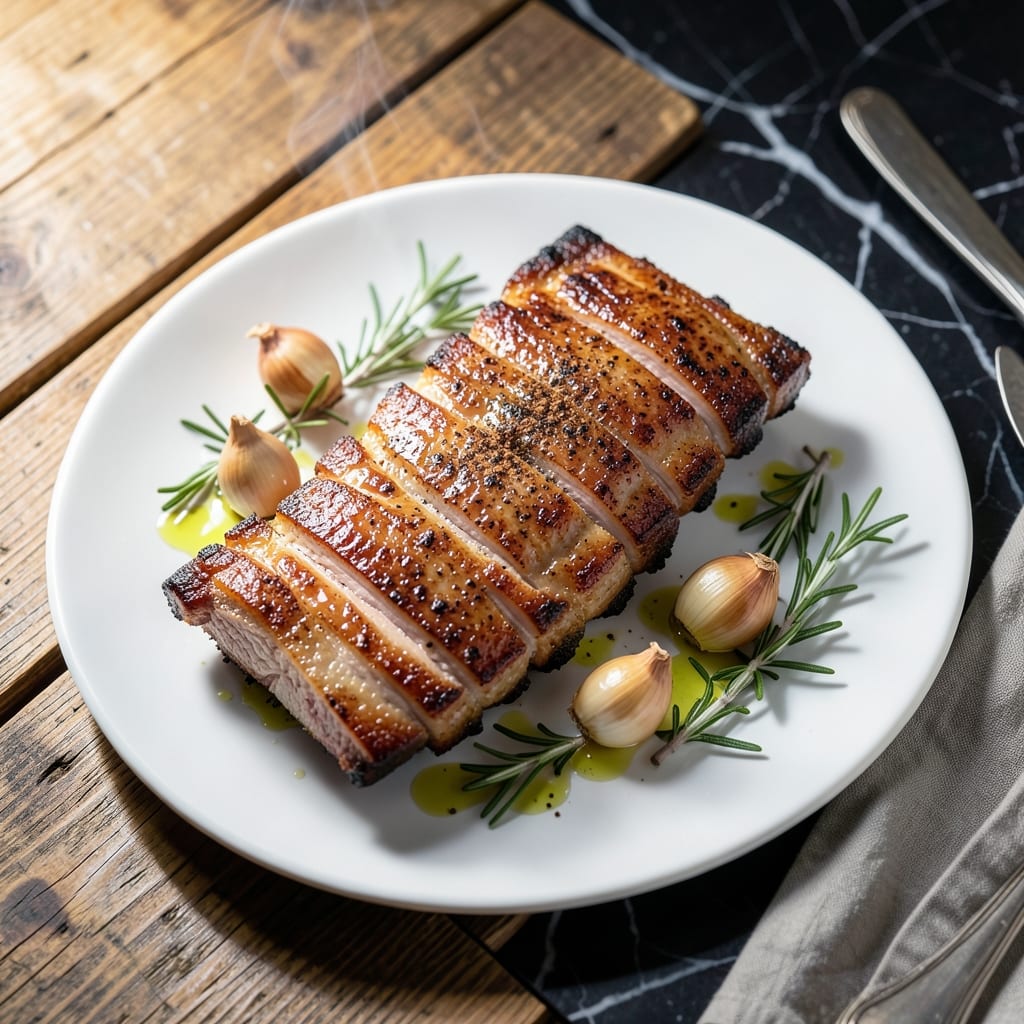
Achieving tender pork ribs without excess fat is possible with this oven-baked method. The key lies in slow cooking at 300°F to break down collagen while keeping the meat moist.
This preparation uses a dry rub of herbs and spices instead of sugary sauces, maintaining bold flavor while reducing calories. The ribs emerge juicy with a light crust, proving healthy doesn’t mean sacrificing taste.
Lean pork ribs benefit from a long, gentle cook time that renders fat naturally. A final broil adds caramelization without deep frying or heavy basting.
Serve these with a side of roasted vegetables for a complete, balanced meal. The technique works for both baby back and spare ribs.
Ingredients for Healthy Pork Ribs
Lean pork ribs and a bold dry rub create tender, flavorful results with minimal added fat.
| Ingredient | Amount | Notes |
|---|---|---|
| Pork Ribs 🍖 | 3 lb | Baby back or spare ribs, trimmed of excess fat |
| Kosher Salt 🧂 | 1 tbsp | Diamond Crystal preferred for even seasoning |
| Ground Black Pepper 🌶️ | 1 tsp | Freshly ground for maximum flavor |
| Garlic Powder 🧄 | 1 tbsp | Not garlic salt for pure flavor |
| Onion Powder 🧅 | 1 tbsp | Fine ground for even distribution |
| Smoked Paprika 🌶️ | 2 tsp | Sweet or hot variety based on preference |
| Dried Thyme 🌿 | 1 tsp | Crushed between fingers to release oils |
| Dried Oregano 🍃 | 1 tsp | Mediterranean oregano for robust flavor |
| Cayenne Pepper 🔥 | ½ tsp | Adjust quantity to heat preference |
| Olive Oil 🫒 | 2 tbsp | Extra-virgin for high-heat stability |
| Apple Cider Vinegar 🍏 | 1 tbsp | Balances richness of ribs |
| Low-Sodium Chicken Broth 🥣 | ½ cup | For moisture during cooking |
[recipe_ingredient_scaler]
The pork ribs are the foundation—baby back ribs are leaner than spare ribs but both work well. Source from Costco or Whole Foods for consistent quality and good marbling. Trim any visible fat before applying the rub to ensure the healthiest preparation. The spices should be freshly purchased for maximum potency, as dried herbs lose their aroma over time.
For the dry rub, smoked paprika is non-negotiable for depth of flavor. No cayenne? Red pepper flakes at half the amount work in a pinch. If you lack dried thyme or oregano, fresh herbs at triple the quantity can substitute, though the texture will differ. The apple cider vinegar can be swapped with white vinegar, but the fruitiness of apple cider complements the pork best.
Store uncooked ribs in the fridge for up to 2 days or freeze for 3 months. The dry rub can be mixed and stored in an airtight container for up to 6 months. Cooked ribs keep well in the fridge for 4 days and reheat beautifully in the oven.
Why You’ll Love This Recipe
- Set It and Forget It: Honestly, just rub the ribs with salt, pepper, garlic, and onion powder, then let the oven do the work.
- Bold Seasoning: That combo of garlic and onion powder gives every bite a deep, savory kick without heavy sauces.
- Meal Prep Hero: I make a double batch on Sunday and pack leftovers for lunch all week.
- Budget Stretch: Pork ribs feed a crowd for way less than takeout, and the spices are already in my pantry.
Step-by-Step Instructions for Oven-Baked Pork Ribs
This method ensures lean, flavorful results with minimal added fat and maximum tenderness.
Step 1: Prepare and Season the Pork Ribs
Begin by trimming any excess fat from the 3 lb Pork Ribs. I use a sharp knife to remove visible fat, which helps create a leaner final dish. Pat the ribs completely dry with paper towels—this ensures the seasoning adheres properly.
In a small bowl, combine the 1 tbsp Kosher Salt, 1 tsp Ground Black Pepper, 1 tbsp Garlic Powder, 1 tbsp Onion Powder, 2 tsp Smoked Paprika, 1 tsp Dried Thyme, 1 tsp Dried Oregano, and 0.5 tsp Cayenne Pepper. Rub this mixture evenly over all surfaces of the ribs, pressing it in firmly so it forms a flavorful crust.
Step 2: Marinate for Maximum Flavor
Place the seasoned ribs in a large resealable bag or shallow dish. Drizzle the 2 tbsp Olive Oil and 1 tbsp Apple Cider Vinegar over the ribs, turning them to coat evenly. The vinegar helps tenderize the meat while balancing the richness of the pork.
Let the ribs marinate in the refrigerator for at least 1 hour, or up to 12 hours for deeper flavor penetration. This step is crucial for achieving the most tender and flavorful results, as it allows the spices to work their way into the meat.
Step 3: Slow-Roast for Tenderness
Preheat your oven to 275°F. This low temperature ensures the ribs cook slowly and evenly without drying out. Place the ribs on a wire rack set over a rimmed baking sheet—this setup allows heat to circulate around the ribs, promoting even cooking and preventing them from steaming in their own juices.
Pour the 0.5 cup Low-Sodium Chicken Broth into the bottom of the baking sheet. This adds moisture to the oven environment, which helps keep the ribs tender as they cook. Cover the ribs tightly with aluminum foil to trap steam and prevent drying.
Step 4: Finish with a Flavor Boost
Roast the ribs for 2.5 to 3 hours, or until the meat pulls back from the bones and is fork-tender. During the last 30 minutes of cooking, remove the foil to allow the ribs to develop a light crust. Baste them with the juices from the pan for added moisture and flavor.
You’ll know they’re ready when the meat easily separates from the bone with a gentle twist of a fork. The ribs should be tender but not falling apart, with a rich, spice-infused flavor that complements the natural taste of the pork.
Pro Tips For Making Healthy Pork Ribs
- Dry the Ribs: Pat the pork ribs thoroughly dry with paper towels before seasoning—I learned this the hard way after my first few batches came out steamed instead of seared.
- Season Overnight: Rub the ribs with salt, pepper, garlic powder, and onion powder the night before cooking; it actually changes the outcome by letting the flavors penetrate deep into the meat.
- Skip the Boiling: Resist the urge to pre-boil the ribs to “speed things up”—it washes away flavor and leaves them mushy instead of tender.
- Use a Meat Thermometer: Pull the ribs at 195°F internal temp, not just when they “look done.” After burning three batches, I finally figured out that guesswork doesn’t cut it.
Make-Ahead Tips for This healthy pork ribs
Prep the Night Before
Trim and season the ribs with the dry rub the evening before cooking. This gives the spices 12 hours to penetrate deeply. Store uncovered in the fridge to let the surface dry slightly, which enhances the crust formation during cooking. 💪
Marinate in Bulk
Double or triple the dry rub mixture and store in an airtight container for up to 6 months. When ready, just coat the ribs and let them sit. This saves time and ensures consistent flavor every time.
Slow Cook Ahead
Cook the ribs completely up to 2 days in advance. After cooling, store them in the fridge in their cooking juices to keep them moist. This method actually improves tenderness as the flavors meld together.
Freeze for Later
Cooked ribs freeze beautifully for up to 3 months. Wrap individual portions tightly in plastic wrap, then foil, to prevent freezer burn. Thaw overnight in the fridge before reheating for best results.
Reheat Gently
For oven reheating, place ribs on a rack over a pan with ¼ cup broth. Cover with foil and warm at 300°F for 20-25 minutes. This prevents drying while restoring that just-cooked texture.
Broil to Refresh
After reheating, a quick 2-3 minute broil on high brings back the crust. Watch closely to avoid burning. I always brush with a little extra vinegar for brightness before serving. 🔥
Nutrition Facts
Frequently Asked Questions
Can I use a different cooking method besides oven-baking?
Try grilling over indirect heat at 275°F for the same slow-cooked tenderness. A slow cooker also works well on low for 6-8 hours.
How do I know when the ribs are done?
The meat should pull back from the bones by about ¼ inch and be fork-tender. For precision, use a meat thermometer—it should read 195-203°F internally.
What if my ribs turn out tough?
This usually means they need more time. Return them to the oven at 275°F for another 30-60 minutes, checking frequently. Adding ¼ cup broth can help restore moisture.
Can I make this recipe with bone-in pork chops?
Yes, but reduce cooking time to 1.5-2 hours at 275°F. The thinner cut cooks faster. Use the same seasoning for great flavor.

Trained in classic French technique but raised on slow-cooked ribs and spicy rubs, she blends culinary skill with smoke and soul.
- Hamburgers in Sauce Recipe Crock Pot: Slow-Cooked Savory Delight - October 3, 2026
- Sanjeev Kapoor Egg Biryani Recipe: Fragrant Spiced Rice With Boiled Eggs - October 3, 2026
- Recipe for French Pork Spread Gorton: Savory Gallic Flavors in a Spreadable Delight - October 3, 2026