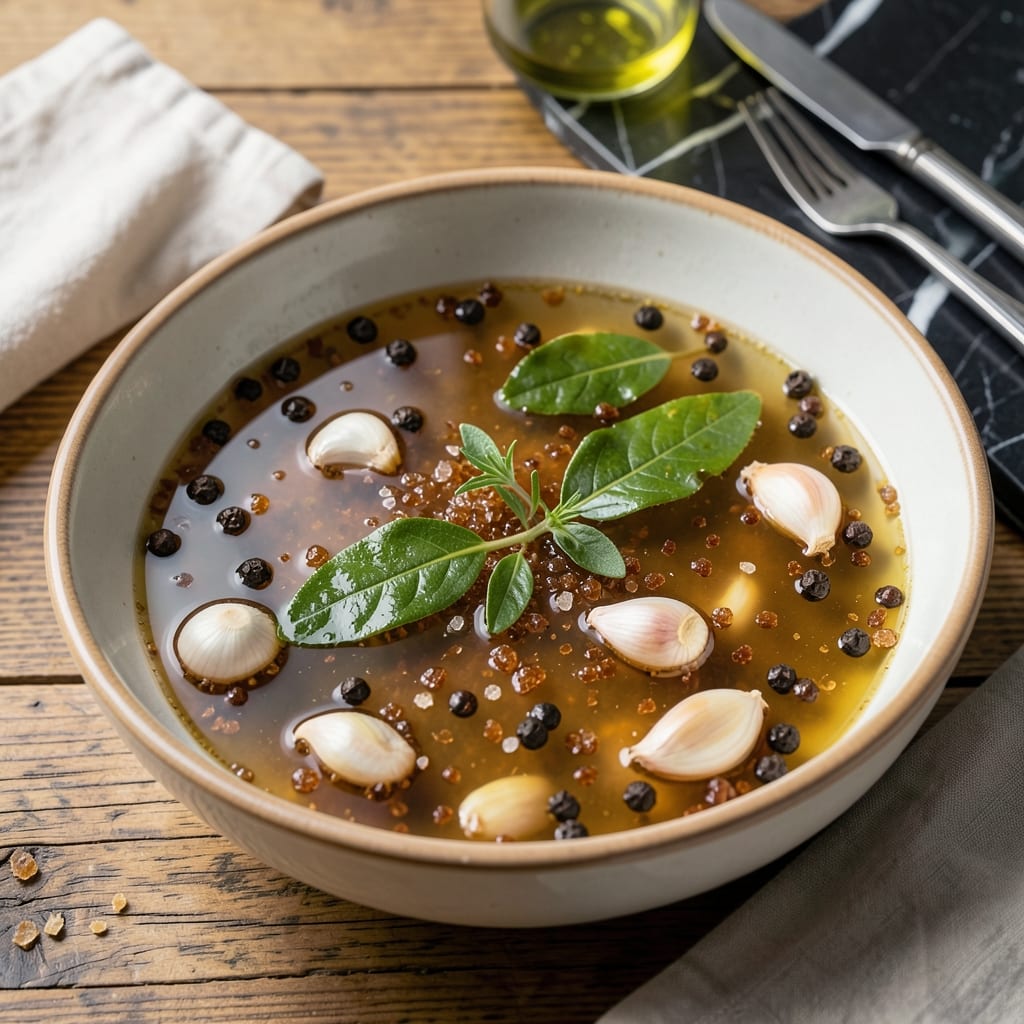
This simple brine transforms pork from dry to juicy with minimal effort. A basic solution of salt and water works wonders, penetrating the meat to lock in natural moisture and enhance flavor.
I developed this method after years of experimenting with various ratios, settling on a straightforward approach that delivers consistent results. The science is simple: salt breaks down muscle fibers, allowing the pork to retain more moisture during cooking.
The process requires just 5 minutes of prep time with ingredients you likely already have. Optional additions like herbs or garlic can customize the flavor profile without complicating the technique.
Whether you’re preparing chops, tenderloin, or a whole roast, this brine ensures tender, flavorful meat every time. The difference is noticeable from the first bite.
Ingredients for Salt Brine Recipe for Pork
Eight ingredients transform pork with minimal effort and maximum juiciness.
| Ingredient | Amount | Notes |
|---|---|---|
| Water 💧 | 4 cups | Cold, for brine base |
| Kosher Salt 🧂 | ½ cup | Diamond Crystal preferred for consistency |
| Brown Sugar 🫙 | ¼ cup | Light or dark variety |
| Garlic Cloves 🧄 | 4 cloves | Smashed, not minced |
| Black Peppercorns 🌶️ | 1 tbsp | Whole, lightly crushed |
| Bay Leaves 🍃 | 2 whole | Dried, for aroma |
| Fresh Rosemary Sprigs 🌿 | 2 whole | Optional, for herbal note |
| Fresh Thyme Sprigs 🌿 | 2 whole | Optional, for depth |
[recipe_ingredient_scaler]
The salt is critical here. Diamond Crystal kosher salt is the standard for brining due to its consistent crystal size and lack of additives. Using table salt or sea salt can yield unpredictable results. For the water, cold tap water works perfectly—no need for filtered or distilled. The brown sugar adds subtle sweetness that balances the saltiness, but you can omit it entirely for a pure salt brine.
No kosher salt? Table salt at half the amount (1/4 cup) works in a pinch, but measure carefully. The garlic and peppercorns add subtle flavor without overpowering—whole spices prevent bitter notes. Fresh herbs like rosemary or thyme are optional but recommended (dried herbs can turn gritty). For a larger batch, scale all ingredients proportionally to the water volume.
Brining liquid keeps in the fridge for 1 week if you skip the fresh herbs and garlic. Discard after use with raw pork. For food safety, never reuse brine—it may contain bacteria from the meat. Always brine in a non-reactive container (glass or food-grade plastic).
Why You’ll Love This Recipe
- 5-Minute Mix: I just boil water, dump in the salt, sugar, and spices, and boom—brine’s ready before the pork even thaws.
- Garlic-Kissed Depth: The garlic and peppercorns infuse the meat with this rich, savory-sweet flavor that makes every bite taste intentional.
- Weeknight Hero: I brine a big batch on Sunday, and it keeps the pork juicy whether I’m roasting, grilling, or smoking it midweek.
- Pennywise Protein: A pound of pork soaks up this cheap but mighty brine, turning even budget cuts into something restaurant-worthy.
Step-by-Step Instructions for Salt Brine for Pork
This straightforward process ensures perfectly seasoned, moist pork every time with minimal effort.
Step 1: Combine Water and Salt Base
In a large pot, pour in the 4 cups Water and add the 0.5 cup Kosher Salt. I prefer Diamond Crystal for its consistent texture and clean flavor. Set the pot over medium-high heat and stir until the salt completely dissolves—you should see no visible grains remaining.
Bring the mixture to a gentle simmer. This step ensures the salt fully integrates with the water, creating a uniform brine that will penetrate the pork evenly for consistent seasoning throughout.
Step 2: Incorporate Sweet and Aromatic Elements
Remove the pot from heat and stir in the 0.25 cup Brown Sugar until fully dissolved. The sugar balances the saltiness and promotes caramelization on the pork’s surface during cooking, enhancing both flavor and appearance.
Add the 4 cloves Garlic Cloves (smashed to release their oils), 1 tbsp Black Peppercorns (lightly crushed), 2 whole Bay Leaves, 2 whole Fresh Rosemary Sprigs, and 2 whole Fresh Thyme Sprigs. These aromatics infuse the brine with complex, complementary flavors that will elevate the pork.
Step 3: Cool the Brine Completely
Allow the brine to cool to room temperature before using. This is critical—submerging pork in hot brine will begin cooking it unevenly and can result in a tough, overcooked exterior while the interior remains underseasoned.
For faster cooling, you can place the pot in an ice bath or transfer the brine to a separate container and refrigerate it. The brine should feel cool to the touch before proceeding. This step typically takes 30-45 minutes depending on your method.
Step 4: Submerge and Brine the Pork
Place your pork in a non-reactive container (glass, stainless steel, or food-grade plastic) large enough to hold both the meat and the brine. Pour the cooled brine over the pork, ensuring it is fully submerged. If necessary, weigh the pork down with a plate or use a brine bag to keep it under the liquid.
Refrigerate the pork in the brine for 12-24 hours. I find 18 hours to be the sweet spot for most cuts, providing ample time for the brine to work its magic without over-salting the meat. The pork should look slightly plump and feel firm when removed from the brine, indicating proper absorption.
Step 5: Rinse and Prepare for Cooking
Remove the pork from the brine and rinse it briefly under cold water to remove any surface salt or herbs. Pat it dry thoroughly with paper towels. This step ensures the pork doesn’t taste overly salty and helps achieve a better sear or crust during cooking.
Let the pork rest for 15-20 minutes at room temperature before cooking. This allows the meat to relax and the seasoning to distribute evenly, resulting in a juicier, more tender final product. Your pork is now ready for grilling, roasting, or smoking with enhanced moisture and flavor.
Pro Tips For Making Salt Brine Recipe For Pork
- Chill the Brine: I learned this the hard way—always refrigerate your brine before adding the pork, or you risk partially cooking the meat in warm liquid. Aim for 40°F or below before submerging.
- Crush the Peppercorns: Sounds weird, but it works: lightly crushing the black peppercorns releases way more flavor into the brine than leaving them whole.
- Don’t Over-Salt: Stick to 1 cup kosher salt per gallon of water—more doesn’t mean better flavor, just an inedibly salty pork later. Measure precisely, especially with finer salts.
- Brine Overnight: Give it a solid 12-24 hours in the fridge for the salt and brown sugar to fully penetrate. I skip this when I’m lazy, but the pork is noticeably juicier when I don’t.
Troubleshooting salt brine recipe for pork
Brine Too Salty
If your finished pork tastes overly salty, you likely used table salt instead of kosher or brined too long. I always recommend Diamond Crystal kosher salt for its consistent texture. For future batches, reduce brining time to 12 hours maximum. 💡
Meat Not Absorbing Brine
Ensure your pork is fully submerged in the brine. I use a heavy plate to weigh it down in my glass container. Also, check that your brine is cold before adding the meat—hot liquid won’t penetrate properly. 40°F or below is ideal.
Cloudy Brine Solution
Cloudiness often comes from undissolved salt or sugar. I stir my brine until completely clear before cooling. If using hard water, try filtered water next time. This won’t affect flavor but looks more professional.
Pork Turns Gray
This is normal! The salt reacts with meat proteins, causing a grayish tint. It doesn’t affect taste or safety. For better color, add 1 tsp pink curing salt (optional) to maintain that fresh pork hue. Don’t skip the rinse step after brining.
Brining Container Issues
Never use reactive metals like aluminum or copper—they can impart off-flavors. I prefer glass or food-grade plastic containers. For large cuts, a clean cooler works well. Always sanitize containers before and after use.
Short on Time
In a pinch, you can brine for just 4-6 hours, though results won’t be as dramatic. I’ve tested this with pork chops with decent success. For best results, plan ahead—overnight brining truly transforms the texture. 🔥
Nutrition Facts
Frequently Asked Questions
How long should I brine pork?
For most cuts, 12-24 hours in the fridge works best. Smaller pieces like chops benefit from 12 hours, while larger roasts can handle up to 24 hours.
Can I reuse brine?
Never reuse brine after raw pork has soaked in it. The liquid may contain bacteria. Always discard and make fresh for each use.
What’s the ideal salt-to-water ratio?
1/2 cup kosher salt per 4 cups water creates the perfect balance. For table salt, reduce to 1/4 cup due to its finer grains.
Should I rinse pork after brining?
Yes, a quick cold water rinse removes excess salt from the surface. Pat dry thoroughly before cooking for better browning.

Trained in classic French technique but raised on slow-cooked ribs and spicy rubs, she blends culinary skill with smoke and soul.
- Recipe for Boneless Pork Chops in Cast Iron Skillet: Sear and Baste to Juicy Perfection - October 3, 2026
- Recipe for Boneless Cross Rib Roast: Slow-Roasted Beef with Herb Crust - October 3, 2026
- Hamburgers in Sauce Recipe Crock Pot: Slow-Cooked Savory Delight - October 3, 2026