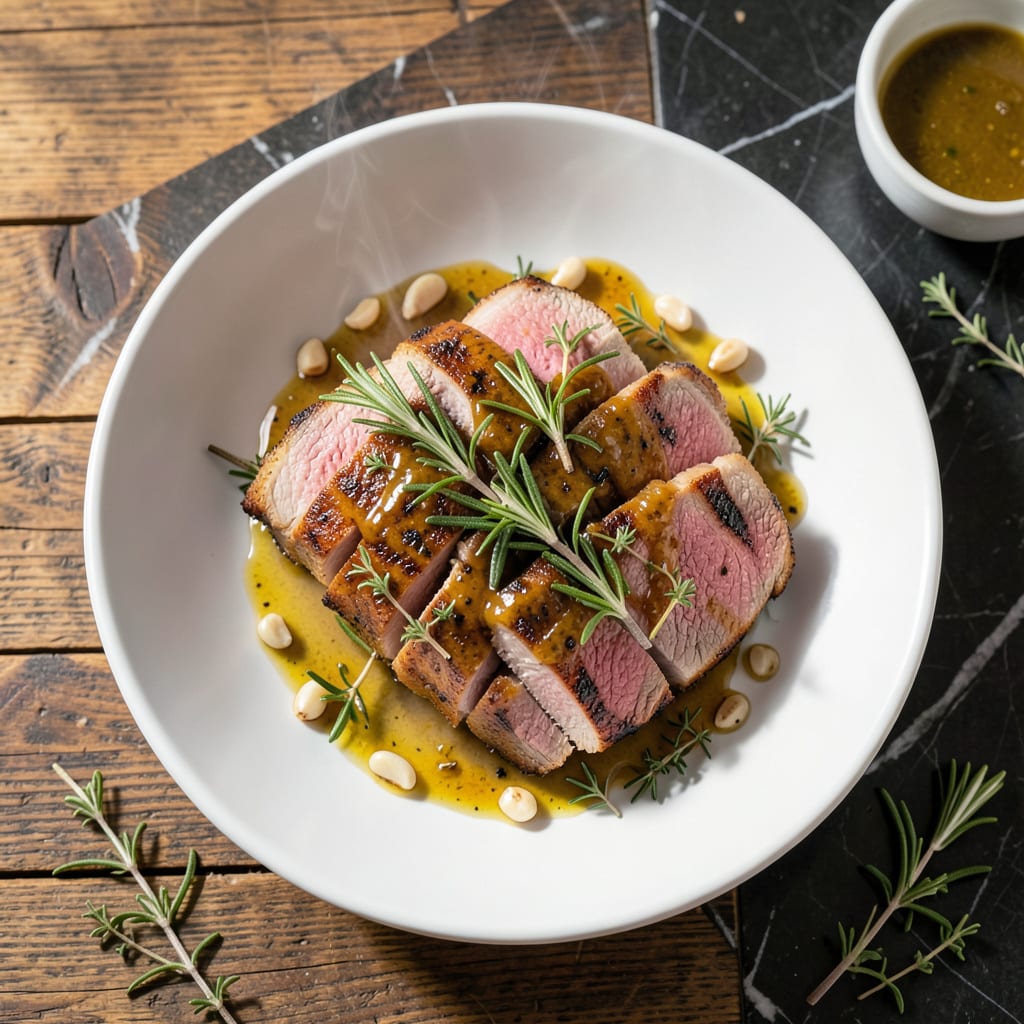
This herb-crusted pork tenderloin delivers tender results with a healthy twist. A simple rub of fresh herbs and garlic creates bold flavor without excess fat or calories.
Cooked at high heat, the outside forms a flavorful crust while the inside stays juicy. The lean cut makes it perfect for a nutritious meal that doesn’t compromise on taste or texture.
Ingredients for Healthy Pork Tenderloin
Lean protein meets bold herb crust with minimal effort and maximum flavor.
| Ingredient | Amount | Notes |
|---|---|---|
| Pork Tenderloin 🥩 | 1 ½ lb | Trimmed of excess fat |
| Fresh Rosemary 🌿 | 2 tbsp | Finely chopped, fresh only |
| Fresh Thyme Leaves 🍃 | 2 tbsp | Stems removed, fresh only |
| Garlic Cloves 🧄 | 4 cloves | Minced for maximum flavor |
| Dijon Mustard 🟡 | 2 tbsp | Creates crust adhesion |
| Extra-Virgin Olive Oil 🫒 | 2 tbsp | Divided for rub and searing |
| Kosher Salt 🧂 | 1 tsp | Diamond Crystal preferred |
| Freshly Ground Black Pepper 🌶️ | 1 tsp | Coarse grind for texture |
| Smoked Paprika 🌶️ | 1 tsp | Adds depth to crust |
| Lemon Zest 🍋 | 1 tsp | Brightens herb flavors |
| Lemon Juice 🍋 | 1 tbsp | Freshly squeezed preferred |
| Low-Sodium Chicken Broth 💧 | ½ cup | For deglazing pan |
[recipeingredientscaler]
The pork tenderloin must be fresh with a rosy hue—avoid anything with a grayish tint. Whole Foods and Costco consistently carry high-quality, humanely raised options. For herbs, organic bunches from the produce section offer superior aroma. The Dijon mustard serves as the binding agent for the crust, so Maille or Grey Poupon are recommended for consistent texture and tang.
No fresh herbs? Dried at one-third the amount works in a pinch, though the flavor won’t be as vibrant. Out of Dijon? Whole-grain mustard adds nice texture, but yellow mustard lacks depth. For a citrus variation, lime zest and juice substitute beautifully. The smoked paprika can be swapped for sweet, but the smoky note complements the pork exceptionally well.
Trimmed tenderloin keeps in the fridge for 2-3 days or can be frozen for up to 6 months. The herb rub can be prepped a day ahead—store it in an airtight container. Leftovers reheat well, though the crust softens slightly. Best served fresh from the oven for optimal texture.
Why You’ll Love This Recipe
- One Pan Meal: I toss everything on a sheet pan and let the oven do the work.
- Herb Crust Perfection: The rosemary, thyme, and Dijon create a crust so flavorful I skip the sauce.
- Weeknight Hero: It’s ready before the kids finish bickering over who gets the last roll.
- Leftover Magic: Cold slices make the best sandwiches—honestly, better than the first night.
Step-by-Step Instructions for Herb-Crusted Pork Tenderloin
Here is the method. Straightforward, tested, works every time.
Step 1: Prepare the Herb Marinade
In a small bowl, combine the 2 tbsp Fresh Rosemary, 2 tbsp Fresh Thyme Leaves, 4 cloves minced Garlic Cloves, 2 tbsp Dijon Mustard, 1 tsp Kosher Salt, 1 tsp Freshly Ground Black Pepper, 1 tsp Smoked Paprika, 1 tsp Lemon Zest, and 1 tbsp Lemon Juice.
Whisk in 1 tbsp Extra-Virgin Olive Oil until the mixture forms a thick paste. This ensures all the herbs and spices adhere properly to the pork. The mustard and oil create the perfect base for the crust.
Step 2: Coat and Sear the Pork Tenderloin
Pat the 1.5 lb Pork Tenderloin dry with paper towels. Rub the herb marinade all over the pork, pressing firmly to ensure an even coating. Let it sit at room temperature for 15-20 minutes to allow the flavors to penetrate.
Heat the remaining 1 tbsp Extra-Virgin Olive Oil in an oven-safe skillet over medium-high heat. Sear the pork on all sides until the crust turns golden brown and a thermometer inserted into the thickest part reads 145°F. This takes about 2-3 minutes per side.
Step 3: Deglaze and Finish in the Oven
Transfer the pork to a plate. Pour the 0.5 cup Low-Sodium Chicken Broth into the hot skillet, scraping up any browned bits from the bottom. This creates a flavorful pan sauce. Return the pork to the skillet.
Place the skillet in a preheated 375°F oven. Roast for 10-15 minutes or until the internal temperature reaches 145°F and the pork is cooked through. The pan sauce will reduce slightly, enhancing the herb crust.
Step 4: Rest and Serve
Remove the pork from the oven and transfer it to a cutting board. Tent loosely with foil and let it rest for 10 minutes. This allows the juices to redistribute, ensuring the pork remains tender and moist.
Slice the pork into ½-inch thick medallions. Drizzle any remaining pan sauce over the top before serving. The result is a juicy, herb-crusted pork tenderloin with a rich, savory finish.
Pro Tips For Making Healthy Pork Tenderloin
- Sear Then Roast: Start with a screaming hot pan to sear the tenderloin on all sides—about 2 minutes per side—then finish in a 400°F oven until it hits 145°F internal. I learned this the hard way after serving dry pork from skipping the sear.
- Mince the Herbs: Finely chop the rosemary and thyme so they stick to the mustard coating and don’t burn during cooking. Sounds fussy, but it actually changes the outcome.
- Don’t Overcook: Pull the pork at 145°F and let it rest 5-10 minutes under foil—it’ll keep rising to 150°F. After burning three batches, I finally figured out the thermometer is non-negotiable.
- Use Whole Garlic: Crush the garlic cloves but leave them whole in the mustard rub for milder flavor that won’t overpower. I was skeptical until I tried it, but it works.
Pro Cooking Tips for This Dish
Herb Adhesion Secret
For maximum crust cling, pat the pork bone-dry with paper towels first. I learned this from my French training—water is the enemy of a good sear. Press the herb paste firmly into every crevice of the tenderloin. 🌿
Perfect Sear Technique
Use a cast iron skillet for even heat distribution. I prefer Lodge for its durability. Heat the oil until it shimmers but doesn’t smoke—about 375°F on an infrared thermometer. Don’t move the pork for 2-3 minutes per side.
Temperature Precision
Invest in a ThermoWorks Instant Read thermometer. Pork tenderloin is lean, so pulling it at exactly 145°F prevents dryness. The temperature will rise 5°F during resting, so remove it just before it hits the mark.
Pan Sauce Magic
After searing, deglaze with ½ cup chicken broth while the pan is still hot. Scrape those browned bits—they’re pure flavor. I add a splash of white wine when I have some open, but broth works perfectly on its own.
Resting importance
This step is non-negotiable. Tent with foil and rest for 10 minutes. The juices redistribute, making each slice moist. I use this time to plate my sides—usually roasted veggies from the farmers market. 💡
Slicing Pro Tip
Slice against the grain into ½-inch medallions. The grain runs lengthwise, so cut perpendicular. Use a long, sharp knife—I keep a Wüsthof 8-inch chef’s knife just for proteins. Clean slices every time.
Nutrition Facts

Trained in classic French technique but raised on slow-cooked ribs and spicy rubs, she blends culinary skill with smoke and soul.
- Recipe for Boneless Pork Chops in Cast Iron Skillet: Sear and Baste to Juicy Perfection - October 3, 2026
- Recipe for Boneless Cross Rib Roast: Slow-Roasted Beef with Herb Crust - October 3, 2026
- Hamburgers in Sauce Recipe Crock Pot: Slow-Cooked Savory Delight - October 3, 2026