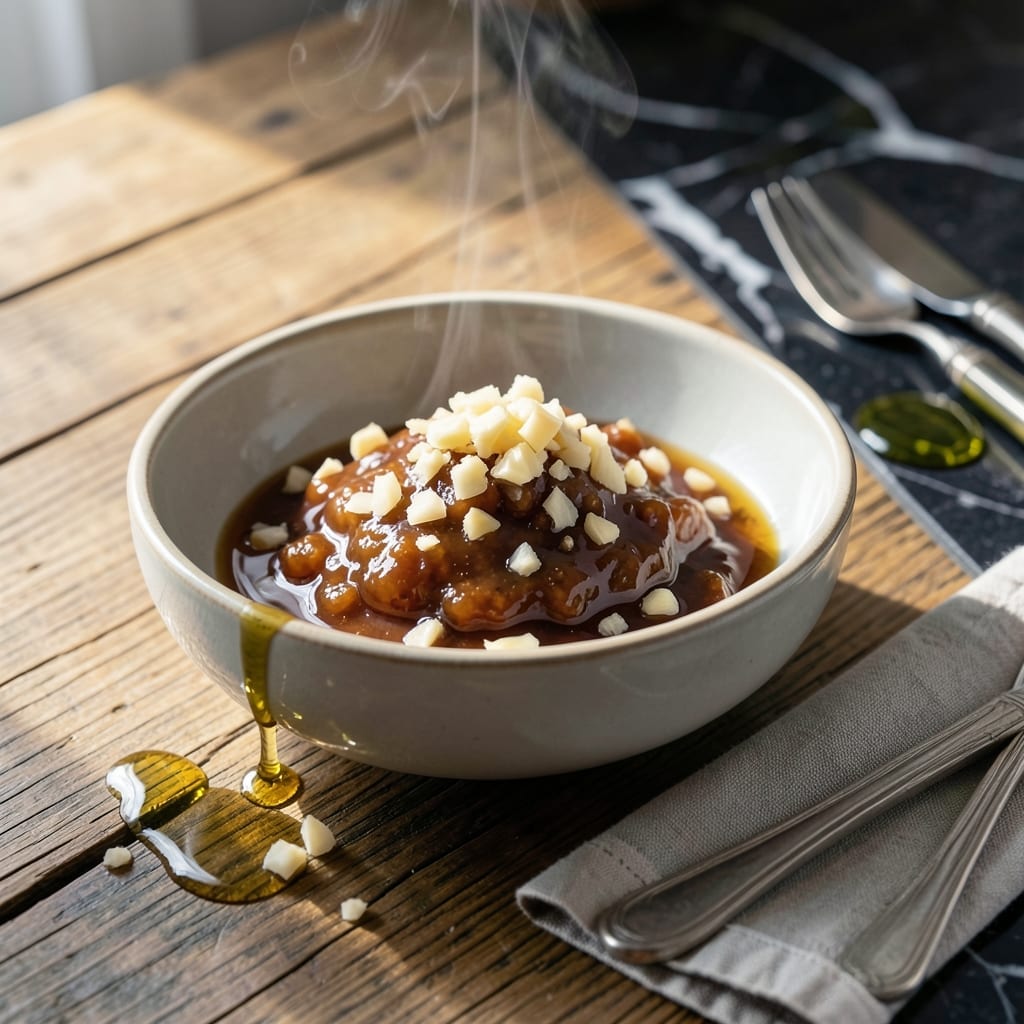
This soy glaze transforms ordinary dishes into restaurant-worthy creations. I developed it to add depth to proteins and vegetables alike.
A perfect balance of sweet and salty, it clings beautifully to grilled meats and roasted veggies. Store in the fridge for up to 2 weeks.
Ingredients for Hello Fresh Soy Glaze
Eight simple ingredients create this sweet-savory glaze that elevates everything it touches.
| Ingredient | Amount | Notes |
|---|---|---|
| Soy Sauce 🥢 | ½ cup | Low-sodium preferred for balance |
| Maple Syrup 🍁 | ¼ cup | Grade A or B for depth |
| Rice Vinegar 🍚 | 2 tbsp | Unseasoned for clean acidity |
| Fresh Ginger 🌿 | 1 tbsp | Finely grated, peeled |
| Garlic Cloves 🧄 | 3 cloves | Minced for even distribution |
| Sesame Oil 🫒 | 1 tsp | Toasted for nutty aroma |
| Cornstarch 🌾 | 1 tsp | Mixed with 1 tbsp water |
| Red Pepper Flakes 🌶️ | ¼ tsp | Optional for subtle heat |
[recipe_ingredient_scaler]
The soy sauce is the backbone here. Kikkoman or San-J tamari (gluten-free if needed) are my go-tos—avoid anything labeled ‘soy sauce flavor’ or with added preservatives. Maple syrup adds that caramelized depth; Grade A dark has more robust flavor than light. Whole Foods or Trader Joe’s carry the good stuff in bulk bins if you want to test before committing to a bottle.
No maple syrup? Agave nectar or date syrup work at a 1:1 ratio. Missing rice vinegar? Apple cider vinegar in a pinch (slightly fruitier but fine). Fresh ginger is non-negotiable for that bright zing—ground ginger just doesn’t cut it. If you can’t find toasted sesame oil, regular works, but add one extra teaspoon for depth.
This keeps beautifully in the fridge for 2 weeks—the flavors actually deepen over time. For longer storage, freeze in ice cube trays, then transfer to a bag for up to 3 months. Thaw at room temp before using (it’ll separate a bit, but whisking brings it back together).
Why You’ll Love This Recipe
- Five-Minute Glaze: I literally stir these five ingredients together while the pan heats—no chopping, no fuss.
- Sticky Sweet Heat: The maple syrup and ginger give it this deep, caramelized kick that clings to every bite.
- Dinner to Lunch: I double the batch, drizzle it on tonight’s chicken, then use leftovers for tomorrow’s grain bowls.
- Pantry Hero: Soy sauce, vinegar, and a few staples mean I can make this any night without a grocery run.
Step-by-Step Instructions for Soy Glaze
This foolproof method delivers a glossy, balanced glaze with minimal effort and maximum flavor.
Step 1: Bloom Aromatics in Oil
Heat the 1 tsp Sesame Oil in a small saucepan over medium-low heat. Add the 1 tbsp Fresh Ginger and 3 cloves Garlic Cloves, stirring constantly for 30-45 seconds until fragrant but not browned.
This step releases the essential oils and creates the flavor base. Watch carefully—garlic burns easily. You want it just golden at the edges, not dark brown. The sesame oil adds a nutty depth that complements the umami of the soy.
Step 2: Build the Glaze Base
Pour in the 0.5 cup Soy Sauce, 0.25 cup Maple Syrup, and 2 tbsp Rice Vinegar. Stir to combine, then increase heat to medium-high. Bring to a gentle boil, then reduce heat to maintain a steady simmer.
The soy sauce provides the salty umami backbone, while the maple syrup adds caramelized sweetness. The rice vinegar cuts through the richness with a clean acidity. You’ll see small bubbles around the edges of the pan when it reaches the right temperature.
Step 3: Thicken with Cornstarch Slurry
In a small bowl, whisk the 1 tsp Cornstarch with 1 tbsp water until smooth. Slowly pour this slurry into the simmering mixture while stirring constantly. Continue stirring for 1-2 minutes until the glaze thickens enough to coat the back of a spoon.
The cornstarch creates a silky, glossy texture that clings beautifully to proteins or vegetables. Keep the heat steady—too high, and the glaze may seize or become lumpy. You’re aiming for the consistency of thin syrup, not a thick paste.
Step 4: Finish and Adjust Heat
Remove the saucepan from heat and stir in the 0.25 tsp Red Pepper Flakes, if using. Let the glaze sit for 1-2 minutes to allow the flavors to meld. Taste and adjust—though the balance should already be spot-on with the given ratios.
The red pepper flakes add a subtle, lingering heat that enhances the other flavors without overpowering them. The glaze will thicken slightly as it cools, so if it seems too thin now, give it a moment. It should be glossy, with a rich mahogany color and a perfect sweet-savory harmony.
Pro Tips For Making Hello Fresh Soy Glaze
- Simmer, Don’t Boil: Keep the heat at medium-low—boiling the soy glaze makes the maple syrup caramelize too fast and burn the garlic. A gentle simmer lets the flavors meld without bitterness.
- Grate the Ginger: Fresh ginger releases more juice when finely grated, so you get that sharp, bright kick throughout the glaze. I learned this the hard way after too many chewy ginger chunks.
- Bloom the Garlic: Cook the minced garlic in a little oil for 30 seconds before adding liquids—it takes the raw edge off and brings out sweetness. Skip this and the glaze tastes harsh.
- Strain the Solids: After cooking, strain out the ginger and garlic for a smooth, restaurant-style glaze. It’s an extra step, but your sauce will cling better to whatever you’re glazing.
Troubleshooting hello fresh soy glaze
Too Thin or Watery
If your glaze isn’t thickening, you likely added the cornstarch slurry too quickly or the heat was too low. Return it to a gentle boil, mix another ½ tsp cornstarch with 1 tbsp water, and whisk in slowly. 🌡️
Lumpy Texture
Lumps usually mean the cornstarch clumped before mixing. Strain through a fine-mesh sieve while warm, then return to heat. Stir constantly to prevent new lumps from forming.
Overly Salty
Balance excess salt by adding 1 tbsp maple syrup or 1 tsp rice vinegar and simmering for 2-3 minutes. This dilutes the salt while enhancing other flavors.
Burnt Flavor
If the glaze tastes bitter, you’ve likely scorched the garlic or ginger. Start fresh—there’s no saving burnt aromatics. Use medium-low heat next time and watch closely.
Too Sweet
Cut the sweetness with 1 tsp rice vinegar or a pinch of red pepper flakes. The acidity and heat will balance the maple syrup beautifully.
I once over-sweetened a batch for a competition—added vinegar saved the day. 💡
Nutrition Facts
Frequently Asked Questions
Can I use honey instead of maple syrup?
Yes! Substitute honey at a 1:1 ratio. The flavor will be slightly floral rather than caramel-like. Reduce heat slightly as honey burns easier than maple syrup.
How long does this glaze keep in the fridge?
Store in an airtight container for up to 2 weeks. The flavors actually deepen over time. For longer storage, freeze in ice cube trays for up to 3 months.
What dishes pair best with this glaze?
It shines on grilled salmon, chicken, or tofu. Also fantastic drizzled over roasted broccoli or as a dip for spring rolls. The umami boosts any protein or veggie.

Trained in classic French technique but raised on slow-cooked ribs and spicy rubs, she blends culinary skill with smoke and soul.
- Recipe for Boneless Pork Chops in Cast Iron Skillet: Sear and Baste to Juicy Perfection - October 3, 2026
- Recipe for Boneless Cross Rib Roast: Slow-Roasted Beef with Herb Crust - October 3, 2026
- Hamburgers in Sauce Recipe Crock Pot: Slow-Cooked Savory Delight - October 3, 2026