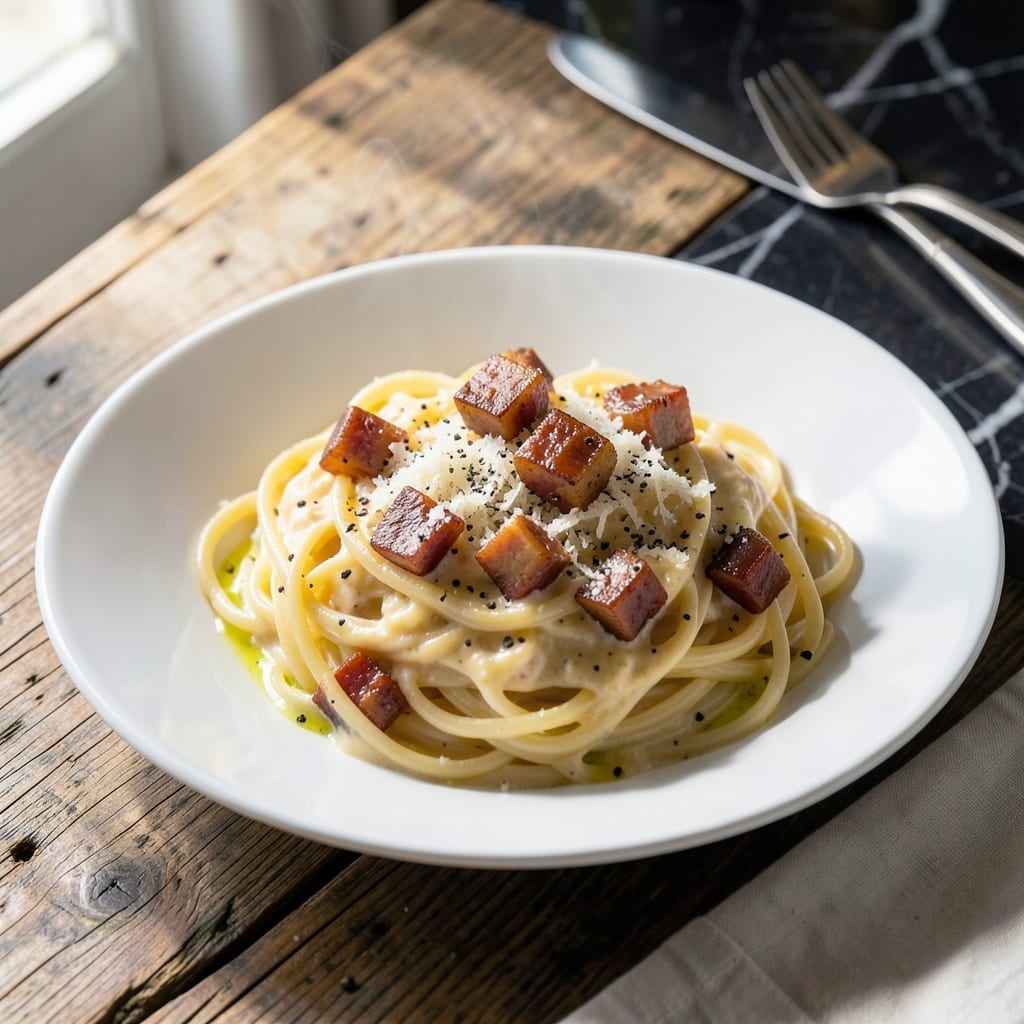
This recipe delivers authentic Italian carbonara with a crispy guanciale foundation and silky egg yolk sauce. I developed this method after years of testing to match Hell’s Kitchen standards.
The key is rendering guanciale until perfectly crispy, then tossing it with al dente pasta and a temperature-controlled egg yolk mixture. This creates the signature creamy sauce without scrambling the eggs.
What emerges is restaurant-quality carbonara with glossy, velvety sauce coating each strand of pasta. The guanciale provides salty depth while maintaining its crispy texture throughout the dish.
Serve immediately with freshly cracked black pepper and grated pecorino for the full experience.
Ingredients for Hell’s Kitchen Carbonara
Authentic Italian ingredients for restaurant-quality pasta at home with silky sauce and crispy meat.
| Ingredient | Amount | Notes |
|---|---|---|
| Guanciale 🥓 | 6 oz | Diced, rendered until crispy |
| Spaghetti 🍝 | 1 lb | Cooked al dente |
| Large Egg Yolks 🥚 | 6 whole | Room temperature, temperature-controlled |
| Pecorino Romano Cheese 🧀 | 1 ½ cups | Freshly grated, finely |
| Parmigiano-Reggiano Cheese 🧀 | ½ cup | Freshly grated, finely |
| Freshly Cracked Black Pepper 🌶️ | 2 tsp | Coarsely ground |
| Diamond Crystal Kosher Salt 🧂 | 1 tsp | For seasoning pasta water |
| Reserved Pasta Water 💧 | 1 cup | Starchy, for sauce consistency |
| Extra-Virgin Olive Oil 🫒 | 1 tbsp | For rendering guanciale |
| Garlic Clove 🧄 | 1 clove | Minced, for aromatic base |
[recipe_ingredient_scaler]
The guanciale is non-negotiable for authentic flavor. Eataly or specialty Italian markets carry it—ask for the cured cheek, not pancetta (which is fine but different). Dice it small for even rendering and maximum crispiness. Guanciale has a higher fat content than pancetta, which is key to the sauce’s emulsion. If you must substitute, pancetta is the closest, but avoid bacon—it’s too smoky for this dish.
No guanciale? Pancetta works in a pinch, though the flavor profile shifts slightly. For the cheese, Pecorino Romano is traditional—its saltiness balances the richness. Parmigiano-Reggiano can be used alone but lacks the sharpness. A blend of both (2:1 Pecorino to Parm) delivers the best results. The eggs must be room temperature to prevent scrambling when mixed with hot pasta.
Serve immediately—carbonara waits for no one. The sauce thickens as it sits, so have everything ready before cooking. Leftovers? Not ideal, but if you must, reheat gently with a splash of water. Best enjoyed fresh, with extra Pecorino and black pepper on top.
Why You’ll Love This Recipe
- I’ll be real: the flavors meld overnight, so tomorrow’s lunch tastes even more decadent. And yes, it reheats beautifully.
- One Pot Wonder: I love how this comes together in a single pan—just cook the guanciale, toss in the spaghetti, and let the egg yolks and cheeses do their magic.
- Rich and Unapologetic: That combo of Pecorino Romano and Parmigiano-Reggiano with the salty guanciale? Ridiculously good. Honestly, it’s the kind of dish that makes me close my eyes with every bite.
- Date Night Winner: It feels fancy enough for a special occasion but is totally doable on a weeknight. My partner requests this every anniversary now.
Step-by-Step Instructions for Silky Carbonara with Crispy Guanciale
Master the technique that transforms simple ingredients into a luxurious, restaurant-worthy dish.
Step 1: Render the Guanciale to Crisp Perfection
Heat a large, heavy skillet over medium-low heat and add the 1 tbsp extra-virgin olive oil. Once warm, add the 6 oz guanciale and cook slowly, stirring occasionally, for 8-10 minutes until the fat has fully rendered and the meat becomes deep golden brown and crispy.
This low-and-slow approach ensures the guanciale cooks evenly without burning, producing crispy bits and a pool of rendered fat that will flavor the entire dish. Remove the skillet from heat and set aside—keep the rendered fat, as it’s essential for building the sauce.
Add the minced garlic clove to the warm fat and let it infuse off-heat for 1-2 minutes. The residual heat will gently soften the garlic without browning it, which would make it bitter.
Step 2: Cook the Spaghetti Al Dente
Bring a large pot of water to a rolling boil and add the 1 tsp Diamond Crystal kosher salt. Add the 1 lb spaghetti and cook according to package instructions until 1 minute shy of al dente—it should still have a slight bite in the center.
Before draining, reserve exactly 1 cup of the starchy reserved pasta water. The starch in this water is crucial for emulsifying the sauce and helping it cling to the pasta. Drain the spaghetti but do not rinse it—the surface starch is your friend here.
Step 3: Prepare the Egg and Cheese Mixture
In a medium bowl, whisk together the 6 whole large egg yolks, 1.5 cups freshly grated Pecorino Romano cheese, 0.5 cup freshly grated Parmigiano-Reggiano cheese, and 2 tsp freshly cracked black pepper until smooth and well combined.
The mixture should be thick and slightly pale. This is your carbonara base, and the key to its signature silky texture. The Pecorino Romano provides a sharp, salty depth, while the Parmigiano-Reggiano adds a nutty richness. The black pepper contributes warmth and a subtle crunch.
Step 4: Combine and Emulsify the Sauce
Working quickly, add the drained spaghetti to the skillet with the guanciale and its rendered fat. Toss to coat the pasta in the fat, then remove the skillet from heat entirely. Let it cool for 1 minute to prevent scrambling the eggs.
Pour the egg and cheese mixture over the pasta, along with ½ cup of the reserved pasta water. Toss vigorously with tongs for 1-2 minutes until the sauce thickens and becomes glossy, coating every strand of spaghetti. If the sauce is too thick, add more pasta water 1 tablespoon at a time until it reaches the desired consistency.
The heat from the pasta will gently cook the eggs, creating a creamy, velvety sauce. Avoid placing the skillet back on direct heat, or you risk turning the eggs into curds.
Step 5: Serve Immediately
Divide the carbonara among four warm plates, ensuring each serving has an equal amount of crispy guanciale. Garnish with additional freshly cracked black pepper and, if desired, a sprinkle of extra Pecorino Romano.
Serve immediately—carbonara waits for no one. The sauce will continue to thicken as it cools, so the moment it’s plated is when it’s at its peak. Each bite should deliver a perfect balance of creamy, salty, peppery, and crispy elements.
Pro Tips For Making Hell’S Kitchen Carbonara
- Use room temp eggs: Pull your egg yolks out 30 minutes before cooking—cold yolks shock the pasta and turn your sauce into scrambled eggs instead of silky carbonara.
- Render guanciale low: Cook the guanciale on medium-low heat until crispy, about 8-10 minutes, so the fat renders slowly without burning the meat.
- Skip the cream: I learned this the hard way—authentic carbonara only needs yolks and cheese; cream makes it gloppy and masks the pecorino’s sharp bite.
- Toss off heat: After draining the pasta, mix everything in a warm bowl off the stove—residual heat is enough to thicken the sauce without curdling the eggs.
Wine and Beer Pairings for This Dish
Italian White Wines
For carbonara, I always reach for a crisp Frascati Superiore from Lazio. Its bright acidity and mineral notes cut through the richness beautifully. Another favorite is Vernaccia di San Gimignano, with its citrusy profile that cleanses your palate between bites. 🍷
Full-Bodied Whites
A well-chilled Chardonnay from Burgundy works surprisingly well, especially if it’s unoaked. The creamy texture mirrors the sauce while its acidity keeps things balanced. I’d avoid heavily oaked versions as they can overwhelm the dish.
Light Red Options
If you prefer red, a light Chianti Classico with its bright acidity and cherry notes can complement the guanciale. Serve it slightly chilled at about 55°F to enhance its refreshing qualities. The tannins should be soft enough not to clash with the egg sauce.
Beer Pairings
For beer lovers, a crisp Italian pilsner like Birra del Borgo ReAle offers the perfect contrast. Its clean, slightly bitter finish cuts through the richness. A Belgian witbier with its citrus notes also pairs surprisingly well. 🍺
Sparkling Choices
Don’t overlook sparkling options. A dry Prosecco from Valdobbiadene provides effervescence that refreshes your palate. The bubbles help cleanse your mouth between each rich, creamy bite of carbonara.
Serving Temperature
Nutrition Facts
Frequently Asked Questions
Why use guanciale instead of bacon?
Guanciale is cured pork cheek with a higher fat content, delivering authentic Italian flavor. Bacon’s smokiness overpowers the dish.
How do I prevent scrambled eggs in the sauce?
Remove the skillet from heat before adding the egg mixture. Toss quickly—the pasta’s residual heat cooks the eggs gently into a creamy sauce.
Can I make this without pecorino cheese?
Use Parmigiano-Reggiano alone, but the flavor will be milder. For best results, blend both cheeses in a 2:1 ratio.
What’s the secret to crispy guanciale?
Cook it low and slow over medium-low heat for 8-10 minutes. This renders the fat evenly while achieving perfect crispiness.

Trained in classic French technique but raised on slow-cooked ribs and spicy rubs, she blends culinary skill with smoke and soul.
- Recipe for Boneless Pork Chops in Cast Iron Skillet: Sear and Baste to Juicy Perfection - October 3, 2026
- Recipe for Boneless Cross Rib Roast: Slow-Roasted Beef with Herb Crust - October 3, 2026
- Hamburgers in Sauce Recipe Crock Pot: Slow-Cooked Savory Delight - October 3, 2026