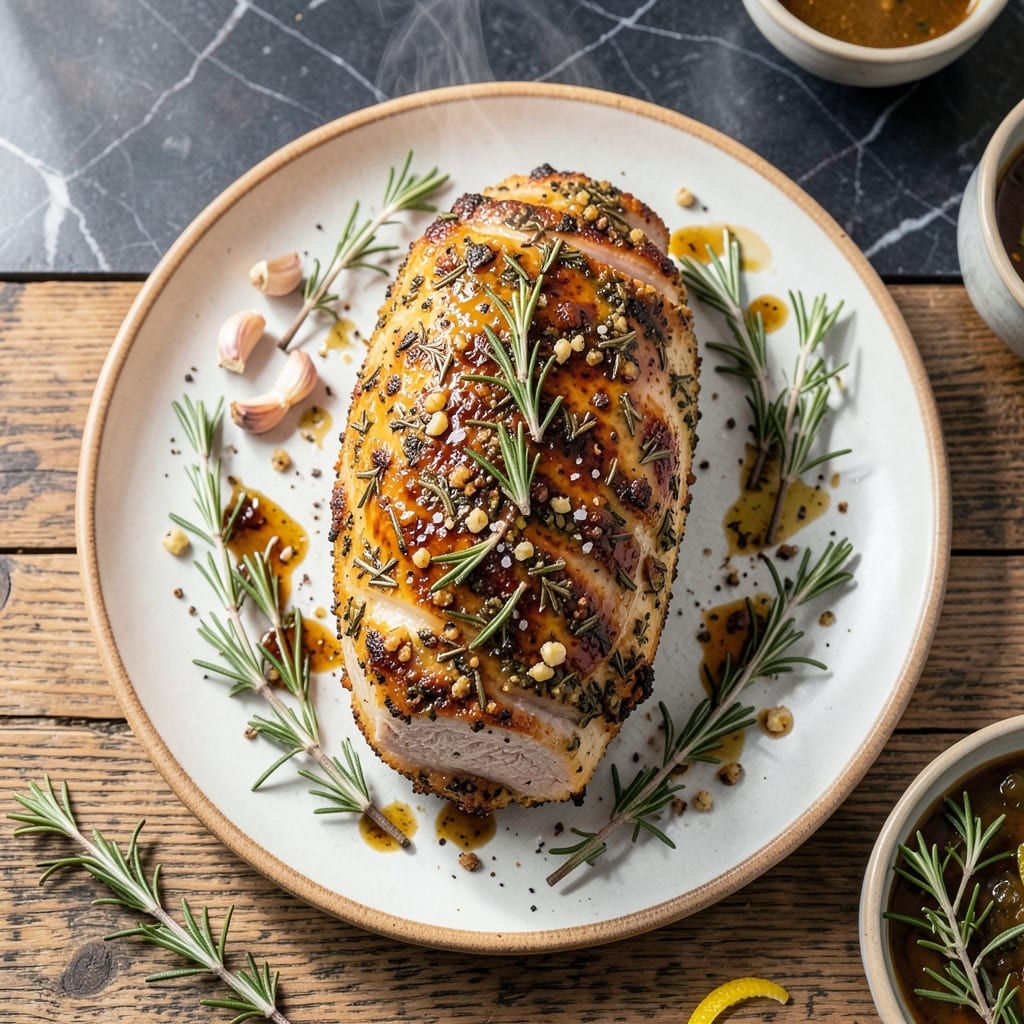
This herb-crusted pork loin delivers a savory crust and moist interior that rivals any restaurant. The secret lies in a simple herb rub and precise cooking times.
I’ve tested this method repeatedly to ensure the pork stays juicy while developing a golden, flavorful crust. The herbs create an aromatic barrier that locks in moisture during roasting.
At 375°F, the loin cooks evenly, reaching perfect doneness without drying out. A meat thermometer is your best tool for guaranteeing tender results every time.
The final dish is as impressive as it is delicious, with a fragrant crust and meat that practically melts on the fork. Serve it sliced for a centerpiece-worthy main course.
Ingredients for Herb-crusted Pork Loin
Nothing exotic here—just good stuff for a restaurant-worthy pork loin.
| Ingredient | Amount | Notes |
|---|---|---|
| Pork Loin 🥩 | 2 lb | Boneless, center-cut preferred |
| Fresh Rosemary 🌿 | 2 tbsp | Finely chopped, stems removed |
| Fresh Thyme 🍃 | 2 tbsp | Finely chopped, stems removed |
| Fresh Garlic Cloves 🧄 | 4 cloves | Minced for maximum flavor |
| Dijon Mustard 🟡 | 3 tbsp | Smooth, not whole-grain |
| Olive Oil 🫒 | 2 tbsp | Extra-virgin for richness |
| Kosher Salt 🧂 | 1 ½ tsp | Diamond Crystal preferred |
| Black Pepper 🌶️ | 1 tsp | Freshly ground for best flavor |
| Dried Oregano 🌿 | 1 tsp | Mediterranean variety preferred |
| Breadcrumbs 🍞 | ½ cup | Panko for extra crunch |
| Butter 🧈 | 2 tbsp | Unsalted, softened |
| Red Wine Vinegar 🍷 | 1 tbsp | For brightness in crust |
[recipe_ingredient_scaler]
The pork loin is the star, so look for center-cut boneless at your butcher counter—Costco or Whole Foods have great options. Aim for even thickness (about 2-3 inches) so it cooks uniformly. The herbs should be fresh (vibrant green, no wilting), and if you can only find bunches, you’ll need about 3-4 sprigs of rosemary and thyme to get those 2 tablespoons each. Don’t skip the Diamond Crystal kosher salt—it adheres better to the meat.
No fresh herbs? Dried rosemary and thyme at one-third the amount work in a pinch (so about 2 tsp each). Out of Dijon? Whole-grain mustard adds a nice texture, but yellow mustard lacks depth. For the breadcrumbs, crushed saltines or Ritz are great substitutes if you don’t have panko. The butter can be swapped for olive oil, but you’ll miss that rich, golden crust.
The herb mix can be prepped a day ahead—just store it in the fridge in a sealed container. The pork loin itself? Cook it the same day you season it. Leftovers (if there are any) keep for 3-4 days in the fridge and reheat beautifully in a low oven.
Why You’ll Love This Recipe
- One Pan Wonder: It’s just sear, coat with Dijon and herbs, then rove—no fancy techniques, no extra dishes.
- That Crust Though: The rosemary and thyme form this golden, fragrant crust that cracks with every slice.
- Sunday or Tuesday: Honestly, it feels fancy enough for company but I make it on random weeknights too.
- Lunch for Days: Leftovers taste even better cold in sandwiches, and the pork loin stretches to feed us twice.
Step-by-Step Instructions for Herb-Crusted Pork Loin
Here’s the method that guarantees a juicy interior with a crisp, fragrant herb crust.
Step 1: Prepare and Season the Pork Loin
Pat the 2 lb Pork Loin dry with paper towels—this is crucial for the crust to adhere properly. Season all over with the 1.5 tsp Kosher Salt and 1 tsp Black Pepper, pressing it into the meat so it sticks.
Let the pork sit at room temperature for 30 minutes while you prep the rest. This takes the chill off so it cooks more evenly. Real talk: cold meat in a hot pan is the fast track to dry, tough pork.
Step 2: Make the Herb Crust Mixture
In a small bowl, combine the 2 tbsp Fresh Rosemary, 2 tbsp Fresh Thyme, 1 tsp Dried Oregano, 4 cloves Fresh Garlic Cloves, 0.5 cup Breadcrumbs, 2 tbsp Butter, and 1 tbsp Red Wine Vinegar. Mix until it forms a crumbly paste—the vinegar brightens the herbs, and the butter helps it brown.
Here’s the thing—this mixture should be chunky, not smooth. The texture gives you that perfect crispy bite later. If it feels too dry, add a splash of the 2 tbsp Olive Oil to bind it.
Step 3: Sear and Coat the Pork Loin
Heat the 2 tbsp Olive Oil in a large oven-safe skillet over medium-high heat. When it shimmers, add the pork loin and sear on all sides until golden brown—about 2-3 minutes per side. Don’t rush this; a good sear locks in moisture.
Brush the seared pork all over with the 3 tbsp Dijon Mustard—this acts as a glue for the herb crust. Then press the herb mixture onto the top and sides of the pork, forming an even layer. It’ll look like a lot, but trust me, it’s perfect.
Step 4: Roast to Perfection
Transfer the skillet to a preheated 375°F oven. Roast for 30-40 minutes, or until the internal temperature reaches 145°F on an instant-read thermometer. The crust should be deep golden brown and the herbs fragrant.
If the crust starts to darken too much before the pork is done, tent loosely with foil. I always pull it out at 140°F and let it carry over to 145°F while resting—this ensures it stays moist.
Step 5: Rest and Slice
Transfer the pork to a cutting board and let it rest for 10 minutes. This is non-negotiable—it allows the juices to redistribute so they don’t all spill out when you slice it. The internal temperature will rise a few degrees during this time.
Slice the pork into ½-inch thick pieces and serve immediately. The crust should crackle slightly when cut, and the meat should be tender and juicy. If it’s not, you’ll know to check your oven temp next time.
Pro Tips For Making Herb-Crusted Pork Loin
- Sear First, Bake Later: Start with a screaming hot pan to sear the pork loin—2-3 minutes per side until golden. Then transfer to a 375°F oven to finish cooking evenly without drying out.
- Dry the Pork: Pat the pork loin completely dry with paper towels before applying the herb crust. I learned this the hard way—excess moisture prevents that crispy, flavorful crust from forming.
- Mince Garlic Fine: Fresh garlic burns easily, so mince it as finely as possible (or use a microplane) before mixing with the herbs and mustard. This ensures even flavor without bitter, charred bits.
- Rest Before Slicing: Give the pork loin a solid 10-minute rest under foil after cooking. Sounds tedious, but it keeps all those juices inside where they belong—your first slice won’t weep all over the cutting board.
Regional Styles of These Flavors
French Herb Style
In Provence, they’d add 1 tbsp herbes de Provence to the crust mix, reducing rosemary to 1 tbsp. This blend includes lavender, which adds a floral note. I also fold in 1 tsp grated lemon zest for brightness. The result is fragrant and sophisticated. 🌿
Italian Rustic
For an Italian approach, replace thyme with 2 tbsp fresh sage and add ¼ cup grated Parmesan to the breadcrumb mix. Use balsamic vinegar instead of red wine vinegar for a deeper, sweeter crust. This version pairs beautifully with polenta.
American South
In the South, they’d swap Dijon for 2 tbsp yellow mustard and add 1 tsp smoked paprika to the crust. I also like including 2 tbsp chopped pecans in the breadcrumbs for crunch. This gives the dish a BBQ-inspired twist. 🔥
German Beer Garden
German-style crust uses 2 tbsp caraway seeds and 1 tbsp whole-grain mustard. Replace the red wine vinegar with 1 tbsp dark beer for depth. Serve with sauerkraut and potato dumplings for a hearty meal.
Moroccan Spice
For North African flair, add 1 tsp ground cumin and 1 tsp coriander to the herb mix. Replace rosemary with 2 tbsp fresh cilantro. A drizzle of honey during the last 10 minutes of roasting adds caramelized sweetness.
Nutrition Facts
Frequently Asked Questions
What’s the best way to prevent the crust from burning?
Tent loosely with foil if it darkens too quickly. Roast at 375°F and check at 30 minutes. The butter in the crust can brown fast, so monitor closely.
Can I prepare the herb mixture ahead of time?
Yes, mix the herbs, breadcrumbs, and seasonings up to 1 day ahead. Store in an airtight container in the fridge. Add butter and vinegar just before using for best texture.
Why does the pork need to rest before slicing?
Resting for 10 minutes lets juices redistribute. Slicing too soon causes them to spill out, leaving the meat dry. The internal temp will rise 5°F during this time too.
Can I use dried herbs instead of fresh?
Yes, use 1/3 the amount (about 2 tsp each of rosemary and thyme). Dried herbs are more concentrated, so adjust to avoid overpowering the dish.

Trained in classic French technique but raised on slow-cooked ribs and spicy rubs, she blends culinary skill with smoke and soul.
- Recipe for Dumplings in Crock Pot: Fluffy Pillows with Minimal Effort - October 3, 2026
- Recipe For Diced Pork In Slow Cooker: Melt-In-Your-Mouth Tenderness All Day - October 3, 2026
- Recipe for Crock Pot Lasagna Using Ravioli: No-Boil Cheese Layers - October 3, 2026