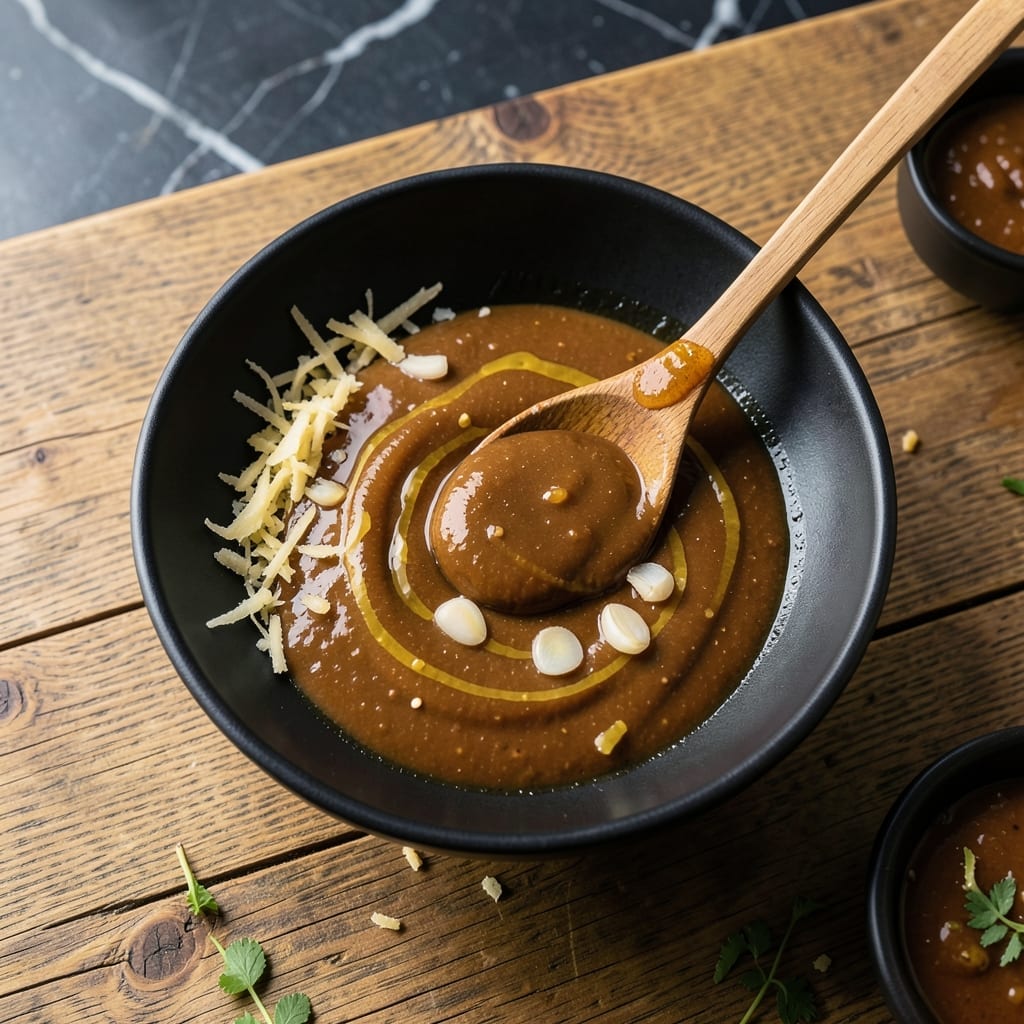
This hibachi-style dressing brings restaurant-quality flavor to your home kitchen. The ginger-garlic base delivers a bold umami punch that elevates any salad.
With just 5 minutes of mixing, you’ll have a versatile sauce that works on greens, as a marinade, or drizzled over grilled proteins. Store in the fridge for up to a week.
Ingredients for Hibachi Grill Salad Dressing
Ten ingredients blend into that signature hibachi flavor everyone loves at home.
| Ingredient | Amount | Notes |
|---|---|---|
| Soy Sauce 🥄 | ½ cup | Low-sodium preferred for balance |
| Rice Vinegar 🍚 | ¼ cup | Unseasoned for clean acidity |
| Fresh Ginger 🌿 | 2 tbsp | Finely grated for smooth texture |
| Garlic Cloves 🧄 | 4 cloves | Minced to release full flavor |
| Honey 🍯 | 2 tbsp | Balances acidity and saltiness |
| Sesame Oil 🫒 | 2 tbsp | Toasted for nutty depth |
| Vegetable Oil 🛢️ | ¼ cup | Neutral flavor base oil |
| Lemon Juice 🍋 | 2 tbsp | Freshly squeezed for brightness |
| Sesame Seeds 🌰 | 1 tbsp | Toasted for garnish and texture |
| Green Onions 🧅 | 2 whole | Thinly sliced for fresh finish |
[recipe_ingredient_scaler]
The ginger and garlic are non-negotiable here—fresh only. I grab mine from Whole Foods or the local Asian market (better selection, often cheaper). The soy sauce should be Japanese-style for authentic flavor; Kikkoman or Yamasa are reliable. For the sesame oil, Kadoya is my go-to brand. Look for pure toasted sesame oil, not the blended stuff.
No honey? Maple syrup or agave work in a pinch (start with 1 tbsp, taste, adjust). Out of rice vinegar? Apple cider vinegar at half the amount—it’s stronger. If you’re skipping the sesame seeds, add an extra teaspoon of sesame oil for that nutty hit. The vegetable oil can be any neutral oil: canola, avocado, whatever you’ve got open.
This keeps in the fridge for about 1 week in a sealed jar. The flavors actually deepen after a day. Shake before using—the ginger and garlic will settle. For longer storage, freeze in ice cube trays, then transfer to a bag. Thaw overnight in the fridge when ready to use.
Why You’ll Love This Recipe
- 5-Minute Blend: I just toss everything in a jar and shake—soy sauce, rice vinegar, ginger, garlic, honey. No blender, no fuss.
- Umami Bomb: The ginger and garlic hit first, then the honey smooths it out with that sticky-sweet finish I crave.
- Dinner to Lunch: I make a double batch on Sunday and it keeps all week for salads, marinades, even drizzled over rice.
- Pantry MVP: Between us, these are all shelf-stable staples. I save a trip to the store and still eat like I’m at the hibachi table.
Step-by-Step Instructions for Hibachi Grill Salad Dressing
This dressing comes together quickly with just a bowl and whisk—no cooking required.
Step 1: Grate and Mince the Aromatics
Finely grate the 2 tbsp Fresh Ginger using a microplane or fine grater—this releases maximum flavor and ensures a smooth texture in the finished dressing. I always use fresh ginger rather than powdered for its bright, zesty character that defines this recipe.
Next, mince the 4 cloves Garlic Cloves until they’re nearly paste-like. The finer the mince, the more evenly the garlic flavor will distribute. You’ll smell the pungent aroma immediately, which is exactly what we want for that signature hibachi punch.
Step 2: Whisk the Liquid Base
In a medium bowl, combine the 0.5 cup Soy Sauce, 0.25 cup Rice Vinegar, 2 tbsp Honey, 2 tbsp Lemon Juice, 2 tbsp Sesame Oil, and 0.25 cup Vegetable Oil. Whisk vigorously for 30 seconds until the honey fully dissolves and the mixture looks uniform.
The soy sauce provides the umami backbone, while the rice vinegar and lemon juice balance it with bright acidity. The vegetable oil mellows the sharpness, and the sesame oil adds a deep, nutty note that makes this dressing unmistakably hibachi-style.
Step 3: Incorporate Aromatics and Finish
Add the grated ginger and minced garlic to the bowl. Whisk again for another 30 seconds to fully integrate these bold flavors. You’ll notice the dressing take on a more complex, layered aroma as the ginger and garlic infuse the liquids.
Finally, stir in the 1 tbsp Sesame Seeds and thinly sliced 2 whole Green Onions. Let the dressing sit for at least 10 minutes before serving to allow the flavors to meld. The sesame seeds add a subtle crunch, while the green onions lend a fresh, oniony bite.
Step 4: Adjust and Serve
Taste and adjust the seasoning if needed. If it’s too sharp, a touch more honey can balance it. If it’s too thick, whisk in a teaspoon of water to reach your desired consistency. This dressing should coat the back of a spoon but still drizzle easily.
Drizzle over crisp lettuce, shredded cabbage, or your favorite hibachi-style salad. For best results, make it a few hours ahead—the flavors deepen beautifully with time. Store any leftovers in an airtight container in the refrigerator for up to 5 days.
Pro Tips For Making Hibachi Grill Salad Dressing
- Grate the Ginger: Use a microplane for the fresh ginger—it extracts more juice and avoids the stringy texture that ruins the dressing’s smoothness. I learned this the hard way after picking ginger fibers out of my teeth at dinner.
- Bloom the Aromatics: Lightly toast the minced garlic and ginger in a dry pan for 30 seconds before mixing. It mellows the harshness and deepens the flavor without overpowering the soy and vinegar.
- Balance the Sweetness: Add the honey slowly and taste as you go—some brands are sweeter than others. I used to dump it all in at once and ended up with a candied mess instead of a tangy dressing.
- Rest Before Serving: Let the dressing sit for at least 15 minutes after mixing. This gives the flavors time to meld, and the rice vinegar’s sharp edge softens into that signature hibachi taste.
Regional Styles of This hibachi grill salad dressing
Traditional Japanese Style
In Japan, this dressing often leans lighter with less honey and more rice vinegar for a tangier profile. They might add 1 tsp grated daikon radish for subtle peppery notes. I learned this trick from a chef in Osaka—it adds a refreshing crunch. 🗺️
American Hibachi Steakhouse
Many US restaurants sweeten it further, sometimes adding 1 tbsp brown sugar or 1 tsp onion powder for depth. The version at Benihana often includes extra sesame oil for richer nuttiness. I prefer a balance between the two styles.
Korean Fusion Twist
Add 1 tbsp gochujang for spicy-sweet heat, or 1 tsp grated pear for natural sweetness. This variation pairs beautifully with bulgogi-style salads. The pear also tenderizes any proteins you might add. 🔥
Thai-Inspired Version
Swap the rice vinegar for lime juice and add 1 stalk finely minced lemongrass and 1 tsp fish sauce. This brightens the dressing significantly, perfect for tropical greens like mango or papaya.
Vegetarian Adaptation
Replace honey with agave syrup or maple syrup to keep it plant-based. Some add 1 tsp white miso paste for extra umami depth. The miso blends seamlessly with the existing flavors.
Gluten-Free Option
Use tamari or coconut aminos instead of soy sauce. I’ve found San-J brand tamari works perfectly in a 1:1 ratio. The flavor remains nearly identical to the original.
Nutrition Facts
Frequently Asked Questions
Can I use powdered ginger instead of fresh?
Fresh ginger is ideal for bright flavor, but in a pinch use 1/2 tsp powdered ginger per 1 tbsp fresh. The flavor won’t be as vibrant, but it’ll still work.
How long can I store this dressing?
It keeps in the fridge for up to 5 days in an airtight container. The flavors actually improve after 24 hours as the ginger and garlic infuse.
What can I use instead of honey?
Maple syrup or agave work perfectly in a 1:1 ratio. For a lighter touch, start with 1 tbsp and adjust to taste.
Why does my dressing separate?
This is normal! Just whisk or shake before using. To prevent it, add the sesame oil last while whisking vigorously.

Trained in classic French technique but raised on slow-cooked ribs and spicy rubs, she blends culinary skill with smoke and soul.
- Recipe for Boneless Pork Chops in Cast Iron Skillet: Sear and Baste to Juicy Perfection - October 3, 2026
- Recipe for Boneless Cross Rib Roast: Slow-Roasted Beef with Herb Crust - October 3, 2026
- Hamburgers in Sauce Recipe Crock Pot: Slow-Cooked Savory Delight - October 3, 2026