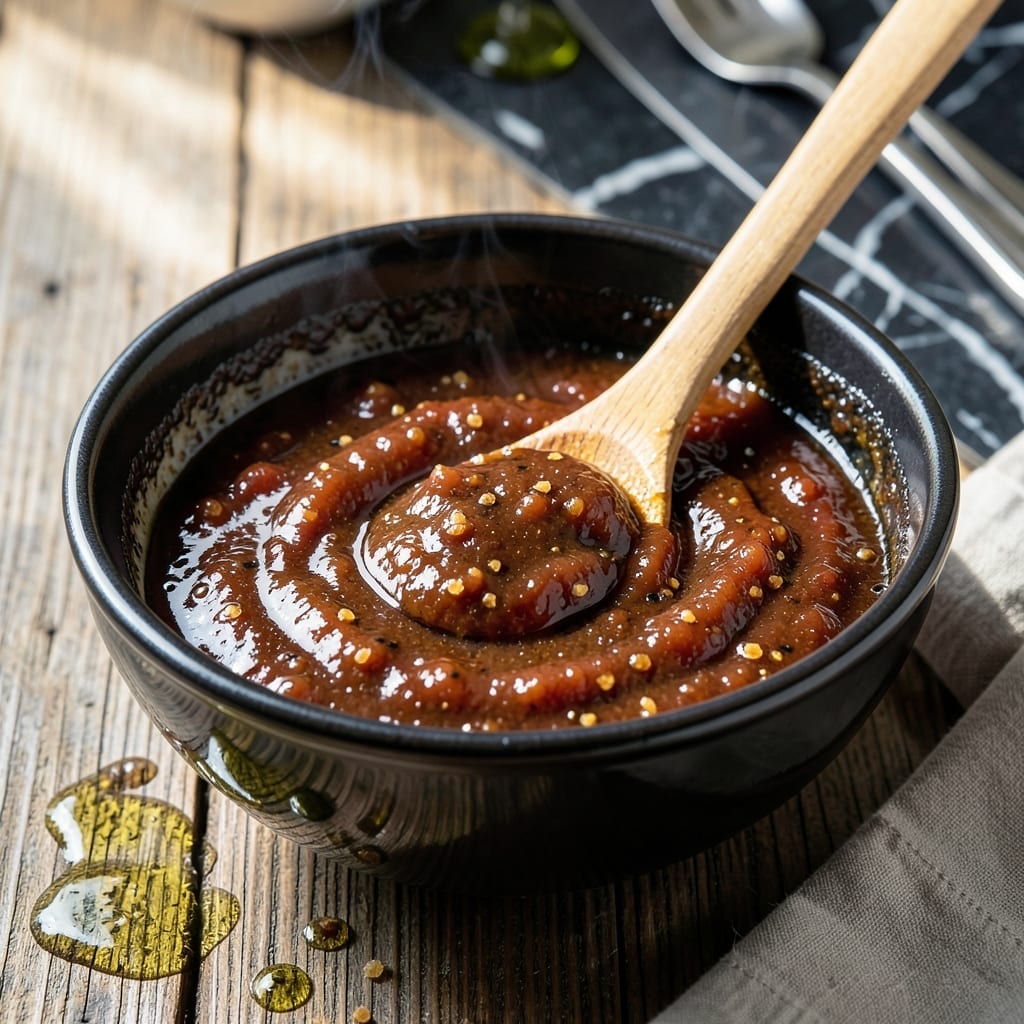
Getting my first whiff of hickory smoke at a family cookout inspired this sauce. It delivers smoky depth with a sweet molasses finish.
This versatile sauce works on ribs, chicken, or as a marinade. The balance of tang, sweetness, and hickory makes it a pitmaster’s staple.
Ingredients for Hickory Barbecue Sauce
Nine ingredients for that authentic pitmaster flavor. Sweet, smoky, and tangy in every drop.
| Ingredient | Amount | Notes |
|---|---|---|
| Ketchup 🍅 | 2 cups | High-quality for best flavor base |
| Apple Cider Vinegar 💧 | ½ cup | Provides essential tangy balance |
| Molasses 🍯 | ½ cup | Dark robust variety preferred |
| Hickory Liquid Smoke 🔥 | 2 tsp | Adjust to taste for smokiness |
| Worcestershire Sauce 🫒 | 2 tbsp | Adds umami depth to sauce |
| Brown Sugar 🧂 | ½ cup | Light or dark works equally |
| Dijon Mustard 🟡 | 2 tbsp | Smooth variety for consistent texture |
| Garlic Powder 🧄 | 1 tsp | Fresh minced works too |
| Onion Powder 🧅 | 1 tsp | Complements garlic perfectly |
| Smoked Paprika 🌶️ | 1 tsp | Enhances hickory smoke flavor |
[recipe_ingredient_scaler]
The molasses and hickory liquid smoke are non-negotiable for that signature depth. Bricker’s or Wright’s liquid smoke brands are pitmaster favorites. Molasses can be found in the baking aisle—look for unsulphured for cleaner flavor. Ketchup quality matters more than you think; Heinz or Hunts give consistent results. Don’t cheap out on the vinegar either—apple cider has the right fruitiness.
No molasses? Honey or maple syrup can sub in a pinch (though flavor changes slightly). Out of hickory smoke? Mesquite or pecan liquid smoke works too. Need more heat? Add cayenne or chipotle powder. The Worcestershire can be swapped for soy sauce if needed, though the umami profile shifts. Brown sugar substitute? Coconut sugar adds nice depth.
Sauce keeps for 2 weeks in the fridge in a sealed jar. For longer storage, freeze in ice cube trays—perfect single-serving portions. Always stir before using as ingredients settle. Flavor deepens after 24 hours as everything melds together.
Why You’ll Love This Recipe
- Five Minute Mix: I dump everything in one pot—ketchup, molasses, the hickory smoke—and it’s ready before the grill heats up.
- Smoky Sweet Balance: The molasses and hickory liquid smoke hit that perfect sweet-smoky note without overpowering.
- Slathers on Everything: I’ve used it on ribs, chicken, even as a dipping sauce for fries. Honestly, it’s my secret for turning leftovers into a second meal.
- Pantry Staples Only: No special trips to the store—just grab what’s already in the cabinet and you’re set. I’ll be real: it saves me cash every time.
Step-by-Step Instructions for Hickory Barbecue Sauce
Here’s the method that guarantees rich, smoky-sweet sauce with perfect consistency every time.
Step 1: Combine Liquid Base Ingredients
In a medium saucepan over medium heat, whisk together the 2 cups Ketchup, 0.5 cup Apple Cider Vinegar, and 0.5 cup Molasses. This trio forms the foundation of your sauce, with the molasses adding that deep, robust sweetness that balances the vinegar’s tang.
Stir frequently as the mixture comes to a gentle simmer. You’ll notice the color deepen slightly as the ingredients meld together. This step takes about 3-4 minutes—just enough time for the flavors to start harmonizing without reducing too much.
Step 2: Build Flavor Layers
Add the 2 tsp Hickory Liquid Smoke, 2 tbsp Worcestershire Sauce, and 0.5 cup Brown Sugar to the saucepan. The liquid smoke delivers that signature hickory aroma, while the Worcestershire adds umami complexity that makes the sauce irresistibly savory.
The brown sugar will dissolve quickly, but keep stirring until you can’t see any grains. At this point, the sauce should have a glossy sheen and a rich, reddish-brown hue. Let it simmer for another 2-3 minutes to allow these new additions to fully incorporate.
Step 3: Incorporate Thickening and Spice Elements
Whisk in the 2 tbsp Dijon Mustard, 1 tsp Garlic Powder, 1 tsp Onion Powder, and 1 tsp Smoked Paprika. The mustard acts as a natural thickener while adding a subtle sharpness, and the smoked paprika enhances the hickory flavor with earthy warmth.
The spices will bloom in the warm liquid, releasing their aromas. I always let this simmer for 5 minutes at low heat—this is where the magic happens. The sauce will thicken slightly and develop a more cohesive flavor profile.
Step 4: Simmer to Perfection
Reduce the heat to low and let the sauce simmer uncovered for 15-20 minutes. Stir occasionally to prevent sticking, especially as it thickens. You’re aiming for a consistency that coats the back of a spoon but still drizzles easily.
Taste and adjust as needed. If you want more smokiness, add another ½ tsp Hickory Liquid Smoke. For extra sweetness, a pinch more brown sugar works. The sauce should have a balanced sweet-tangy-smoky profile that makes your taste buds dance.
Step 5: Cool and Store
Remove the saucepan from heat and let the barbecue sauce cool to room temperature. It will thicken further as it cools—this is normal. Once cool, transfer it to an airtight container or jar.
The sauce can be used immediately or stored in the refrigerator for up to 2 weeks. For the best flavor development, I recommend letting it sit overnight. This gives all those complex flavors time to meld together into the perfect hickory barbecue sauce.
Pro Tips For Making Hickory Barbecue Sauce
- Simmer Low and Slow: Cook the sauce on medium-low heat for 15-20 minutes—any higher and the vinegar will overpower the molasses and hickory smoke.
- Measure the Liquid Smoke: Hickory liquid smoke is potent; start with ½ teaspoon, taste, then add more if needed—I learned this the hard way after ruining a batch with too much.
- Balance the Sweetness: If the molasses makes it too sweet, add an extra splash of apple cider vinegar to cut through it. Sounds weird, but it works.
- Rest Before Using: Let the sauce sit for at least 30 minutes after cooking so the flavors meld—your ribs or chicken will taste noticeably better.
Dietary Considerations for This hickory barbecue sauce
Gluten-Free Friendly
This sauce is naturally gluten-free since none of the core ingredients contain gluten. I always double-check my Worcestershire sauce though—some brands like Lea & Perrins are gluten-free, but others may contain barley malt. The Dijon mustard should also be verified, as some varieties use wheat as a thickener.
Vegan Adaptation
All ingredients in this recipe are plant-based, making it naturally vegan-friendly. The molasses and brown sugar provide sweetness without any animal products. I’ve used this sauce at vegan BBQ competitions with great success.
Reducing Sugar
For a lower-sugar version, cut the brown sugar in half and replace molasses with sugar-free maple syrup. The tang from apple cider vinegar will still balance the flavors, though the depth may be slightly lighter. Taste and adjust as you go.
Sodium Considerations
To reduce sodium, opt for low-sodium ketchup and low-sodium Worcestershire sauce. I also reduce the Worcestershire by 1 tbsp and boost umami with 1 tsp mushroom powder instead. The hickory smoke keeps the flavor bold.
Allergen Notes
The main allergens to watch are in Worcestershire sauce (fish/anchovies) and Dijon mustard (mustard seeds). For fish-free versions, use Annie’s Vegan Worcestershire. For mustard allergies, substitute with yellow mustard seeds or omit entirely.
Low-Carb Option
Replace brown sugar with 1/4 cup monk fruit sweetener and use sugar-free ketchup. The molasses can be swapped for sugar-free pancake syrup with a touch of blackstrap for depth. The carbs drop significantly while keeping that smoky-sweet balance. 💪
Nutrition Facts
Frequently Asked Questions
Can I use regular molasses or does it need to be unsulphured?
Use unsulphured molasses for cleaner flavor. Regular works in a pinch but may add bitterness. The unsulphured version lets the hickory and spices shine.
How long should I simmer the sauce for best flavor?
Simmer for 15-20 minutes on low heat. This allows flavors to meld and the sauce to thicken properly. Stir occasionally to prevent sticking.
What if my sauce turns out too thin?
Simmer uncovered for 5-10 extra minutes to reduce. Alternatively, mix 1 tsp cornstarch with water and stir in. The sauce will thicken as it cools too.
Can I use this sauce as a marinade?
Yes, but limit marinating to 2-4 hours. The vinegar and acidity can start to “cook” the meat if left too long. Perfect for chicken or pork.

Trained in classic French technique but raised on slow-cooked ribs and spicy rubs, she blends culinary skill with smoke and soul.
- Recipe for Boneless Pork Chops in Cast Iron Skillet: Sear and Baste to Juicy Perfection - October 3, 2026
- Recipe for Boneless Cross Rib Roast: Slow-Roasted Beef with Herb Crust - October 3, 2026
- Hamburgers in Sauce Recipe Crock Pot: Slow-Cooked Savory Delight - October 3, 2026