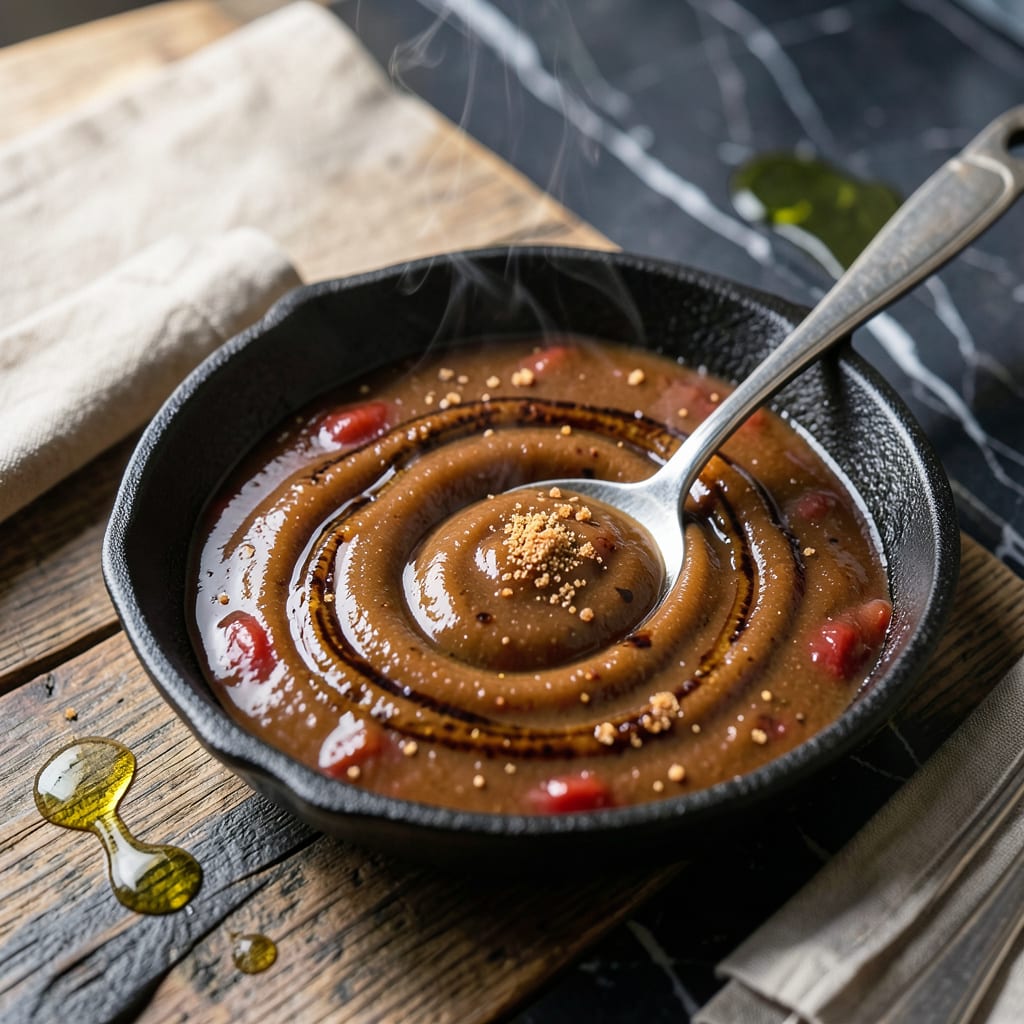
There’s nothing like the deep, smoky aroma of hickory in a BBQ sauce to elevate grilled meats. I developed this recipe to capture that classic backyard flavor with a touch of sweetness from brown sugar.
This sauce delivers a perfect balance of sweet and smoky, with just enough tang to cut through rich meats. It’s thick enough to cling to ribs or chicken while maintaining a smooth, pourable consistency for easy application.
Ingredients for Hickory Brown Sugar Bbq Sauce
Nine simple ingredients blend into a rich, smoky sauce perfect for any barbecue.
| Ingredient | Amount | Notes |
|---|---|---|
| Ketchup 🍅 | 2 cups | High-quality for base flavor |
| Brown Sugar 🍚 | ¾ cup | Light or dark variety |
| Apple Cider Vinegar 🍎 | ¼ cup | For tangy acidity |
| Molasses 🍯 | 2 tbsp | Adds depth and richness |
| Hickory Liquid Smoke 🔥 | 1 tsp | For authentic smoky flavor |
| Worcestershire Sauce 🍶 | 2 tbsp | Vegan variety required |
| Dijon Mustard 🟡 | 1 tbsp | Smooth, not whole grain |
| Garlic Powder 🧄 | 1 tsp | Not garlic salt |
| Onion Powder 🧅 | 1 tsp | Fine powder texture |
| Smoked Paprika 🌶️ | 1 tsp | For extra smokiness |
[recipe_ingredient_scaler]
The hickory liquid smoke is non-negotiable here—Colgin or Wright’s are the most reliable brands. Brown sugar adds that caramelized depth, so don’t substitute white. Organic molasses gives a cleaner flavor than the blackstrap variety. Most grocery stores carry all of these in the baking or condiment aisle. Look for vegan Worcestershire labeled as such—Annie’s makes a good one.
No molasses? Honey or maple syrup works in a pinch (but skip the honey for strict vegan). Out of liquid smoke? Chipotle powder at half the amount adds smoke without heat. Apple cider vinegar can be swapped for white vinegar, but the flavor will be sharper. For a spicier kick, add cayenne or hot sauce to taste. Ketchup quality matters—Heinz or Hunt’s give the best base.
This keeps for 2 weeks in the fridge in a sealed jar. For longer storage, freeze in ice cube trays then transfer to bags—thaw only what you need. The flavors meld and deepen after 24 hours, so make it ahead if possible.
Why You’ll Love This Recipe
- Five Minute Mix: I just dump everything in a pot and stir—no chopping, no fuss, just hickory liquid smoke and molasses doing the work.
- Sweet & Smoky: The brown sugar caramelizes with the vinegar, while the hickory smoke adds that deep, campfire-like kick.
- Slathers On Anything: I’ve used it on ribs, chicken, even as a burger glaze—honestly, it’s my go-to for anything needing a sticky, tangy finish.
- Makes Extra: One batch fills a jar, so I always have leftovers for next week’s meal prep.
Step-by-Step Instructions for Hickory Brown Sugar BBQ Sauce
This method ensures a perfectly balanced sauce with deep smoky notes and just the right sweetness.
Step 1: Combine the Wet Base Ingredients
In a medium saucepan, whisk together the 2 cups Ketchup, 0.75 cup Brown Sugar, 0.25 cup Apple Cider Vinegar, and 2 tbsp Molasses until the brown sugar begins to dissolve. I use a flat whisk for this—it helps break up any clumps in the molasses more effectively.
Place the saucepan over medium heat and stir occasionally as the mixture warms. You’ll notice the sugar fully dissolving after about 2-3 minutes. This initial heating step prevents sugar crystals from settling at the bottom and potentially burning later.
Step 2: Incorporate the Flavor Enhancers
Once the base mixture is smooth and slightly bubbly at the edges, stir in the 1 tsp Hickory Liquid Smoke, 2 tbsp Worcestershire Sauce, and 1 tbsp Dijon Mustard. The hickory liquid smoke is potent, so measure it carefully—too much can overpower the sauce.
As you add these ingredients, you’ll immediately smell the complexity developing. The Worcestershire sauce adds umami depth, while the Dijon mustard provides a subtle sharpness that balances the sweetness. Continue cooking at medium heat for another 2 minutes to meld the flavors.
Step 3: Add the Spice Blend and Simmer
Sprinkle in the 1 tsp Garlic Powder, 1 tsp Onion Powder, and 1 tsp Smoked Paprika, whisking constantly to distribute the spices evenly. These dry ingredients can clump if added too quickly, so take your time.
Reduce the heat to low and let the sauce simmer gently for 15-20 minutes. You want to see small, lazy bubbles breaking the surface occasionally. Stir every 3-4 minutes to prevent sticking, especially as the sauce begins to thicken. The mixture will darken slightly and develop a glossy sheen when it’s ready.
Step 4: Adjust Consistency and Cool
After simmering, remove the sauce from heat and let it cool for 5 minutes. The sauce will thicken further as it cools. If it seems too thick for your preference, whisk in 1-2 tablespoons of warm water to reach your desired consistency.
Taste and adjust seasoning if needed, though the measured ingredients should provide perfect balance. The final sauce should coat the back of a spoon with a slight ribbon effect. Transfer to an airtight container once completely cooled.
Pro Tips For Making Hickory Brown Sugar Bbq Sauce
- Simmer Low and Slow: Keep the heat at a gentle simmer—any higher and the brown sugar will burn before the flavors meld. I learned this the hard way after ruining a batch by rushing it on high.
- Bloom the Sugar: Dissolve the brown sugar in the vinegar and molasses first over medium heat—this prevents grainy texture and ensures a smooth, glossy sauce.
- Measure Liquid Smoke: Hickory liquid smoke is potent; start with ½ teaspoon, taste, then add more. After overdoing it once, I now know a little goes a long way.
- Rest Before Using: Let the sauce sit for at least 30 minutes off the heat before using—this lets the hickory and spice flavors deepen. I skip this when I’m lazy, but the sauce tastes noticeably better when I don’t.
Common Mistakes When Making Great hickory brown sugar bbq sauce
Overpowering Smoke Flavor
Hickory liquid smoke is potent—more than 1 tsp can make your sauce taste like a campfire. I learned this the hard way at a local BBQ competition when my first batch was nearly inedible. Measure carefully and taste as you go. 🔥
Burning the Sugar
Brown sugar burns easily if the heat’s too high. Keep your sauce at a gentle simmer, not a rolling boil. I use medium-low heat and stir every 3-4 minutes to prevent hot spots from forming at the bottom of the pan.
Lumpy Spice Distribution
Dry spices like smoked paprika can clump. Whisk them in slowly while the sauce is warm. I find that adding them to the liquid base first (before heating) helps distribute them evenly without any grainy texture.
Sauce Too Thin or Thick
If your sauce is too thin after simmering, cook it longer on low heat. Too thick? Whisk in 1-2 tbsp warm water. The consistency should coat the back of a spoon but still pour easily from a jar.
Skipping the Cooling Step
Letting the sauce cool for at least 5 minutes after cooking is crucial. It thickens significantly as it cools, and the flavors meld together. I once served it hot and it was disappointingly runny—lesson learned.
Using Low-Quality Ketchup
Cheap ketchup has a thin, watery texture that affects the final product. Stick with Heinz or Hunt’s for the best base flavor. The difference in your finished sauce will be noticeable, especially in the depth of tomato flavor.
Nutrition Facts

Trained in classic French technique but raised on slow-cooked ribs and spicy rubs, she blends culinary skill with smoke and soul.
- Recipe for Boneless Pork Chops in Cast Iron Skillet: Sear and Baste to Juicy Perfection - October 3, 2026
- Recipe for Boneless Cross Rib Roast: Slow-Roasted Beef with Herb Crust - October 3, 2026
- Hamburgers in Sauce Recipe Crock Pot: Slow-Cooked Savory Delight - October 3, 2026