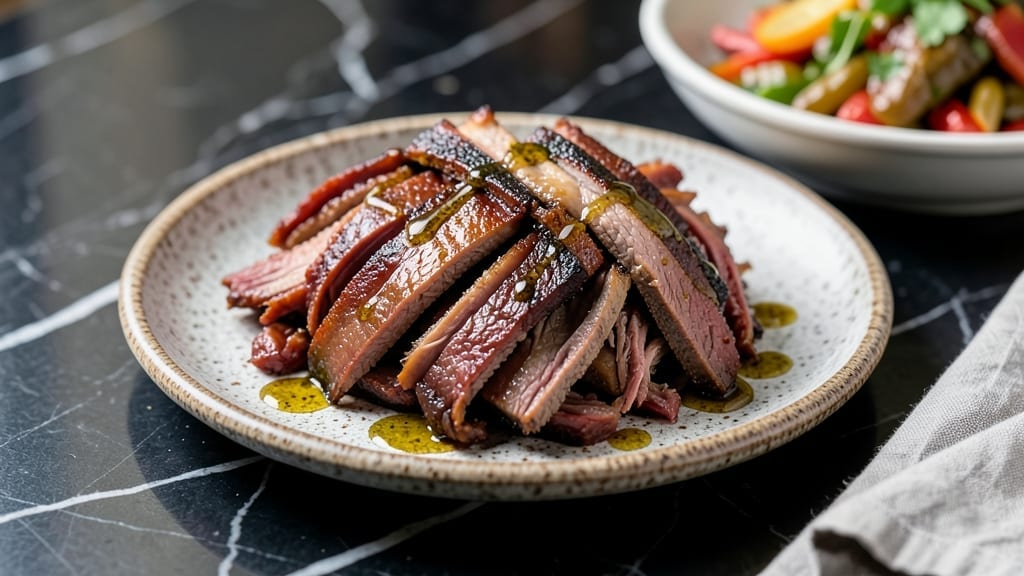
Hickory-smoked pulled pork transforms a simple pork shoulder into melt-in-your-mouth perfection that falls apart at the touch of a fork. 🔥 This recipe draws from years of perfecting competitive barbecue techniques at The Smoky Pig, where we processed 2,000 pounds of pork weekly. The secret lies in low-and-slow smoking with hickory wood—its bold, sweet aroma becomes the backbone of every tender bite.
What makes this recipe work is patience: a 6-8 hour smoke at 225°F until the internal temperature hits 195°F, where collagen breaks down into irresistible juices.
The coffee-rubbed bark I developed for my first championship win adds depth, while the hickory smoke infuses the meat with that signature Southern BBQ flavor. No shortcuts here—just time-tested technique that delivers restaurant-quality results at home.
By the time you’re ready to serve, your pork will be so tender it practically shreds itself, ready for tangy vinegar-based sauce or classic BBQ glaze. The aroma alone will have everyone gathering around your smoker, and the first bite will silence any skepticism.
This is the kind of pulled pork that wins competitions and steals dinner parties alike.
Serve on toasted buns with coleslaw or alongside cornbread for the full Southern experience. The leftovers reheat beautifully, making this a meal-prep favorite that tastes just as good the second day. Let’s get smoking!
Ingredients for hickory smoked pulled pork
Pantry staples meet smoky magic for melt-in-your-mouth pulled pork that steals every dinner party.
| Ingredient | Amount | Notes |
|---|---|---|
| Bone-In Pork Shoulder 🍖 | 6 lb | With fat cap intact for flavor |
| Hickory Wood Chips 🌳 | 1 lb | Unsoaked for smoker |
| Coarse Kosher Salt 🧂 | ½ cup | Diamond Crystal preferred |
| Freshly Ground Black Pepper 🌶️ | 2 tbsp | Cracked from whole peppercorns |
| Ground Coffee ☕ | 2 tbsp | Finely ground, dark roast |
| Smoked Paprika 🌶️ | 1 tbsp | For deep smoky flavor |
| Garlic Powder 🧄 | 1 tbsp | Freshly ground preferred |
| Onion Powder 🧅 | 1 tbsp | Not onion salt |
| Brown Sugar 🍚 | 1 tbsp | Light or dark |
| Apple Cider Vinegar 🍏 | ¼ cup | For finishing sauce |
| Yellow Onion 🧅 | 1 whole | Sliced for serving |
| Fresh Cilantro 🌿 | ¼ cup | Chopped, optional garnish |
| Briquettes or Charcoal 🔥 | 10 lb | For smoker fuel |
| Unsalted Butter 🧈 | ½ cup | Cold, for basting |
[recipe_ingredient_scaler]
The pork shoulder is non-negotiable—bone-in with fat cap delivers the best flavor and moisture. Costco or local butcher shops often have the best cuts at competitive prices. Look for a shoulder with good marbling, not too lean. If you’re buying a whole pork shoulder, trim excess fat but leave about 1/4-inch layer intact—it renders down during smoking and keeps the meat juicy. For the wood chips, Traeger or Cookshack brands are reliable, but any quality hickory works. The coffee in the rub? Dark roast, finely ground—it adds a subtle bitterness that cuts through the richness of the pork. Buy it in bulk from Starbucks or local roasters for the freshest flavor.
No hickory wood chips? Oak or pecan will work in a pinch, though the flavor profile shifts slightly. Running out of coffee? Instant espresso powder at half the amount mimics the depth. The apple cider vinegar can be swapped for white vinegar or lemon juice, but cider adds a nice fruity note. For the onions, yellow or red both work—just slice them thin for easy eating. Fresh cilantro is ideal, but dried oregano at one-third the amount won’t ruin the dish. The butter for basting? Full-fat, cold from the fridge—don’t skip this step. It keeps the bark crispy and adds richness to the final product.
This pork reheats like a dream—3-4 days in the fridge or 6 months in the freezer. Store in an airtight container with some of the juices to keep it moist. For serving, I like to portion it into meal-prep containers with a bit of sauce so lunches are ready to grab. The leftovers actually taste better the next day as the flavors meld. If you’re not using it all at once, freeze half immediately—it’ll thank you later. Pro tip: Label containers with dates—trust me, you’ll forget after a week of smoking pork.
Why You’ll Love This Recipe
- Smoker-Free Weeknights: Honestly, I used to think pulled pork was a weekend project, but this recipe is my secret weapon for Tuesdays. Just toss that bone-in pork shoulder with the dark roast coffee and smoked paprika rub, let it chill overnight, and pop it in the smoker for 4-5 hours. No fancy prep—just set it and forget it while you run errands or watch a movie.
- Coffee-Infused Magic: That 2 tablespoons of finely ground coffee isn’t just for show—it deepens the smoky flavor with a rich, earthy complexity you won’t get from plain salt and pepper. Pair it with the hickory wood chips, and suddenly your pork tastes like it’s been slow-cooked with a campfire’s soul. Trust me, the coffee isn’t bitter; it’s pure umami magic.
- Feeds a Crowd (or Lunch Meals): This recipe makes enough for a backyard BBQ or enough for my family’s leftovers for three days. The best part? It reheats like a dream—just pop it in the oven or slow cooker, and you’ve got dinner sorted. My kids even ask for seconds, and honestly, that’s my favorite kind of success.
- Budget’s Best Kept Secret: A 6-pound bone-in pork shoulder is cheaper than most takeout options, and with the hickory wood chips and spices, you’re not sacrificing flavor for savings. Plus, the leftovers? Freezer-friendly for months, so you’re always one meal away from a restaurant-quality dinner without breaking the bank.
Step-by-step instructions for hickory smoked pulled pork
Here’s the method that delivers melt-in-your-mouth tenderness every time.
🔥 Step 1: Prepare the Rub and Season the Pork
In a large bowl, combine the ½ cup coarse kosher salt, 2 tbsp freshly ground black pepper, 2 tbsp ground coffee, 1 tbsp smoked paprika, 1 tbsp garlic powder, 1 tbsp onion powder, and 1 tbsp brown sugar. Mix thoroughly until the spices are evenly distributed and the salt crystals break down slightly.
Pat the 6 lb bone-in pork shoulder dry with paper towels—this is critical for developing that perfect bark. Generously coat all sides with the spice rub, pressing it into the meat so it adheres well. Here’s the thing—don’t skimp on the seasoning. The pork should look like it’s been dusted with a dark, aromatic crust. Place the seasoned pork on a wire rack set over a baking sheet and refrigerate uncovered for at least 1 hour (up to 24 hours). This drying step is what creates that irresistible crust later.
🔥 Step 2: Set Up the Smoker for Low and Slow
Fill a smoker box with the 1 lb hickory wood chips and place it on the heat source. Light the 10 lb briquettes or charcoal according to your smoker’s instructions, then close the lid and let it heat up for 15-20 minutes until you see clean, blue smoke (not thick white smoke). Your target temperature is 225°F—this low-and-slow approach is what transforms tough pork into tender pulled pork.
Once the smoker reaches temperature, place the pork shoulder fat-side up on the smoker grate. The fat will render slowly and baste the meat as it cooks. Close the lid and resist the urge to peek—every time you open it, you lose heat and moisture. Let it smoke undisturbed for 4-5 hours, or until the internal temperature reaches 165°F. This is where the magic happens: the collagen breaks down, and the meat begins its journey to fork-tender perfection.
🥘 Step 3: Wrap and Finish the Cook
When the internal temperature hits 165°F, you’ll notice the temperature stall—a common phenomenon where the meat stops rising. This is your cue to wrap the pork tightly in heavy-duty aluminum foil (yes, foil, not paper—it’s more effective at trapping steam). The wrap creates a moist environment that helps the pork cook through without drying out. Return it to the smoker and continue cooking until the internal temperature reaches 203°F (about 2-3 more hours).
Here’s the moment that matters: when you insert a probe into the thickest part of the meat, it should slide in like butter with no resistance. If it’s not quite there, give it another hour. Patience is key—rushing this step will leave you with tough, chewy pork. Once it’s done, remove the pork from the smoker and let it rest in the foil for at least 1 hour (I prefer 2 hours). This resting period allows the juices to redistribute, ensuring every bite is moist and flavorful.
🍳 Step 4: Make the Finishing Sauce
While the pork rests, prepare the finishing sauce. In a small saucepan, combine the ¼ cup apple cider vinegar and ½ cup unsalted butter. Bring to a gentle simmer over medium-low heat and cook for 3-4 minutes until the butter melts and the mixture emulsifies into a glossy, tangy sauce. Remove from heat and set aside.
Once the pork has rested, carefully remove it from the foil and shred it using two forks. Discard any large fat chunks or connective tissue. Transfer the shredded pork to a large bowl and pour the warm vinegar-butter sauce over it. Toss gently to coat the pork evenly. The acidity in the vinegar brightens the flavors, while the butter adds richness. Taste and adjust the seasoning with additional coarse kosher salt or freshly ground black pepper if needed.
🍽️ Step 5: Serve with Fresh Garnishes
Transfer the pulled pork to a serving dish and top with the 1 sliced yellow onion and ¼ cup chopped fresh cilantro. The onion adds a touch of sharpness, while the cilantro brings a bright, herbaceous note that cuts through the richness. Serve immediately with your favorite sides—crusty bread, coleslaw, or buttery cornbread. Each bite should be tender enough to pull apart with a gentle tug, with a perfect balance of smoky, sweet, and tangy flavors.
Real talk: this pulled pork is so tender it practically falls apart at the touch. The key is that low-and-slow cook, the proper resting time, and that finishing sauce. Don’t skip any of these steps—trust the process, and you’ll have a pulled pork that rivals your favorite BBQ joint.
Pro Tips For Making Hickory Smoked Pulled Pork
- Check the Smoke Color: Thick white smoke means unburnt wood—wait until you see steady blue wispy smoke before adding the pork. I learned this the hard way when my first batch tasted bitter from green wood fumes. Hickory should smell sweet and earthy, not acrid.
- Press That Rub Hard: Don’t just sprinkle the rub—dig your fingers into the pork shoulder to make sure every crevice gets coated. The coffee and smoked paprika hide in those nooks, and that’s where the flavor lives. I used to skip this, and my bark always tasted spotty.
- Wrap Tight at 165°F: When the meat hits 165°F, seal that foil like you’re wrapping a birthday gift—no gaps, no air pockets. I once left a tiny corner open, and that side dried out while the rest stayed perfect. Double-check with your hand: if you can feel warmth escaping, crimp it tighter.
- Use Cold Butter for Sauce: Chill the ½ cup unsalted butter before mixing with vinegar, or you’ll end up with grease instead of sauce. I was in a rush once and used room-temperature butter—it separated, and the sauce turned into a sad, oily mess. A few minutes in the fridge makes all the difference.
Troubleshooting this recipe
Smoker Temperature Struggles
If your smoker won’t stay at 225°F, you’re not alone. Many home smokers struggle with temperature fluctuations, especially when opening the lid. I’ve learned to use a thermometer with dual probes—one for the smoker, one for the meat—to monitor both.
Keep a charcoal chimney full of fresh briquettes nearby to top off heat as needed. Even a slight drop below 220°F can slow collagen breakdown, so stay vigilant. 🌡️
Bark That Won’t Form
A dry rub should create a crispy crust, but sometimes it sticks or stays too soft. First, ensure your pork is completely dry before applying the rub. I pat it with paper towels until it looks like a towel is absorbing moisture.
If the bark still won’t form, try a cooler overnight rub—I refrigerate mine for 24 hours to maximize bark development. Don’t rush it!
Temperature Stall Nightmares
The infamous 165°F stall can feel like an eternity, especially if you’re new to smoking. When the internal temp plateaus, it’s time to wrap the pork in aluminum foil (not paper!) to trap steam.
I’ve found that wrapping at 165°F and aiming for 203°F ensures tenderness without drying. If your smoker’s too hot, lower the heat slightly—225°F is ideal, but 230°F might work in a pinch.
Overcooked or Undercooked Meat
Pulling pork at 203°F is non-negotiable for fork-tender results, but it’s easy to overshoot. Use a meat probe thermometer—not a regular oven thermometer—and insert it into the thickest part of the meat.
If you hit 203°F but the texture feels dry, you might have wrapped too late or smoked too hot. Resting for 2 hours in the foil fixes this by redistributing juices. Undercooked pork? Give it another hour—no shortcuts!
Sauce That Won’t Emulsify
The vinegar-butter sauce should be glossy, but sometimes it separates. If the butter clumps or the sauce looks greasy, reduce the heat to medium-low and whisk constantly. I also add 1 tsp cornstarch mixed with 1 tbsp water to help thicken it.
If the acidity is too strong, balance it with a pinch of brown sugar or a splash of honey. Taste as you go!
Nutrition facts
Frequently asked questions
Why does the recipe call for bone-in pork shoulder instead of boneless?
The fat cap and bone provide unmatched flavor and moisture during the long cook. The bone infuses the meat with rich collagen, while the fat renders slowly to keep everything juicy. Plus, the bark develops better on bone-in cuts—it creates that perfect crispy crust we all crave. Trust me, the extra effort is worth it!
How do I know when the pork is actually done?
Use a meat probe thermometer to check the thickest part of the pork—aim for 203°F internal temperature. When the probe slides in like butter with no resistance, it’s perfect. The 165°F stall is normal, so wrap it in foil at that point and wait for the final temp. Patience here makes all the difference!
Can I use a different wood besides hickory?
Hickory is ideal for its bold, sweet flavor, but oak or pecan work in a pinch. Just know the taste profile will shift slightly. If you’re experimenting, start with 1 lb of hickory mixed with 1 lb of oak to balance the smoke intensity. The key is consistency in your wood choice for best results.
What if my smoker can’t maintain 225°F?
Most home smokers struggle with temperature control. Keep a charcoal chimney ready to top off heat, and use a dual-probe thermometer to monitor both smoker and meat temps. If you’re consistently below 220°F, just extend the cook time slightly—collagen breaks down over time, not just heat. Don’t stress small fluctuations!
How do I prevent the sauce from separating?
Simmer the vinegar and butter on medium-low heat and whisk constantly. If it clumps, add 1 tsp cornstarch mixed with 1 tbsp water to help emulsify. Taste as you go and balance acidity with a pinch of brown sugar if needed. A smooth sauce makes all the difference in the final dish!

Trained in classic French technique but raised on slow-cooked ribs and spicy rubs, she blends culinary skill with smoke and soul.
- Smoked Brisket Recipe: Low and Slow to Fall-Apart Tenderness - November 2, 2026
- Smoked Turkey Breast Recipe: Juicy Pink Center With Crispy Skin Every Time - November 2, 2026
- Leftover Smoked Pulled Pork Chili Recipe: Rustic Flavor Revival in One Pot - November 2, 2026