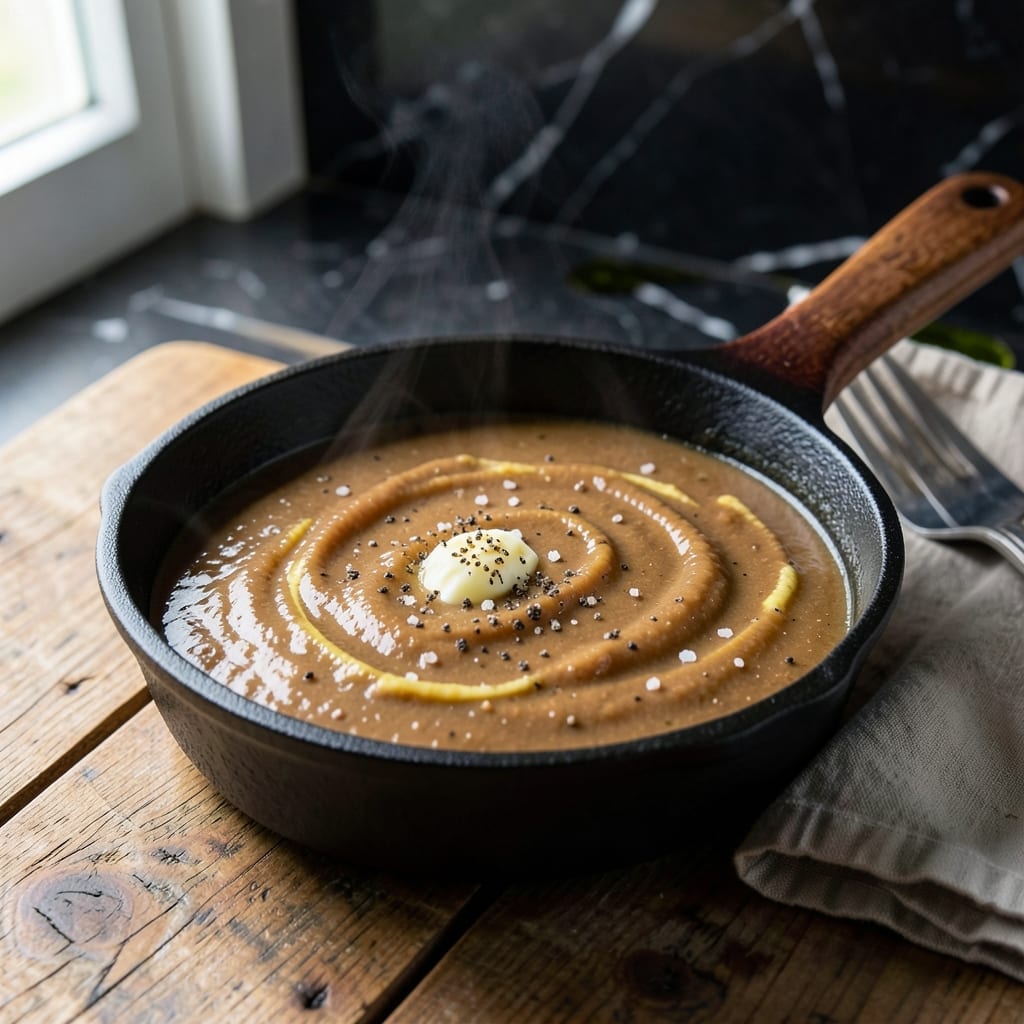
Making gravy from scratch doesn’t have to be complicated. This foolproof method delivers silky smooth results every time with minimal effort.
By mastering a simple roux and slow whisking, you’ll create a rich, lump-free sauce that elevates any meal. No special tools required—just patience and a watchful eye.
Ingredients for Home Made Gravy Recipe Easy
Eight ingredients transform into rich, velvety gravy with this classic technique.
| Ingredient | Amount | Notes |
|---|---|---|
| Unsalted Butter 🧈 | 4 tbsp | Divided for roux and finishing |
| All-Purpose Flour 🌾 | 4 tbsp | For classic roux base |
| Beef Stock 🥩 | 2 cups | Low-sodium preferred for control |
| Drippings from Roasted Meat 🍖 | ¼ cup | Or substitute with butter |
| Kosher Salt 🧂 | ½ tsp | Diamond Crystal preferred |
| Black Pepper 🌶️ | ½ tsp | Freshly cracked for best flavor |
| Worcestershire Sauce 🍶 | 1 tsp | Adds depth of flavor |
| Fresh Thyme Leaves 🌿 | 1 tsp | Chopped, or 1/2 tsp dried |
[recipe_ingredient_scaler]
The stock makes the difference. Homemade beef stock yields the deepest flavor, but Better Than Bouillon base works in a pinch—just use low-sodium to control seasoning. For the drippings, if you’re making this separate from a roast, brown 1/2 lb ground beef first and use those rendered fats. Unsalted butter is essential (salted can over-season the roux).
No drippings? All butter works fine. Out of fresh thyme? Dried thyme at half the amount gets you close. For a vegetarian version, swap beef stock for mushroom or vegetable stock—just as rich. The Worcestershire adds umami, but if you don’t have it, a splash of soy sauce works (use sparingly).
Gravy thickens as it cools—keep it warm in a thermos or slow cooker for serving. Stores in the fridge for 3-4 days or freezes beautifully for 3 months. Reheat gently with a splash of stock to restore consistency.
Why You’ll Love This Recipe
- One Pot Wonder: I melt the butter, whisk in flour, and let the beef stock and drippings do the rest. No fuss, no extra dishes.
- Rich and Savory: The roasted meat drippings and beef stock create a depth of flavor that store-bought can’t touch.
- Sunday Roast Hero: It’s my go-to for holiday dinners, but honestly, I make it for weeknight meals too.
- Penny Pincher: A little butter, flour, and stock stretch into a luxurious sauce. I’ll be real: it’s cheaper than any jarred version.
Step-by-Step Instructions for Home Made Gravy
Master the technique for lump-free gravy using this straightforward, professional approach.
Step 1: Create a Roux Base
Melt 2 tbsp Unsalted Butter in a saucepan over medium heat. Add all 4 tbsp All-Purpose Flour at once and whisk continuously for 2-3 minutes until the mixture turns a light golden color. This roux acts as your gravy’s foundation, providing body and richness.
The key is constant whisking—this prevents the flour from clumping and ensures even cooking. You’ll notice the mixture transform from a pale paste to a smooth, bubbling base with a nutty aroma. If it darkens too quickly, reduce the heat slightly to avoid burning.
Step 2: Incorporate Drippings and Stock
Slowly whisk in the 0.25 cup Drippings from Roasted Meat and remaining 2 tbsp Unsalted Butter. The drippings add incredible depth of flavor, while the additional butter ensures you have enough fat for a stable emulsion. Continue whisking as you gradually pour in all 2 cups Beef Stock.
Pour the stock in a thin, steady stream while maintaining constant motion with your whisk. This gradual incorporation prevents lumps from forming. The mixture will initially appear thin, but it will thicken as it simmers. Watch for the first bubbles to form at the edges—this signals it’s time to reduce the heat.
Step 3: Season and Simmer to Perfection
Reduce heat to medium-low and add the 0.5 tsp Kosher Salt, 0.5 tsp Black Pepper, 1 tsp Worcestershire Sauce, and 1 tsp Fresh Thyme Leaves. Each ingredient serves a specific purpose: the salt and pepper provide basic seasoning, the Worcestershire adds umami depth, and the thyme contributes a subtle herbal note.
Simmer the gravy for 5-7 minutes, stirring occasionally, until it reaches your desired consistency. You’re aiming for a velvety texture that coats the back of a spoon. If it thickens too much, whisk in a splash of water or additional stock. Taste and adjust seasoning as needed—the flavors will intensify slightly as it reduces.
Step 4: Strain and Serve
For the smoothest possible gravy, pour it through a fine-mesh strainer into a serving vessel. This removes any potential lumps or bits of flour that might have formed during cooking, ensuring that silky texture promised in the title.
Serve immediately while hot. The gravy should have a glossy appearance and a rich, savory aroma. If it sits for more than 10 minutes before serving, you may need to reheat it gently, adding a small amount of stock or water to restore the proper consistency. This gravy pairs perfectly with roasted meats, mashed potatoes, or biscuits.
Pro Tips For Making Home Made Gravy Recipe Easy
- Brown the Flour: Cook the flour in butter for 2-3 minutes until golden—this removes the raw taste and adds depth. I learned this the hard way after serving gravy that tasted like wet paste.
- Use Warm Stock: Always add beef stock that’s at least room temperature, or hot if possible. Cold stock causes the roux to seize up and makes lumps nearly impossible to avoid.
- Skim the Drippings: Before adding drippings to your gravy, skim off the excess fat—too much grease makes it greasy instead of rich. A fat separator or a spoon works fine.
- Salt at the End: Wait to season with kosher salt until the gravy is nearly done, since the drippings and stock can vary in saltiness. Taste as you go—it’s easier to add than to fix.
Common Mistakes When Making This Dish
🔥 Overcrowding the Pan
Adding too many ingredients at once can lower the pan’s temperature, preventing proper browning of meat drippings. This results in weak, dull gravy lacking depth.
Fix: Cook meat in batches to ensure a good sear. Use the fond (browned bits) for rich flavor.
🥘 Skipping the Roux
Without a roux (butter and flour mixture), gravy often turns thin or lumpy. This step thickens and stabilizes your sauce for a velvety texture.
Fix: Whisk equal parts fat and flour over medium heat for 2-3 minutes before adding liquid.
⏰ Rushing the Simmer
Gravy needs time to thicken and meld flavors. Boiling it too vigorously can break the emulsion, causing separation or a greasy finish.
Fix: Simmer on low heat, stirring often, for at least 5–10 minutes.
🌡️ Not Adjusting Consistency
Gravy that’s too thick or thin ruins the dish. Over-reduction or insufficient liquid throws off the balance.
Fix: Thin with broth or thicken with a cornstarch slurry (1 tbsp cornstarch + 1 tbsp water) as needed.
Nutrition Facts

Trained in classic French technique but raised on slow-cooked ribs and spicy rubs, she blends culinary skill with smoke and soul.
- Recipe for Boneless Pork Chops in Cast Iron Skillet: Sear and Baste to Juicy Perfection - October 3, 2026
- Recipe for Boneless Cross Rib Roast: Slow-Roasted Beef with Herb Crust - October 3, 2026
- Hamburgers in Sauce Recipe Crock Pot: Slow-Cooked Savory Delight - October 3, 2026