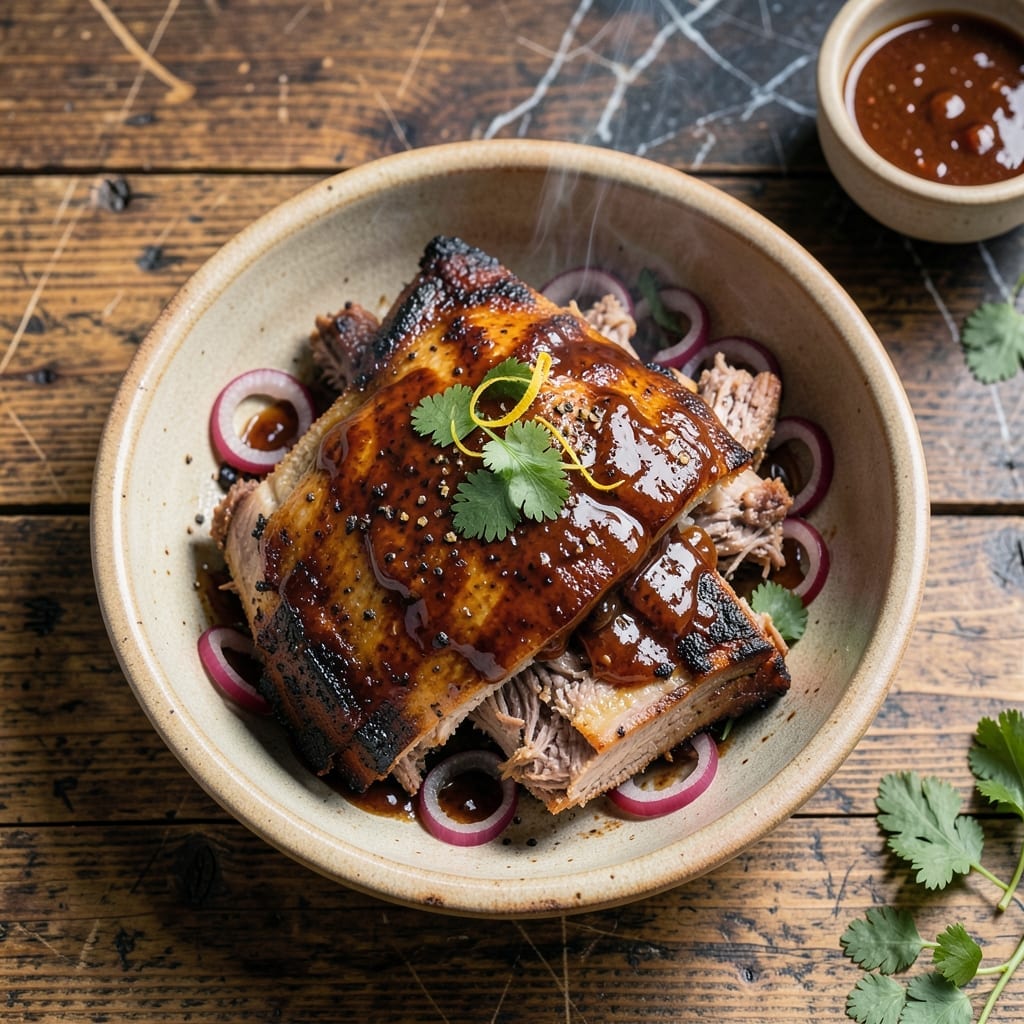
This slow-smoked creation delivers the tangy, sweet depth that defines great barbecue. My years of pitmaster experience taught me that patience and proper technique are key.
You’ll achieve fall-off-the-bone tenderness with a bark that’s rich and caramelized. This method honors tradition while ensuring consistent, professional results every time.
Ingredients for Homemade Barbecue
A few quality ingredients and patience create that signature sweet, tangy, smoky depth.
| Ingredient | Amount | Notes |
|---|---|---|
| Pork Shoulder 🥩 | 4 lb | Bone-in for best flavor |
| Brown Sugar 🍚 | 1 cup | Light or dark variety |
| Apple Cider Vinegar 🍏 | ½ cup | For tangy acidity |
| Ketchup 🍅 | 1 ½ cups | Quality brand preferred |
| Molasses 🍯 | ¼ cup | Adds deep sweetness |
| Worcestershire Sauce 🫒 | 2 tbsp | For umami depth |
| Yellow Mustard 🟡 | 2 tbsp | Smooth variety |
| Garlic Powder 🧄 | 2 tbsp | Freshly ground if possible |
| Onion Powder 🧅 | 2 tbsp | Balances sweetness |
| Smoked Paprika 🌶️ | 1 tbsp | Key for smoky flavor |
| Salt 🧂 | 1 tbsp | Kosher or coarse sea |
| Black Pepper 🌶️ | 1 tbsp | Freshly ground preferred |
| Hickory Wood Chips 🪵 | 3 cups | Soaked for 1 hour |
| Apple Juice 🍎 | 2 cups | For spritzing during smoking |
[recipe_ingredient_scaler]
The pork shoulder is non-negotiable here. Bone-in gives you that fall-off-the-bone texture we’re after. I always grab mine from Whole Foods or a local butcher—they’ve got the best marbling. Avoid those pre-cut, lean chunks at the grocery store (they dry out fast). If you’re smoking for a crowd, Costco has great bulk options. Just plan for extra time with larger cuts.
No molasses? Honey works at a 1:1 ratio (though it’s slightly sweeter). Swap apple cider vinegar for white vinegar in a pinch, but the flavor won’t be as deep. Out of smoked paprika? Use regular paprika plus half a teaspoon of liquid smoke. The ketchup should be a quality brand—Heinz or Primal Kitchen—since it’s the base of your sauce. Skip the generic stuff.
Pork shoulder freezes beautifully for 3-4 months. Your wood chips? Store them in a sealed container to keep them dry. The sauce keeps in the fridge for 1 week—if it lasts that long. I always make a double batch of sauce (it disappears fast).
Why You’ll Love This Recipe
- Set It and Forget: I rub the pork shoulder with brown sugar, toss it in the oven, and let the molasses and vinegar do their slow magic while I go about my day.
- Sweet and Tangy: That first bite where the caramelized crust gives way to tender meat—honestly, the brown sugar and apple cider vinegar balance is ridiculous.
- Feeds a Hungry Crowd: I’ve served this at Sunday dinners and summer potlucks, and it’s the one dish everyone asks for seconds of, even the picky eaters.
- Leftovers for Days: Between us, the pulled pork tastes even better the next day in sandwiches or tacos, and it freezes beautifully for lazy nights.
Step-by-Step Instructions for Slow-Smoked Sweet and Tangy Barbecue
Here’s my tested method for achieving fall-off-the-bone tenderness with a perfect bark.
Step 1: Prepare and Season the Pork Shoulder
Pat the 4 lb Pork Shoulder dry with paper towels to ensure the rub adheres properly. In a bowl, combine the 1 cup Brown Sugar, 2 tbsp Garlic Powder, 2 tbsp Onion Powder, 1 tbsp Smoked Paprika, 1 tbsp Salt, and 1 tbsp Black Pepper.
Massage this rub generously over every surface of the pork, pressing it into the meat. Let it sit at room temperature for 30 minutes while you prepare the smoker. This resting period allows the spices to penetrate and the meat to cook more evenly.
Step 2: Prepare the Smoker and Wood Chips
Soak the 3 cups Hickory Wood Chips in water for 1 hour to prevent them from burning too quickly. Preheat your smoker to 225-250°F using indirect heat. Drain the soaked wood chips and add them to the smoker’s wood box or place them in a foil pouch with holes poked in it.
Once the smoker reaches temperature and you see thin, blue smoke, you’re ready to begin. Place a water pan in the smoker to maintain moisture during the long cook. This step is crucial for preventing the pork from drying out.
Step 3: Smoke the Pork Shoulder
Place the pork shoulder in the smoker, fat-side up, so the rendering fat bastes the meat as it cooks. Smoke undisturbed for 4-5 hours until the internal temperature reaches 160-165°F. Spritz the pork with the 2 cups Apple Juice every 45-60 minutes to keep it moist and build a beautiful bark.
Resist the urge to open the smoker too often—every time you do, you lose heat and extend the cooking time. The pork is ready for the next step when it develops a dark, mahogany crust.
Step 4: Wrap and Continue Cooking
Once the pork reaches 165°F, remove it from the smoker and wrap it tightly in aluminum foil. This step, known as the “Texas crutch,” helps power through the stall—a phase where the meat’s internal temperature plateaus as moisture evaporates.
Return the wrapped pork to the smoker and continue cooking until the internal temperature hits 200-203°F and a probe slides in like butter. This usually takes another 3-4 hours. The pork should be fork-tender at this point.
Step 5: Rest, Shred, and Sauce
Remove the pork from the smoker and let it rest, still wrapped, for 1 hour. This resting period allows the juices to redistribute, ensuring moist, flavorful meat. Unwrap the pork, discard any large fat chunks, and shred it using two forks or meat claws.
In a saucepan, combine the 1.5 cups Ketchup, 0.5 cup Apple Cider Vinegar, 0.25 cup Molasses, 2 tbsp Worcestershire Sauce, and 2 tbsp Yellow Mustard. Simmer for 10-15 minutes until thickened, then toss the shredded pork in the sauce until fully coated. Serve immediately for the best texture and flavor.
Pro Tips For Making Homemade Barbecue
- Low and Slow Wins: I learned this the hard way—cook that pork shoulder at 225°F for at least 6 hours, or it’ll be tough no matter how much sauce you drown it in.
- Balance the Sweet: Brown sugar and molasses can overpower, so add a splash of apple cider vinegar to cut through the richness and brighten the sauce.
- Don’t Rush the Rest: After pulling the pork, let it sit in the sauce for 15-20 minutes—this is when it soaks up the most flavor.
- Skip the Shortcuts: Sounds weird, but I was skeptical until I tried it: use real molasses, not a substitute, or the depth of flavor just won’t be the same.
Essential Equipment for This Dish
Quality Smoker
A reliable smoker is the heart of great barbecue. I use a Traeger Pro Series for its consistent temperature control and ease of use. For beginners, a Weber Smokey Mountain offers excellent results without a huge investment. Either way, aim for 225-250°F range. 🔥
Accurate Thermometer
Never trust built-in smoker thermometers. A dual-probe digital thermometer like ThermoWorks Smoke is essential. One probe tracks smoker temperature, the other monitors internal meat temp. This prevents undercooking or drying out your pork.
Wood and Fuel
For that authentic smoke flavor, hickory wood chips are my go-to. Soak them for 1 hour before use. If using charcoal, go for lump charcoal over briquettes—it burns cleaner and hotter. I always keep extra wood chips on hand for long smokes.
Essential Tools
Good heat-resistant gloves protect your hands when handling hot grates or meat. I also recommend long-handled tongs and a meat injectors for brining. A spray bottle for apple juice spritzing helps build that perfect bark on your pork shoulder.
Resting Setup
After smoking, proper resting is crucial. I use a cooler lined with towels to keep the meat warm during the 1-hour rest. This setup maintains temperature while juices redistribute. A meat claw makes shredding the tender pork effortless.
Sauce Equipment
For the sauce, a heavy-bottomed saucepan prevents burning. I prefer All-Clad stainless steel for even heat distribution. A silicone whisk ensures smooth mixing of your ketchup, vinegar, and molasses base. 💡
Nutrition Facts
Frequently Asked Questions
What’s the ideal smoking temperature?
Keep your smoker steady at 225-250°F for the entire cook. This low-and-slow approach ensures tender meat without drying it out.
Can I use a different wood besides hickory?
Yes! Apple or cherry wood add sweeter notes. Avoid mesquite—it can overpower the pork’s natural flavor with its strong, earthy taste.
How do I know when it’s done?
Use a meat thermometer: the pork is ready at 200-203°F internally. It should also pull apart easily with a fork.
What if my sauce is too thin?
Simmer it longer to thicken. If it reduces too much, stir in 1-2 tablespoons of water or apple juice to reach your desired consistency.

Trained in classic French technique but raised on slow-cooked ribs and spicy rubs, she blends culinary skill with smoke and soul.
- Recipe for Boneless Pork Chops in Cast Iron Skillet: Sear and Baste to Juicy Perfection - October 3, 2026
- Recipe for Boneless Cross Rib Roast: Slow-Roasted Beef with Herb Crust - October 3, 2026
- Hamburgers in Sauce Recipe Crock Pot: Slow-Cooked Savory Delight - October 3, 2026