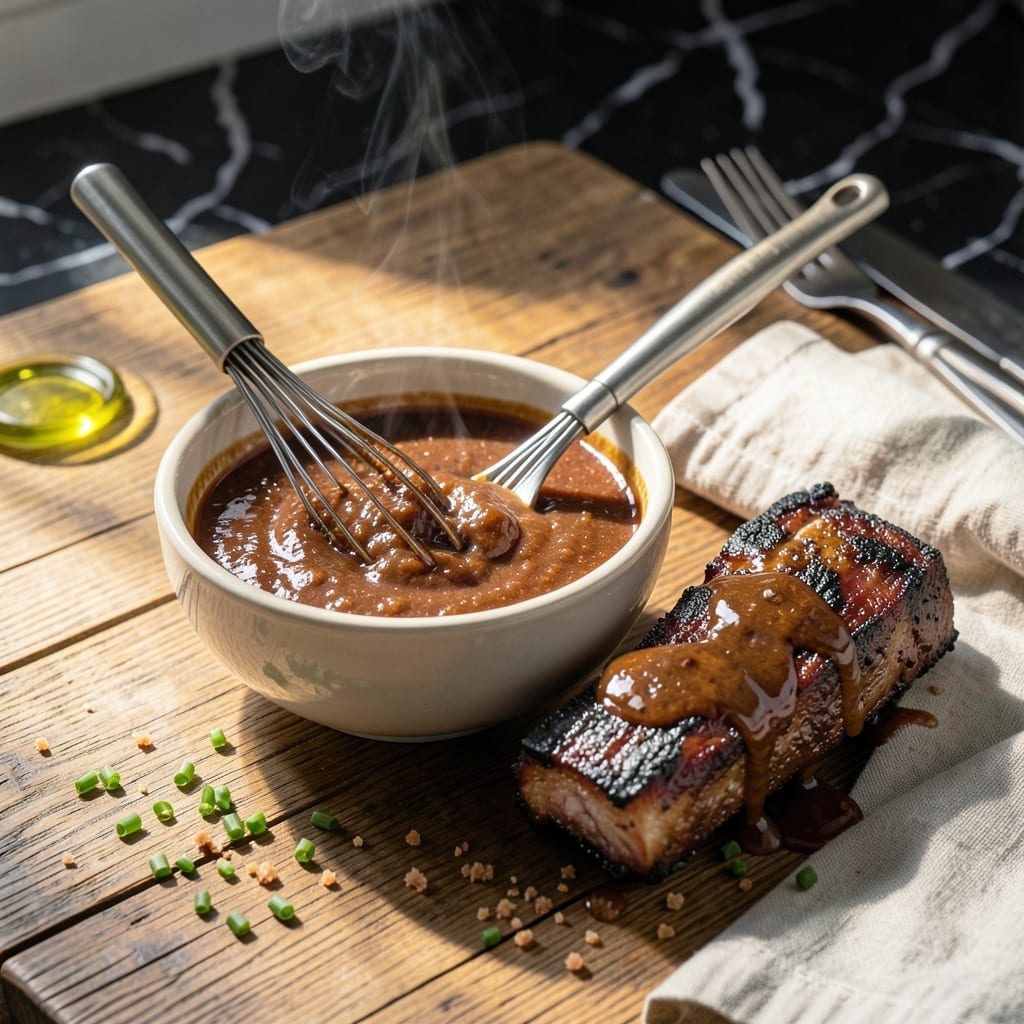
This sauce delivers the deep, smoky sweetness that transforms good ribs into unforgettable ones. I developed it to balance molasses richness with bold spice notes that stand up to long cooking.
With simple ingredients and 10 minutes of simmering, you’ll have a restaurant-quality glaze that’s better than anything store-bought. It keeps well, so make a double batch.
Ingredients for Homemade Barbecue Sauce for Ribs
Ten ingredients. One sauce. Better than anything bottled.
| Ingredient | Amount | Notes |
|---|---|---|
| Molasses 🍯 | 1 cup | Unsulphured for best flavor |
| Ketchup 🍅 | 1 ½ cups | High-quality preferred |
| Apple Cider Vinegar 🍏 | ¼ cup | For tangy brightness |
| Worcestershire Sauce 🫒 | 2 tbsp | Anchovy-free if needed |
| Dijon Mustard 🟡 | 1 tbsp | Smooth, sharp variety |
| Brown Sugar 🍚 | ½ cup | Light or dark works |
| Smoked Paprika 🌶️ | 1 tbsp | For deep smoky flavor |
| Garlic Powder 🧄 | 1 tsp | Fresh minced works too |
| Onion Powder 🧅 | 1 tsp | Balances sweetness |
| Salt 🧂 | 1 tsp | Diamond Crystal preferred |
| Black Pepper 🌶️ | ½ tsp | Freshly ground for best results |
[recipe_ingredient_scaler]
The molasses is the backbone here—unsulphured has cleaner flavor than blackstrap. Heinz ketchup is my go-to (consistent thickness, good tomato flavor), but any high-quality brand works. Apple cider vinegar brightens everything up. Look for it in the baking aisle if you don’t normally keep it around. For the Worcestershire, Annie’s makes a vegetarian version if anchovies are a concern.
No molasses? Honey or maple syrup at half the quantity plus a teaspoon of blackstrap for color. Out of Dijon? Yellow mustard in a pinch. The smoked paprika is non-negotiable for that signature depth—Penzeys has the best. Brown sugar can be swapped for white, but you’ll lose some caramel notes. Want heat? Cayenne or chipotle powder at 1/4 teaspoon.
This keeps for 2 weeks in the fridge, 6 months frozen. Double the batch—it’s worth it. Glass jar, airtight lid. The flavors meld overnight, so make it a day ahead if you can.
Why You’ll Love This Recipe
- Five-Minute Mix: I dump everything in one pot and stir—no chopping, no fuss, just a simmer away from sauce.
- Deep, Tangy Love: The molasses and apple cider vinegar hit that sweet-sour balance I crave on ribs every single time.
- Grill Night Hero: I slather it on ribs for summer cookouts or use it to jazz up weeknight chicken.
- Stretches Further: One batch covers two racks of ribs and still leaves enough for sandwiches later in the week.
Step-by-Step Instructions for Homemade Barbecue Sauce
This method delivers a rich, complex sauce with the perfect balance of sweet, tangy, and smoky flavors.
Step 1: Combine Liquid Base Ingredients
In a medium saucepan, whisk together the 1 cup Molasses, 1.5 cups Ketchup, and 0.25 cup Apple Cider Vinegar until fully combined. The molasses will be thick and slow to incorporate, so use a sturdy whisk and apply some elbow grease.
Place the saucepan over medium heat and bring the mixture to a gentle simmer. This gradual heating helps prevent the sugars from scorching at the bottom. You’ll see small bubbles forming around the edges first—that’s your signal that it’s warming evenly.
Step 2: Add Remaining Wet and Dry Ingredients
Stir in the 2 tbsp Worcestershire Sauce and 1 tbsp Dijon Mustard. The mustard will add a sharp tang that cuts through the sweetness, while the Worcestershire contributes umami depth. Whisk vigorously to distribute these ingredients evenly throughout the mixture.
Next, add the 0.5 cup Brown Sugar, 1 tbsp Smoked Paprika, 1 tsp Garlic Powder, 1 tsp Onion Powder, 1 tsp Salt, and 0.5 tsp Black Pepper. The smoked paprika is key here—it’s what gives the sauce that characteristic barbecue depth.
Step 3: Simmer to Develop Flavor and Thickness
Reduce the heat to medium-low and let the sauce simmer uncovered for 15-20 minutes. Stir frequently, especially at the beginning, to prevent sticking. As it cooks, the sauce will darken slightly and thicken enough to coat the back of a spoon.
You’ll notice the aroma changing too—initially sharp from the vinegar, it will mellow into a rich, complex scent as the flavors meld together. The sauce is ready when it has reduced by about one-quarter and has a glossy, syrupy consistency.
Step 4: Adjust Consistency and Cool
Remove the saucepan from heat and let the sauce cool for 5 minutes. It will thicken slightly as it cools. If you prefer a thicker sauce, you can return it to low heat for an additional 5-10 minutes to reduce further.
Taste and adjust seasoning if needed—though with these proportions, you shouldn’t need to add anything. The balance should be perfect: sweet from the molasses and brown sugar, tangy from the vinegar and mustard, with a smoky backbone from the paprika. Transfer to a jar and let cool completely before using.
Pro Tips For Making Homemade Barbecue Sauce For Ribs
- Simmer Low and Slow: Keep the heat at a gentle simmer—high heat can make the molasses and vinegar separate or burn. I learned this the hard way after scorching a batch that smelled like burnt candy.
- Balance the Vinegar: Apple cider vinegar can overpower if you’re heavy-handed. Start with half the amount you think you need, taste, then adjust—this sauce should be tangy, not sour.
- Skip the Cheap Ketchup: Sounds weird, but it works: use a high-quality ketchup with real tomato flavor. The cheap stuff tastes thin and makes the whole sauce taste flat, no matter what else you add.
- Stir in Mustard Last: Add the Dijon mustard at the very end of cooking to preserve its sharp kick. If you cook it too long, the heat mellows it out and you lose that punch that cuts through the sweetness.
Serving Suggestions for Leftovers
Slathering Techniques
For fall-off-the-bone ribs, I apply this sauce in 3 stages. First, a light coat when the ribs hit 160°F internal to build layers of flavor. Then a second coat at 185°F as they near completion. 🔥
Garnish Like a Pro
Finish with a drizzle of sauce and sprinkle of chopped cilantro for freshness. I also love adding pickled jalapeños on the side for those who want heat. The acidity cuts through the richness beautifully.
Side Pairings
Classic cornbread soaks up extra sauce perfectly. For something lighter, my shaved cabbage slaw with apple cider vinegar dressing complements the smoky-sweet profile. Try both for a complete spread.
Serving Temperature
Always serve this sauce warm or at room temperature. Cold sauce dulls the flavors. I keep a small pot warming on the grill’s edge during cookouts. Stir occasionally to maintain that perfect glossy consistency.
Presentation Tips
Transfer to a mason jar for rustic charm at outdoor gatherings. For elegant plating, brush a final coat on ribs and arrange on a wooden board with fresh herbs. The deep color pops against any serving dish. ✨
Leftovers Hack
Use extra sauce as a glaze for grilled chicken or roasted vegetables. I toss cauliflower florets in leftover sauce before roasting at 400°F for 20 minutes—transforms them completely.
Nutrition Facts
Frequently Asked Questions
Can I make this sauce ahead of time?
The flavors deepen after 24 hours in the fridge. Store in an airtight container and it’ll keep for up to 2 weeks. Just give it a good stir before using.
What can I substitute for molasses?
Use 1/2 cup honey or maple syrup plus 1 tsp blackstrap molasses for color. The flavor will be milder but still delicious. Avoid corn syrup—it lacks depth.
Why did my sauce turn out too thin?
Simmer it longer! Return to medium-low heat and cook uncovered for another 5-10 minutes, stirring often. The natural sugars will thicken it as it reduces.
Is this sauce spicy?
No, it has a smoky-sweet profile. For heat, add 1/4 tsp cayenne or chipotle powder while simmering. Adjust to taste—start small!

Trained in classic French technique but raised on slow-cooked ribs and spicy rubs, she blends culinary skill with smoke and soul.
- Recipe for Boneless Pork Chops in Cast Iron Skillet: Sear and Baste to Juicy Perfection - October 3, 2026
- Recipe for Boneless Cross Rib Roast: Slow-Roasted Beef with Herb Crust - October 3, 2026
- Hamburgers in Sauce Recipe Crock Pot: Slow-Cooked Savory Delight - October 3, 2026