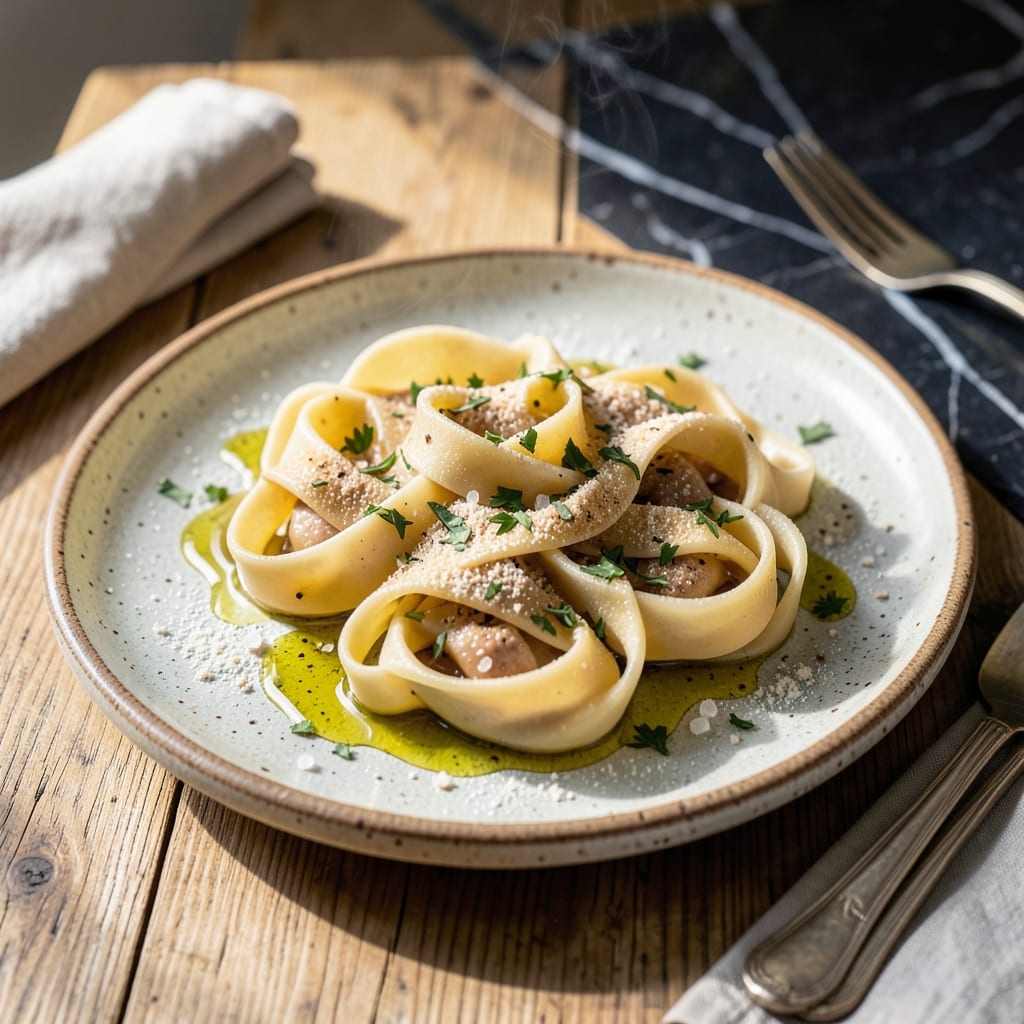
There’s nothing like the satisfaction of rolling out your own authentic Italian pasta by hand. This method proves you don’t need expensive equipment to achieve restaurant-quality results at home.
With just flour, eggs, and a little patience, you’ll create silky homemade pasta that’s far superior to store-bought. The key lies in proper kneading and resting time, which develops the gluten for that perfect al dente texture.
The rolling process transforms the dough into delicate ribbons that cook in minutes. Each bite delivers the pure, simple flavors of traditional Italian pasta-making, with a texture that’s both tender and firm.
This technique connects you to generations of Italian nonnas who made pasta this exact way. The process is as rewarding as the final dish.
Ingredients for Homemade Italian Pasta Recipe Without Machine
Simple flour, eggs, and patience transform into authentic hand-rolled Italian pasta ribbons at home.
| Ingredient | Amount | Notes |
|---|---|---|
| 00 Flour 🌾 | 3 cups | Plus extra for dusting |
| Large Eggs 🥚 | 4 whole | Room temperature preferred |
| Semolina Flour 🌾 | ½ cup | For texture and authenticity |
| Extra-Virgin Olive Oil 🫒 | 1 tbsp | For elasticity in dough |
| Sea Salt 🧂 | 1 tsp | Fine grain preferred |
| Water 💧 | 2 tbsp | As needed for consistency |
| All-Purpose Flour 🌾 | ½ cup | Optional for dusting |
[recipe_ingredient_scaler]
The flour makes all the difference here. 00 flour is the gold standard for pasta—find it at Italian specialty stores or Amazon. Semolina adds that perfect bite (look for Bob’s Red Mill at most supermarkets). If you’re new to this, start with King Arthur all-purpose—it’s forgiving and still delivers great results.
No 00 flour? All-purpose flour works fine—just use slightly less since it absorbs liquid differently. Short on eggs? 3 whole eggs plus 2 yolks makes a richer dough. The olive oil can be skipped in a pinch, but it adds a silky quality that’s hard to beat. For extra authenticity, some Italian nonnas swear by a splash of white wine instead of water.
Fresh pasta cooks in 2-3 minutes, so have your sauce ready. Dough can rest in the fridge for up to 24 hours if wrapped tightly—this actually improves the texture. Leftover uncooked dough freezes beautifully for 1 month (thaw in fridge overnight before rolling).
Why You’ll Love This Recipe
- No Machine Needed: I roll it out with just a rolling pin—no fancy equipment, no fuss.
- Rich Egg Flavor: The large eggs and 00 flour give it that authentic, buttery taste I crave.
- Freezer Friendly: I make a big batch and freeze it for lazy nights when fresh pasta feels impossible.
- Budget Stretcher: A pound of pasta for pennies compared to store-bought, and honestly, it tastes way better.
Step-by-Step Instructions for Hand-Rolled Italian Pasta
Here’s my authentic method for creating silky, tender pasta ribbons by hand.
Step 1: Create the Dough on a Clean Surface
On a clean work surface, mound the 3 cups 00 Flour with the 0.5 cup Semolina Flour and 1 tsp Sea Salt. Create a well in the center large enough to hold the 4 whole Large Eggs and 1 tbsp Extra-Virgin Olive Oil. The well should have steep sides to contain the liquids.
Beat the eggs lightly with the olive oil, then pour them into the well. Using a fork, gradually incorporate the flour from the inner rim of the well, working outward in a circular motion. I find this method prevents the eggs from spilling over the edges and makes for a more controlled mixing process.
Step 2: Knead to Perfect Elasticity
Once the dough comes together into a shaggy mass, use your hands to incorporate any remaining flour. The dough should feel slightly sticky at first—that’s normal. Begin kneading by pushing the dough away with the heel of your hand, then folding it back over itself.
Continue kneading for 8-10 minutes until the dough becomes smooth and elastic. If it feels too dry, add the 2 tbsp Water, 1 tablespoon at a time. If it’s too sticky, dust with some of the 0.5 cup All-Purpose Flour reserved for dusting. You’ll know it’s ready when it springs back when poked and feels silky to the touch.
Step 3: Rest the Dough for Workability
Shape the dough into a ball and wrap it tightly in plastic wrap. Let it rest at room temperature for 30 minutes. This resting period allows the gluten to relax, making the dough much easier to roll out thinly.
I always set a timer for this step—it’s tempting to rush, but the rest is crucial for achieving that perfect, tender texture in your final pasta. While waiting, I clean my work surface and gather my rolling pin so everything’s ready for the next step.
Step 4: Roll and Cut the Pasta Ribbons
Divide the rested dough into 4 equal portions. On a lightly floured surface (using some of the 0.5 cup All-Purpose Flour), roll out one portion at a time to about ⅛-inch thickness. Start from the center and roll outward, turning the dough occasionally to maintain an even thickness.
Once rolled thin, let the sheet dry for 2-3 minutes until it’s just barely tacky but not wet. Then, loosely roll the sheet from one end to the other and slice into ¼-inch wide ribbons. Unfurl the ribbons and dust lightly with more flour to prevent sticking. Repeat with remaining dough portions.
Step 5: Cook Immediately or Dry for Later
To cook fresh, bring a large pot of salted water to a rolling boil. Add the pasta and cook for 2-3 minutes until it floats to the surface and is al dente. For drying, hang the ribbons on a pasta drying rack or lay them flat on a floured surface for 1-2 hours until completely dry before storing.
Fresh pasta cooks much faster than dried, so keep an eye on it. The ribbons should be tender but still have a slight bite. Toss immediately with your favorite sauce to prevent sticking, as fresh pasta absorbs sauces beautifully.
Pro Tips For Making Homemade Italian Pasta Recipe Without Machine
- Knead Until Smooth: Work the dough for at least 8-10 minutes by hand—it’ll start rough and crumbly, but keep going until it’s silky. I learned this the hard way when my first few batches cracked because I gave up too soon.
- Use Room-Temp Eggs: Pull your eggs out of the fridge an hour before mixing. Cold eggs make the dough fight you, and nobody wants to wrestle with pasta dough.
- Skip the Extra Flour: Resist the urge to dust your counter with too much semolina or 00 flour while rolling—it’ll dry out the pasta. Just enough to prevent sticking, no more.
- Rest the Dough: After kneading, wrap it in plastic and let it sit for 30 minutes. My grandmother swore by this, and she was right: it relaxes the gluten so rolling it thin by hand is actually possible.
Common Mistakes When Making This Recipe
Overworking the Dough
Kneading beyond 10 minutes makes the pasta tough, not tender. I learned this the hard way—my first batch was chewy like rubber bands. Stop when the dough springs back when poked. 💪
Skipping the Rest
Rushing the 30-minute rest ruins the texture. The gluten needs time to relax for smooth rolling. I use this time to prep my sauce or set the table.
Uneven Rolling
Inconsistent thickness leads to uneven cooking. Roll from the center outward, turning the dough often. Aim for ⅛-inch thickness throughout. A long wooden rolling pin helps with leverage.
Too Much Flour
Excess flour makes the pasta dry and crumbly. Use just enough all-purpose flour for dusting to prevent sticking. Brush off excess before slicing into ribbons.
Cutting Too Thick
Ribbons wider than ¼-inch won’t cook evenly. Roll the sheet loosely before slicing for consistent width. I use a sharp chef’s knife for clean cuts.
Improper Drying
Fresh pasta sticks together if not dried slightly before cooking. Let ribbons rest for 2-3 minutes on a floured surface. This prevents clumping when boiling. 🍝
Nutrition Facts
Frequently Asked Questions
What can I use if I don’t have 00 flour?
All-purpose flour works as a substitute. Use slightly less since it absorbs liquid differently. For best results, add a bit of semolina for texture.
How thin should the pasta be rolled?
Aim for about ⅛-inch thickness for perfect texture. Roll from the center outward, turning the dough often for even thickness.
Can I make this dough ahead of time?
Yes! Wrap the dough tightly and refrigerate for up to 24 hours. This actually improves the texture by allowing the gluten to fully relax.
Why did my pasta turn out tough?
Over-kneading or skipping the rest period are common culprits. Stop kneading at 8-10 minutes and always let the dough rest for 30 minutes.

Trained in classic French technique but raised on slow-cooked ribs and spicy rubs, she blends culinary skill with smoke and soul.
- Recipe for Boneless Pork Chops in Cast Iron Skillet: Sear and Baste to Juicy Perfection - October 3, 2026
- Recipe for Boneless Cross Rib Roast: Slow-Roasted Beef with Herb Crust - October 3, 2026
- Hamburgers in Sauce Recipe Crock Pot: Slow-Cooked Savory Delight - October 3, 2026