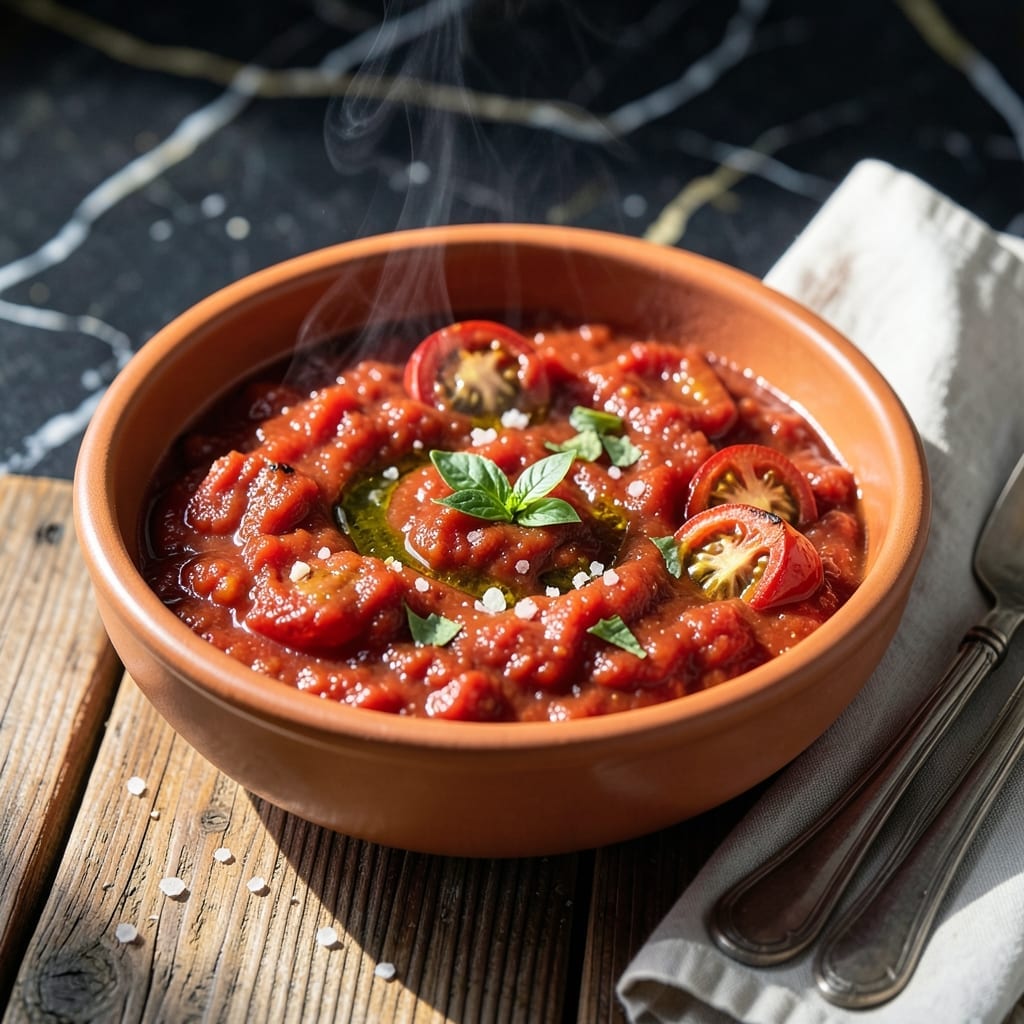
There’s nothing like the taste of a homemade marinara made from ripe summer tomatoes at their peak. This sauce captures the essence of garden-fresh flavors without complicated techniques.
Simmered slowly to concentrate the natural sweetness, it transforms into a rich, vibrant base for pasta, pizza, or dipping. The process is straightforward but yields professional results every time.
Ingredients for Homemade Marinara Sauce Recipe Using Fresh Tomatoes
Ripe summer tomatoes and a handful of pantry staples create this vibrant sauce base.
| Ingredient | Amount | Notes |
|---|---|---|
| Ripe Summer Tomatoes 🍅 | 8 lb | Cored and quartered, Roma or heirloom |
| Extra-Virgin Olive Oil 🫒 | ¼ cup | High quality, fruity |
| Yellow Onion 🧅 | 1 whole | Medium, finely diced |
| Garlic Cloves 🧄 | 6 cloves | Peeled and minced |
| Fresh Basil Leaves 🌿 | 1 cup | Loosely packed, torn |
| Sea Salt 🧂 | 2 tsp | Fine grain, adjust to taste |
| Black Pepper 🌶️ | 1 tsp | Freshly cracked preferred |
| Crushed Red Pepper Flakes 🔥 | ½ tsp | Optional for heat |
| Tomato Paste 🍅 | 2 tbsp | For depth of flavor |
| Balsamic Vinegar 💧 | 1 tbsp | For acidity balance |
[recipe_ingredient_scaler]
The tomatoes are the foundation—farmers market produce or homegrown yields the most concentrated flavor. Roma tomatoes offer the best flesh-to-seed ratio, but heirlooms add complexity. Avoid refrigerated tomatoes, as cold storage dulls their natural sweetness. San Marzano canned tomatoes can supplement if fresh are scarce, though the result will differ slightly.
No fresh basil? Dried oregano at one-third the amount provides a similar herbal note. For a deeper umami profile, add 1 tsp of nutritional yeast—this vegan staple mimics the richness typically added by Parmesan in traditional recipes. The balsamic vinegar may be replaced with red wine vinegar if preferred, though the former’s fruitiness complements the tomatoes beautifully.
This sauce freezes exceptionally well for up to 6 months. Store in airtight containers with a thin layer of olive oil on top to prevent oxidation. Refrigerated, it keeps for 5-7 days—the flavors deepen with time.
Why You’ll Love This Recipe
- Minimal Chopping: I just quarter the tomatoes, rough chop the onion, and smash the garlic—no fancy knife skills needed.
- Sun-Kissed Flavor: The ripe summer tomatoes and fresh basil make it taste like Italy in a jar, no passport required.
- Freezer Friendly: I double the batch and freeze in jars for those nights I’m too tired to cook. (Yes, even on a Tuesday night)
- Pantry Stretch: Honestly, it’s cheaper than store-bought and uses up all those garden tomatoes before they go bad.
Step-by-Step Instructions for Homemade Marinara Sauce
Here’s the method. Straightforward, tested, works every time.
Step 1: Prepare and Roast the Tomatoes
Preheat your oven to 400°F. Core and quarter the 8 lb ripe summer tomatoes, then spread them on a rimmed baking sheet. Drizzle with 0.25 cup extra-virgin olive oil and sprinkle evenly with 2 tsp sea salt, 1 tsp black pepper, and 0.5 tsp crushed red pepper flakes. Toss gently to coat.
Roast for 45-50 minutes until the tomatoes collapse and their edges begin to caramelize. This intensifies their natural sweetness and removes excess moisture, which is critical for a rich, concentrated sauce.
Step 2: Sauté the Aromatics
While the tomatoes roast, finely dice the 1 whole yellow onion and mince the 6 cloves garlic cloves. Heat a large Dutch oven over medium heat with 1 tablespoon of the reserved extra-virgin olive oil from the roasting pan.
Add the onion and cook for 5-6 minutes until translucent and just beginning to turn golden brown. Add the garlic and cook for 1 minute until fragrant—don’t let it brown, as it will turn bitter. Stir in the 2 tbsp tomato paste and cook for 2 minutes, allowing its raw flavor to mellow.
Step 3: Combine and Simmer the Sauce
Transfer the roasted tomatoes and all their juices to the Dutch oven with the onion and garlic. Add the 1 tbsp balsamic vinegar and stir to combine. Increase the heat to medium-high and bring to a gentle boil.
Reduce the heat to low and let the sauce simmer uncovered for 45-60 minutes. Stir occasionally to prevent sticking, and watch for the sauce to thicken and deepen in color. The tomatoes should break down completely, and the mixture should reduce by about a third.
Step 4: Finish with Fresh Basil
Once the sauce has reached your desired consistency, remove it from the heat. Tear the 1 cup fresh basil leaves by hand and stir them into the sauce. This preserves their delicate aroma better than chopping.
Taste and adjust seasoning if needed, though the roasting process should have concentrated the flavors beautifully. For a smoother texture, you can use an immersion blender to purée the sauce slightly, but I prefer leaving it slightly chunky for a rustic feel.
Pro Tips For Making Homemade Marinara Sauce Recipe Using Fresh Tomatoes
- Score the Tomatoes: Cut a shallow X on the bottom of each tomato before blanching—I learned this the hard way after peeling half a batch by hand. It makes the skins slip right off.
- Sweat the Onions: Cook the onions in olive oil over low heat for 8-10 minutes until translucent. Rushing this step gives the sauce a raw, harsh flavor that overpowers the sweetness of fresh tomatoes.
- Skip the Seeds: After peeling, remove the seeds and excess pulp from the tomatoes. Sounds tedious, but it prevents a watery sauce that takes forever to thicken.
- Tear the Basil: Add fresh basil leaves at the end and tear them by hand instead of chopping. My grandmother swore by this, and the flavor actually tastes brighter and more aromatic.
Regional Styles of homemade marinara sauce recipe using fresh tomatoes
🍅 Italian Style
In Italy, marinara sauce is all about simplicity and freshness. This style typically uses San Marzano tomatoes, known for their sweet, low-acid flavor, combined with garlic, fresh basil, and olive oil. The sauce is often simmered slowly to deepen the flavors, and it’s kept chunky for texture. Historically, this style originated in Naples, where it was a staple for pizza and pasta dishes.
🌶️ Sicilian Style
Sicilian marinara often includes a touch of heat. This regional variation incorporates red pepper flakes or chili peppers for a spicy kick, along with traditional ingredients like tomatoes, garlic, and olive oil. Some versions also feature capers or olives for a briny depth. This style reflects Sicily’s love for bold, robust flavors, influenced by its diverse cultural history.
🧄 Neapolitan Style
Neapolitan marinara is the classic version many think of today. It’s made with fresh tomatoes, garlic, and basil, and often includes a splash of white wine for acidity. The sauce is typically smooth and slightly sweet, perfect for coating pasta or topping a Margherita pizza. This style dates back to the 18th century and remains a cornerstone of Neapolitan cuisine.
🍷 Tuscan Style
In Tuscany, marinara sauce often takes on a richer profile. This version may include red wine for depth and fresh herbs like rosemary or oregano in addition to basil. Some recipes also incorporate roasted garlic for a sweeter, more complex flavor. Tuscan marinara is heartier, making it ideal for rustic dishes like pappardelle al ragù.
Nutrition Facts

Trained in classic French technique but raised on slow-cooked ribs and spicy rubs, she blends culinary skill with smoke and soul.
- Recipe for Boneless Pork Chops in Cast Iron Skillet: Sear and Baste to Juicy Perfection - October 3, 2026
- Recipe for Boneless Cross Rib Roast: Slow-Roasted Beef with Herb Crust - October 3, 2026
- Hamburgers in Sauce Recipe Crock Pot: Slow-Cooked Savory Delight - October 3, 2026