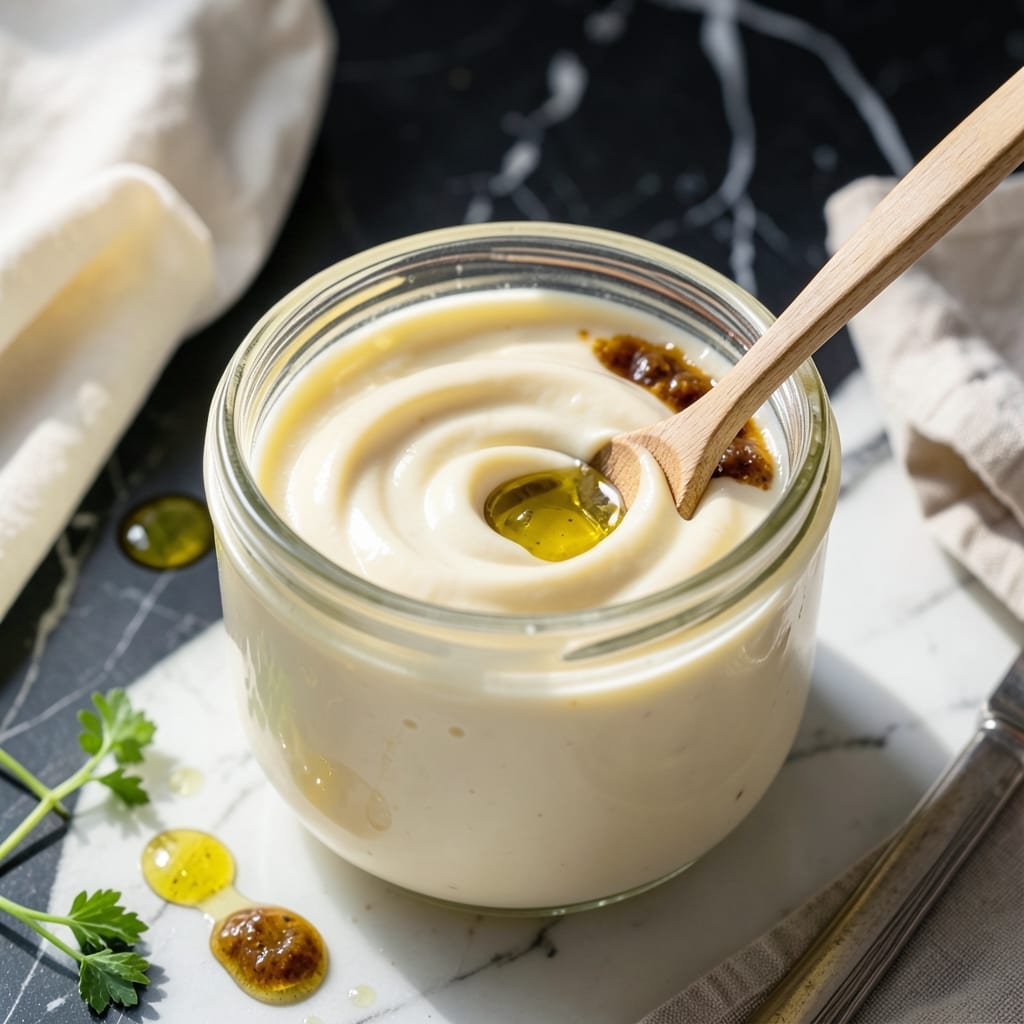
This immersion blender method delivers foolproof homemade mayo every time. No whisking, no splitting—just a 60-second process that creates silky, restaurant-quality results with basic ingredients.
The secret lies in the slow drizzle and steady blending, which builds a stable emulsion without fail. You’ll achieve creamy, rich mayo that puts store-bought versions to shame.
Ingredients for Homemade Mayo Recipe Immersion Blender
Seven basic ingredients transform into silky, restaurant-quality condiment in moments.
| Ingredient | Amount | Notes |
|---|---|---|
| Large Egg Yolk 🥚 | 1 whole | Room temperature essential for emulsion |
| Dijon Mustard 🟡 | 1 tsp | Acts as natural emulsifier |
| White Wine Vinegar 🍷 | 1 tbsp | Or substitute lemon juice |
| Neutral Oil 🫒 | 1 cup | Avocado or light olive oil preferred |
| Salt 🧂 | ½ tsp | Fine sea salt for even distribution |
| Lemon Juice 🍋 | 1 tbsp | Freshly squeezed for brightness |
| Granulated Sugar 🍚 | ¼ tsp | Balances acidity optional addition |
[recipe_ingredient_scaler]
The oil quality is paramount here. Avocado oil or light olive oil are ideal for their neutral flavor and high smoke point. Costco’s Kirkland or California Olive Ranch offer reliable options at reasonable prices. Always start with room temperature ingredients—the cold can break your emulsion. The egg yolk should be fresh, and while pasteurized works, conventional yields better texture.
No white wine vinegar? Apple cider vinegar or rice vinegar are suitable substitutes. Out of Dijon? Yellow mustard at the same amount will work in a pinch. For a tangier result, increase lemon juice to 1.5 tbsp. The sugar is optional but recommended—it softens the sharpness without sweetening. If avoiding sugar, a pinch of baking soda neutralizes acidity effectively.
This keeps in an airtight container in the refrigerator for 1 week. The flavor actually improves after 24 hours as it rests. For longer storage, freeze in ice cube trays for up to 3 months. Thaw in the fridge before using.
Why You’ll Love This Recipe
- One-Minute Magic: I can make a full jar in under 60 seconds with just my immersion blender and five ingredients.
- Tangy Depth: The Dijon and white wine vinegar give it that bright, restaurant-quality kick my store-bought mayo lacks.
- Endless Uses: It’s my secret for sandwiches, salad dressings, and even as a base for creamy sauces.
- Pantry Savior: A single egg yolk turns into a jar of mayo for pennies, and it keeps for a full week in the fridge.
Step-by-Step Instructions for Homemade Mayo
Master the immersion blender technique for a perfect emulsion every time you make this.
Step 1: Combine the Base Ingredients
Place the large egg yolk, 1 tsp Dijon mustard, 1 tbsp white wine vinegar, 0.5 tsp salt, 1 tbsp lemon juice, and 0.25 tsp granulated sugar in a tall, narrow container that fits your immersion blender. The mustard acts as a natural emulsifier, while the vinegar and lemon juice provide the necessary acidity for balance.
I use a pint-sized mason jar for this—it’s the perfect width for the blender head and allows the ingredients to stay concentrated at the bottom. Ensure all ingredients are at room temperature, especially the egg yolk, as cold ingredients can prevent proper emulsification.
Step 2: Begin the Emulsion with the Oil
Add 1 cup neutral oil to the container, pouring it directly on top of the other ingredients. The oil should completely cover the liquid mixture. Insert the immersion blender all the way to the bottom of the container, ensuring the blades are fully submerged in the liquid layer beneath the oil.
Start blending on high speed without moving the blender. You’ll see the mixture at the bottom begin to thicken and turn pale yellow within 10-15 seconds. This is the emulsion forming—a critical moment where the oil and liquids bind together permanently.
Step 3: Gradually Incorporate the Remaining Oil
Once the emulsion begins to form at the bottom, start moving the immersion blender very slowly upward, keeping the blades just below the surface of the thickening mixture. As you blend, the emulsion will naturally pull more oil down from the top, incorporating it into the mayonnaise.
Continue this slow, steady movement until all the oil is fully emulsified. The process should take no more than 30-45 seconds total. You’ll know it’s ready when the mixture is thick, creamy, and consistent throughout, with no separated oil visible on the surface.
Step 4: Adjust and Finish
Turn off the blender and check the consistency. If it appears too thick, you can thin it slightly with a teaspoon of water and blend again briefly. Taste and adjust the seasoning if needed—though the initial measurements should yield a perfectly balanced flavor.
The finished product should have a glossy appearance and hold its shape when a spoon is dipped in. Transfer to a clean jar and store in the refrigerator for up to 1 week. The mayonnaise will thicken slightly as it chills, reaching its ideal texture after 1 hour in the fridge.
Pro Tips For Making Homemade Mayo Recipe Immersion Blender
- Room Temp Eggs: Take your egg yolk out of the fridge 30 minutes before blending—I learned this the hard way after my first batch broke because the cold yolk couldn’t emulsify properly with the oil.
- Slow Oil Drizzle: Pour the neutral oil in a thin, steady stream, especially at the start. After my first attempt turned into a greasy mess, I realized rushing this step guarantees failure.
- Use a Tall Cup: Grab a narrow, tall container for your immersion blender so the blade can fully incorporate the yolk and oil without splashing. Sounds obvious, but I used to make this mistake every time.
- Add Vinegar Last: Mix in the white wine vinegar after the mayo has thickened—adding it too early can prevent proper emulsification, and yes, I’ve ruined a batch by doing this.
Essential Equipment for This Dish
Must-Have Tools
To make the perfect homemade mayo with an immersion blender, you’ll need a few key items. First up is, of course, a reliable immersion blender—brands like Cuisinart or Braun work wonders for creating a smooth, creamy emulsion in seconds. A tall, narrow container (like a mason jar or a deep cup) is also essential to help the blender fully incorporate the oil into the egg yolk without splattering.
Don’t forget a measuring cup with a spout for slow, steady oil drizzling—this is crucial for a stable emulsion. A whisk can be handy for initial mixing, but the immersion blender will do most of the heavy lifting. 🥘
Nice-to-Have Tools
For extra convenience, consider a digital kitchen scale to measure ingredients precisely, or a squeeze bottle for easy mayo dispensing. A fine-mesh strainer can help sift in dry ingredients like mustard powder for a lump-free texture.
If you plan to make mayo often, a wide-mouth pint jar with measurements etched on the side can streamline the process. These aren’t deal-breakers, but they’ll make your life easier! ✨
Budget Alternatives
No immersion blender? No problem! A whisk and a bowl will work, though it’ll require more elbow grease and patience. Use a bowl with a non-slip base or place it on a damp towel to keep it steady while you whisk.
For oil drizzling, a plastic bottle with a small hole punctured in the cap can mimic a slow pour. And if you don’t have a tall container, any deep, narrow vessel (even a clean, empty wine bottle) can serve as a makeshift blending jar. 💡
Nutrition Facts

Trained in classic French technique but raised on slow-cooked ribs and spicy rubs, she blends culinary skill with smoke and soul.
- Recipe for Boneless Pork Chops in Cast Iron Skillet: Sear and Baste to Juicy Perfection - October 3, 2026
- Recipe for Boneless Cross Rib Roast: Slow-Roasted Beef with Herb Crust - October 3, 2026
- Hamburgers in Sauce Recipe Crock Pot: Slow-Cooked Savory Delight - October 3, 2026