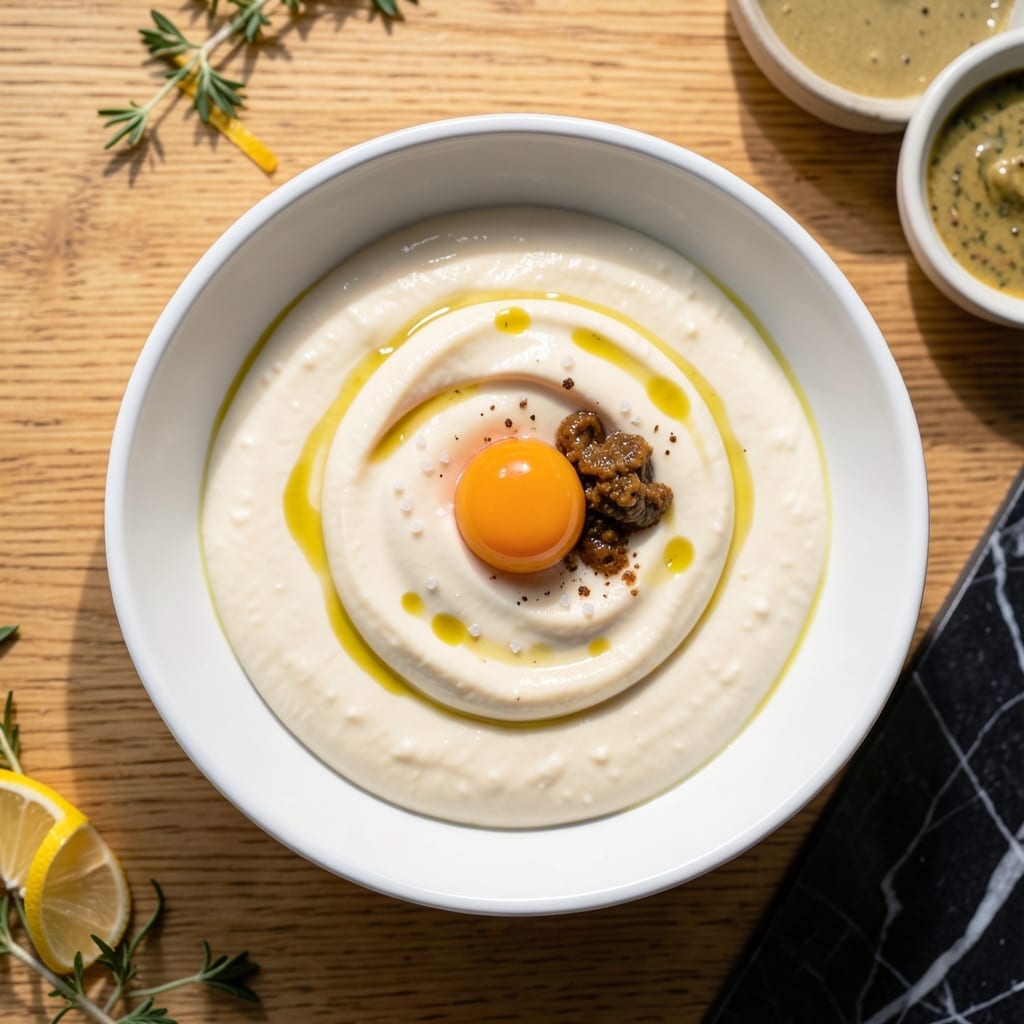
Making mayonnaise at home transforms your cooking with a creamy, rich condiment free from preservatives. This method uses avocado oil for a neutral taste and healthy fats.
With just a few simple ingredients and a whisk, you can create a smooth, stable emulsion in minutes. The result is far superior to store-bought versions.
Ingredients for Homemade Mayonnaise Recipe Avocado Oil
Eight ingredients. Ten minutes. A condiment that outshines any store-bought version.
| Ingredient | Amount | Notes |
|---|---|---|
| Avocado Oil 🫒 | 1 cup | Neutral flavor, high smoke point |
| Large Egg Yolk 🥚 | 1 whole | Room temperature for best emulsion |
| Whole Egg 🥚 | 1 whole | Room temperature for best emulsion |
| Dijon Mustard 🟡 | 1 tsp | Smooth, not whole grain |
| White Wine Vinegar 🍷 | 1 tbsp | Or apple cider vinegar |
| Lemon Juice 🍋 | 1 tbsp | Freshly squeezed preferred |
| Fine Sea Salt 🧂 | ½ tsp | Adjust to taste preference |
| Granulated Sugar 🍚 | ¼ tsp | Optional, balances acidity |
[recipe_ingredient_scaler]
Avocado oil is key here—look for refined, neutral-tasting brands like Chosen Foods or Primal Kitchen. The eggs must be fresh; older yolks won’t emulsify as well. Pasture-raised eggs yield a richer color and flavor. Dijon mustard acts as your emulsifier, so don’t skip it. Most grocery stores carry it near the vinegars.
No white wine vinegar? Apple cider vinegar or lemon juice at 1:1 ratio works. Want it tangier? Add another teaspoon of vinegar. If you’re avoiding raw eggs, pasteurized eggs are a safe alternative (found at Whole Foods). For a lighter mayo, swap half the oil for Greek yogurt—but it won’t be as stable.
Homemade mayo keeps in the fridge for 1 week. Store in a clean glass jar with a tight lid. If it separates, just whisk it back together. For longer storage, freeze in ice cube trays—thaw and re-whisk before using.
Why You’ll Love This Recipe
- Whisk and Done: I can blend this in five minutes flat with just a whisk, a bowl, and these five ingredients.
- Creamy Avocado Luxe: The avocado oil gives it a rich, velvety texture that store-bought can’t touch, and the Dijon mustard adds just the right kick.
- Meal Prep MVP: I make a big batch on Sunday and use it all week—sandwiches, salads, even as a base for creamy dressings.
- Pantry Savior: Honestly, it’s cheaper than buying jars of mayo, and I always have eggs and oil on hand anyway.
Step-by-Step Instructions for Homemade Mayonnaise with Avocado Oil
Master the emulsion technique and you’ll create silky, rich mayonnaise with perfect consistency every time.
Step 1: Combine Eggs and Mustard for the Base
In a medium bowl, whisk together the large egg yolk, whole egg, and 1 tsp Dijon mustard until fully combined. The mustard acts as an emulsifier, helping to bind the oil and eggs together into a stable emulsion.
I use a bowl with a non-slip base or place it on a damp towel to prevent movement while whisking. This base mixture should look smooth and slightly thick, with no visible streaks of mustard. Room temperature eggs are crucial—they emulsify more readily than cold eggs.
Step 2: Incorporate Acidic Components
Add the 1 tbsp white wine vinegar, 1 tbsp lemon juice, 0.5 tsp fine sea salt, and 0.25 tsp granulated sugar to the egg mixture. Whisk vigorously for 20-30 seconds until the mixture is pale and slightly thickened.
The vinegar and lemon juice provide the characteristic tang while helping to stabilize the emulsion. The salt enhances flavor, and the sugar balances the acidity. This step ensures all liquid ingredients are fully integrated before the oil is introduced.
Step 3: Begin the Emulsion with Slow Oil Addition
With a whisk in one hand and the 1 cup avocado oil in a measuring cup with a spout in the other, begin adding the oil drop by drop while whisking constantly. This slow incorporation is critical for creating a stable emulsion.
After about ¼ cup of oil has been added and the mixture begins to thicken, you can increase the stream to a very thin, steady pour. Continue whisking vigorously until all the avocado oil is incorporated. The mixture will transform from thin and liquid to thick and creamy.
Step 4: Adjust Consistency and Finish
Once all the oil is added, taste and adjust seasoning if needed. If the mayonnaise is too thick, whisk in 1 teaspoon of warm water at a time until it reaches your desired consistency. If it’s too thin, continue whisking for another 30 seconds to 1 minute—it should thicken as the emulsion stabilizes.
Transfer to an airtight container and let it rest for 10 minutes before using. This allows the flavors to meld together. The finished mayonnaise should be smooth, creamy, and hold its shape when spooned. Store in the refrigerator for up to 1 week.
Pro Tips For Making Homemade Mayonnaise Recipe Avocado Oil
- Room Temp Eggs: Pull your egg and yolk out of the fridge 30 minutes before starting—cold eggs resist emulsifying with avocado oil, and I learned this the hard way after three broken batches.
- Drip the Oil: Add the avocado oil in the thinnest possible stream at first, especially with the whole egg. I was skeptical until I tried it, but this prevents that greasy, separated mess.
- Acid Last: Hold off on the white wine vinegar until the mayo starts thickening. Adding it too early can break the emulsion, and yes, I’ve ruined a perfectly good batch this way.
- Boost with Mustard: Use a full teaspoon of Dijon mustard—it’s not just for flavor. The emulsifiers in mustard help stabilize the avocado oil and egg, making the whole process smoother.
Health Benefits of This Dish
Rich in Healthy Fats 💪
Avocado oil is packed with monounsaturated fats, which support heart health and help lower bad cholesterol. Unlike store-bought mayo loaded with processed oils, this homemade version gives you the good fats your body craves.
Boosts Vitamin Absorption 🥗
The vitamin E in avocado oil acts as an antioxidant, protecting your cells from damage. Plus, the healthy fats in this mayo help your body absorb fat-soluble vitamins (A, D, E, K) from other foods more efficiently.
Supports Skin and Hair 🍎
Thanks to its omega-9 fatty acids and vitamin E, avocado oil mayonnaise can contribute to glowing skin and strong hair. These nutrients hydrate and nourish from within, giving you a natural radiance.
No Added Preservatives
Store-bought mayo often contains artificial preservatives and additives. This homemade version lets you control the ingredients, ensuring a cleaner, preservative-free condiment that’s better for your body.
Nutrition Facts

Trained in classic French technique but raised on slow-cooked ribs and spicy rubs, she blends culinary skill with smoke and soul.
- Recipe for Boneless Pork Chops in Cast Iron Skillet: Sear and Baste to Juicy Perfection - October 3, 2026
- Recipe for Boneless Cross Rib Roast: Slow-Roasted Beef with Herb Crust - October 3, 2026
- Hamburgers in Sauce Recipe Crock Pot: Slow-Cooked Savory Delight - October 3, 2026