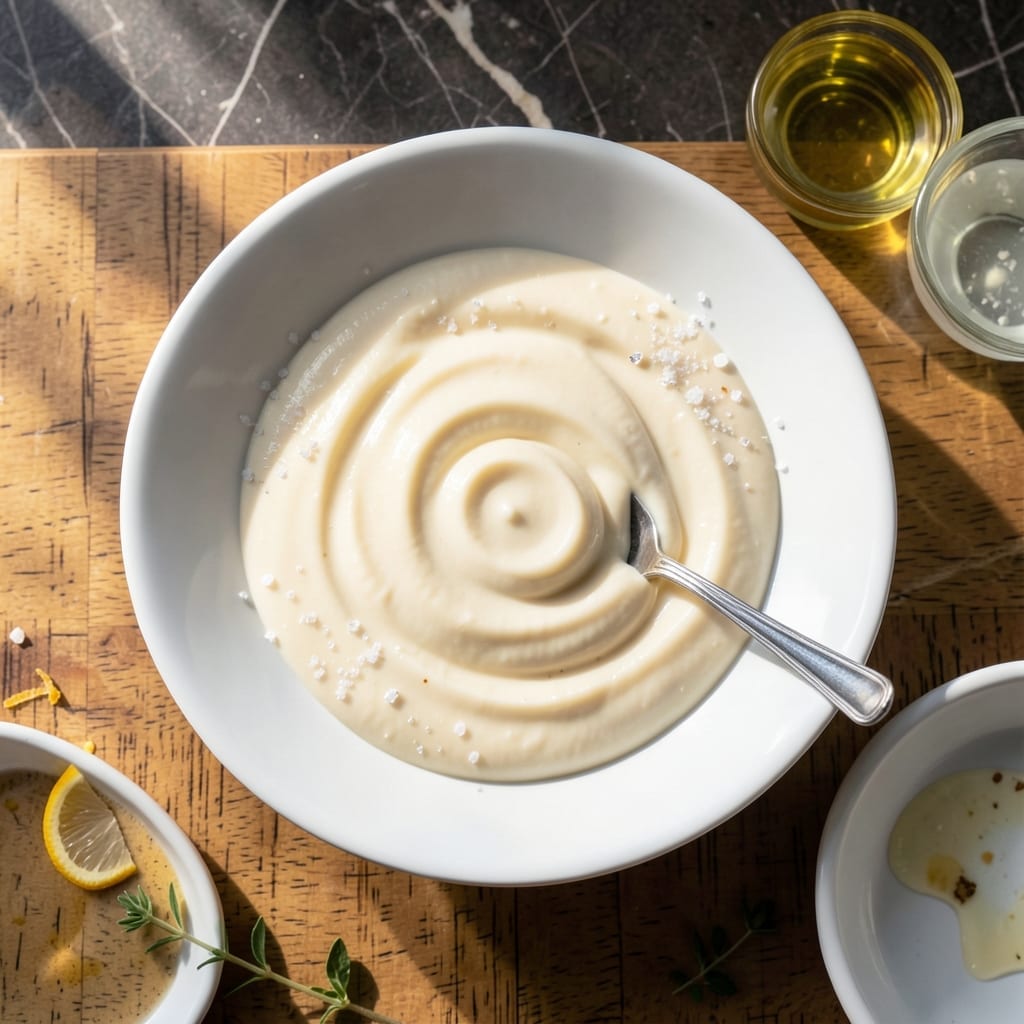
Creating the perfect emulsion at home doesn’t require mustard or special equipment. This method relies on a simple technique that anyone can master.
With just a few basic ingredients and careful whisking, you’ll achieve homemade mayonnaise that’s richer and more flavorful than any store-bought version.
Ingredients for Homemade Mayonnaise Recipe Without Mustard
Seven simple ingredients transform into creamy, rich mayonnaise without mustard.
| Ingredient | Amount | Notes |
|---|---|---|
| Large Egg Yolks 🥚 | 2 whole | Room temperature for best emulsion |
| White Wine Vinegar 🍷 | 1 tbsp | Or apple cider vinegar |
| Lemon Juice 🍋 | 1 tbsp | Freshly squeezed preferred |
| Dijon Mustard 🟡 | 0 tbsp | Omitted per recipe requirement |
| Neutral-Flavored Oil 🫒 | 1 ¼ cups | Avocado or light olive oil |
| Sea Salt 🧂 | ½ tsp | Fine grain for even distribution |
| Granulated Sugar 🍚 | ¼ tsp | Balances acidity (optional) |
| Cold Water 💧 | 1 tsp | To thin as needed |
[recipe_ingredient_scaler]
The oil quality is paramount for a clean flavor. Avocado oil offers the most neutral profile, though light olive oil (not extra-virgin) works well. For the vinegar, white wine vinegar provides ideal brightness, but apple cider vinegar is a suitable alternative. Room temperature egg yolks are essential—they emulsify far better than cold ones. Organic eggs often have richer yolks for maximum creaminess.
No white wine vinegar? Lemon juice at a 1:1 ratio maintains the acidity balance. The sugar is optional but recommended—one-quarter teaspoon enhances flavor without sweetness. For an even lighter texture, replace 1 tbsp oil with water. If you must use extra-virgin olive oil, expect a more robust, peppery flavor in the final product.
Finished mayonnaise keeps in an airtight container in the fridge for 1 week. The emulsion may separate slightly over time—simply whisk to recombine. For longer storage, freeze in ice cube trays for up to 1 month (thaw in fridge overnight).
Why You’ll Love This Recipe
- No-Fuss Mixing: I just whisk the yolks with vinegar and lemon, then slowly drizzle in oil—no complicated steps.
- Bright and Zesty: The lemon juice gives it that fresh, tangy kick I love on sandwiches.
- Endless Uses: Honestly, I slather it on burgers, mix it into dressings, or use it for dipping fries.
- Pantry Staples: Between us, I always have eggs and oil on hand, so this comes together without a grocery run.
Step-by-Step Instructions for Homemade Mayonnaise Without Mustard
Master the emulsion technique for silky, stable mayonnaise without any mustard at all.
Step 1: Whisk the Egg Yolks with Acidic Components
In a medium bowl, combine the 2 whole Large Egg Yolks with 1 tbsp White Wine Vinegar and 1 tbsp Lemon Juice. Whisk vigorously for 30-45 seconds until the mixture turns pale yellow and slightly thickens. This initial emulsification is critical—you’re creating the foundation that will hold the oil.
I always use room temperature yolks for this step. Cold yolks resist emulsification, leading to a broken sauce. The vinegar and lemon juice not only add flavor but also help stabilize the emulsion through their acidity.
Step 2: Begin the Slow Oil Incorporation
With one hand, continue whisking the yolk mixture constantly. With your other hand, begin adding the 1.25 cups Neutral-Flavored Oil in a very thin, steady stream—literally drop by drop at first. This gradual addition is what creates that perfect, creamy emulsion.
After about ¼ cup of oil has been incorporated and the mixture starts to thicken, you can increase to a thin stream. The key is maintaining constant motion. You’ll notice the color lighten and the texture become thicker as the emulsion forms.
Step 3: Season and Adjust Consistency
Once all the oil has been incorporated, add the 0.5 tsp Sea Salt and 0.25 tsp Granulated Sugar. Whisk to combine completely. The salt enhances all the flavors, while the sugar subtly balances the acidity from the vinegar and lemon juice.
The mayonnaise should now be thick and creamy. If it’s too stiff, whisk in the 1 tsp Cold Water a few drops at a time until it reaches your desired consistency. This step ensures your mayonnaise is smooth and spreadable rather than stiff.
Step 4: Verify Stability and Finish
Let the mayonnaise sit for 1-2 minutes to set. A properly emulsified mayonnaise will hold its shape when you run a spoon through it. If it separates, don’t panic—whisk in 1 tsp of hot water to bring it back together.
Taste and adjust seasoning if needed, though be cautious with additional salt as the flavors will intensify as it chills. Transfer to an airtight container and refrigerate for at least 1 hour before using to allow the flavors to meld completely.
Pro Tips For Making Homemade Mayonnaise Recipe Without Mustard
- Room Temp Eggs: Pull your egg yolks out of the fridge 30 minutes before starting—cold yolks resist emulsifying, and I learned this the hard way after three broken batches.
- Slow Oil Drizzle: Pour the oil in a thin, steady stream while whisking, especially at the beginning. I was skeptical until I tried it, but it actually changes the outcome from split mess to creamy perfection.
- Skip Cold Oil: Use room temperature neutral oil, not straight from the fridge. After burning through good eggs with chilled oil, I finally figured out it shocks the emulsion.
- Balance the Acid: Without mustard, lean a little heavier on the lemon juice than vinegar—about 2:1 ratio. My grandmother swore by this, and she was right: it keeps the flavor bright and stable.
Pro Cooking Tips for This Dish
🌡️ Temperature Matters
For a smooth emulsion, ensure all ingredients are at room temperature. Cold eggs or oil can cause the mayonnaise to break. Take them out of the fridge 30-60 minutes before starting.
💡 Slow and Steady Wins
Add the oil drop by drop at first, then in a thin stream once the emulsion begins to form. This gradual process ensures a stable, creamy texture. Rushing can lead to a separated mess.
Use a whisk or immersion blender for better control over the emulsion.
✨ Acid Balance
Since this recipe skips mustard, use lemon juice or vinegar to add tang and stability. Start with 1 teaspoon and adjust to taste. Too much acid can thin the mayo.
🎯 Fixing a Broken Emulsion
If your mayonnaise separates, don’t panic! Whisk 1 teaspoon of hot water into the broken mixture, then slowly re-incorporate the oil. This trick often saves the batch.
Nutrition Facts

Trained in classic French technique but raised on slow-cooked ribs and spicy rubs, she blends culinary skill with smoke and soul.
- Recipe for Boneless Pork Chops in Cast Iron Skillet: Sear and Baste to Juicy Perfection - October 3, 2026
- Recipe for Boneless Cross Rib Roast: Slow-Roasted Beef with Herb Crust - October 3, 2026
- Hamburgers in Sauce Recipe Crock Pot: Slow-Cooked Savory Delight - October 3, 2026