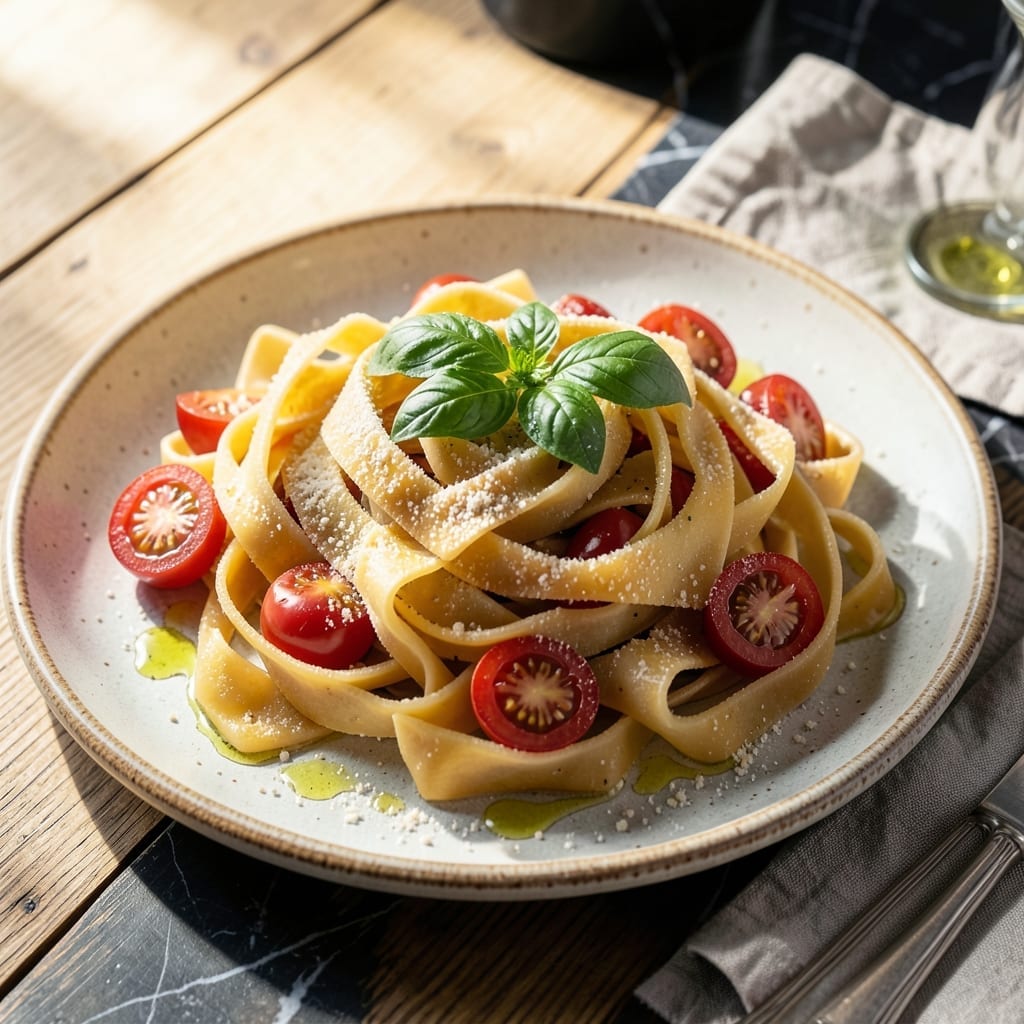
There’s something deeply satisfying about making pasta from scratch, especially when you achieve those silky ribbons without a single machine. This method relies on simple ingredients and a bit of elbow grease.
With just flour, eggs, and patience, you’ll create pasta that rivals any store-bought version. The key is in the kneading and resting—two steps that transform basic dough into tender, delicate strands.
Ingredients for Homemade Pasta Recipe Without Machine
Six simple ingredients transform into tender, delicate strands with just your hands and patience.
| Ingredient | Amount | Notes |
|---|---|---|
| All-Purpose Flour 🌾 | 2 cups | Plus extra for dusting |
| Semolina Flour 🌾 | ½ cup | For texture and bite |
| Large Eggs 🥚 | 4 whole | Room temperature preferred |
| Extra-Virgin Olive Oil 🫒 | 1 tbsp | For elasticity in dough |
| Sea Salt 🧂 | ½ tsp | Fine grain for even distribution |
| Water 💧 | 1 tbsp | As needed for consistency |
[recipe_ingredient_scaler]
The flour foundation matters most here. King Arthur’s all-purpose is my go-to for consistent results, but any high-quality brand works. Semolina adds that signature bite—look for fine-ground at Italian markets or the baking aisle. Room temperature eggs incorporate more smoothly into the dough, so pull them out 30 minutes before starting.
No semolina? Replace with additional all-purpose flour, though you’ll lose some texture. Out of olive oil? Melted butter (cool slightly) or any neutral oil works. For egg-free pasta, use water only, but expect a denser result. The salt can be adjusted to taste—just don’t skip it entirely.
Dough keeps wrapped in plastic for 24 hours in the fridge (bring to room temp before rolling). Fresh pasta cooks in 2-3 minutes—watch closely. Freeze uncooked nests on a tray first, then transfer to bags for up to 1 month.
Why You’ll Love This Recipe
- No Machine Needed: I roll it out with just a rolling pin—no special equipment, no fuss.
- Rich, Earthy Bite: The semolina flour gives it that nutty depth you just can’t get from store-bought.
- Meal Prep Dream: Fresh pasta freezes beautifully, so I always double the batch for lazy nights.
- Pennies Per Serving: A handful of flour, a few eggs, and I’ve got dinner for four for less than a fiver.
Step-by-Step Instructions for Handmade Pasta
Mastering the technique of rolling and cutting pasta by hand delivers authentic texture and flavor.
Step 1: Form the Dough on a Clean Surface
On a clean work surface, create a well with the 2 cups All-Purpose Flour and 0.5 cup Semolina Flour. Add the 4 whole Large Eggs, 1 tbsp Extra-Virgin Olive Oil, and 0.5 tsp Sea Salt to the center. This traditional method ensures even distribution of ingredients without overworking the dough.
Using a fork, gradually incorporate the flour from the edges into the wet ingredients, moving in a circular motion. The mixture will start as a shaggy mass. Continue until it becomes too stiff to mix with a fork, then switch to your hands, pressing and folding until fully combined. The dough should feel slightly tacky but not sticky.
Step 2: Knead the Dough to Develop Gluten
Knead the dough for 8-10 minutes by pushing it away from you with the heel of your hand, then folding it back over itself. Rotate the dough a quarter turn after each fold. This process develops the gluten, giving your pasta its signature elasticity and chew.
If the dough feels too dry, add the 1 tbsp Water, 1 teaspoon at a time. If it’s too sticky, work in a bit more all-purpose flour, but use restraint—too much flour makes the dough tough. You’ll know it’s ready when the dough is smooth, supple, and springs back lightly when pressed with a finger.
Step 3: Rest the Dough for Optimal Texture
Shape the dough into a ball, wrap it tightly in plastic wrap, and let it rest at room temperature for 30 minutes. This resting period allows the gluten to relax, making the dough easier to roll out thinly and evenly. Without this step, the dough will resist rolling and shrink back.
While waiting, prepare your work surface by lightly dusting it with all-purpose flour. This prevents sticking as you roll. The dough should feel slightly softer after resting, which is normal—this is the gluten relaxing, not the dough going bad.
Step 4: Roll and Cut the Pasta by Hand
Divide the rested dough into 4 equal pieces. Working with one piece at a time (keep the others covered), flatten it with your hands, then roll it out using a rolling pin. Start from the center and roll outward, rotating the dough occasionally to maintain an even thickness. Aim for a rectangle about 1/16-inch thick or thinner.
Once rolled, dust the surface lightly with flour, then loosely roll the sheet of dough into a cylinder. Using a sharp knife, slice the cylinder into ¼-inch wide ribbons for fettuccine or slightly narrower for linguine. Unfurl the ribbons and lay them flat on a floured surface to prevent sticking. Repeat with the remaining dough pieces.
Step 5: Cook Immediately or Dry for Storage
To cook fresh pasta, bring a large pot of salted water to a rolling boil. Add the pasta and cook for 2-3 minutes until it floats to the surface and is al dente. Fresh pasta cooks much faster than dried, so test it early to avoid overcooking.
If not cooking immediately, dust the cut pasta with a bit of flour, then arrange it in a single layer on a baking sheet to dry for 15-20 minutes. Once dry to the touch, you can store it in an airtight container in the refrigerator for up to 2 days or freeze for up to 1 month. This method preserves the homemade quality without sacrificing texture.
Pro Tips For Making Homemade Pasta Recipe Without Machine
- Knead Longer: I learned this the hard way—work that dough for at least 8-10 minutes until it’s smooth and elastic, or your pasta will crack when rolling.
- Use Semolina Wisely: Swap 25% of the all-purpose flour for semolina for texture, but don’t overdo it or the dough gets too stiff to roll by hand.
- Skip the Extra Flour: Resist the urge to dust the counter too heavily as you roll—just enough to prevent sticking, or your pasta turns out tough and dry.
- Rest the Dough: After mixing, let it sit covered for 30 minutes—sounds tedious, but it relaxes the gluten so it rolls out thinner and easier.
Best Sauces and Condiments for These Flavors
Classic Marinara
A bright, simple marinara lets your handmade pasta shine. Simmer 1 can San Marzano tomatoes with 3 minced garlic cloves, ¼ cup olive oil, and fresh basil for 20 minutes. The acidity cuts through the richness of fresh pasta perfectly. 💛
Brown Butter Sage
Melt ½ cup butter until nutty brown, then add 8 fresh sage leaves. Toss with pasta and finish with Parmigiano-Reggiano. This northern Italian classic pairs beautifully with the egg-rich dough.
I love how the sage leaves become crispy in the butter—it adds texture contrast.
Pesto Genovese
Blend 2 cups basil, ¼ cup pine nuts, ½ cup olive oil, and ½ cup grated Pecorino. The vibrant green sauce clings to fresh pasta ribbons. Use the best basil you can find for maximum flavor.
Garlic and Oil
Sometimes simple is best. Sauté 6 thinly sliced garlic cloves in ½ cup olive oil until golden. Add ½ tsp red pepper flakes and toss with pasta. Finish with parsley and lemon zest for brightness.
Creamy Alfredo
For a richer option, melt 4 tbsp butter and whisk in 1 cup heavy cream. Stir in 1 cup grated Parmesan until smooth. The sauce coats every strand of your fresh pasta luxuriously.
Nutrition Facts
Frequently Asked Questions
Can I use only all-purpose flour?
Yes, but semolina adds texture. For best results, keep the ratio of 2 cups all-purpose flour and omit semolina if needed. The pasta will be slightly softer but still delicious.
How thin should the pasta be?
Aim for 1/16-inch thick or thinner. Roll the dough as thin as possible without tearing for the best texture and even cooking.
Why does my dough keep springing back?
It needs more resting. If it resists rolling, wrap it and let it rest for another 15-20 minutes to relax the gluten.
Can I make this ahead of time?
Store fresh pasta in the fridge for up to 2 days or freeze for 1 month. Dust with flour to prevent sticking.

Trained in classic French technique but raised on slow-cooked ribs and spicy rubs, she blends culinary skill with smoke and soul.
- Recipe for Boneless Pork Chops in Cast Iron Skillet: Sear and Baste to Juicy Perfection - October 3, 2026
- Recipe for Boneless Cross Rib Roast: Slow-Roasted Beef with Herb Crust - October 3, 2026
- Hamburgers in Sauce Recipe Crock Pot: Slow-Cooked Savory Delight - October 3, 2026