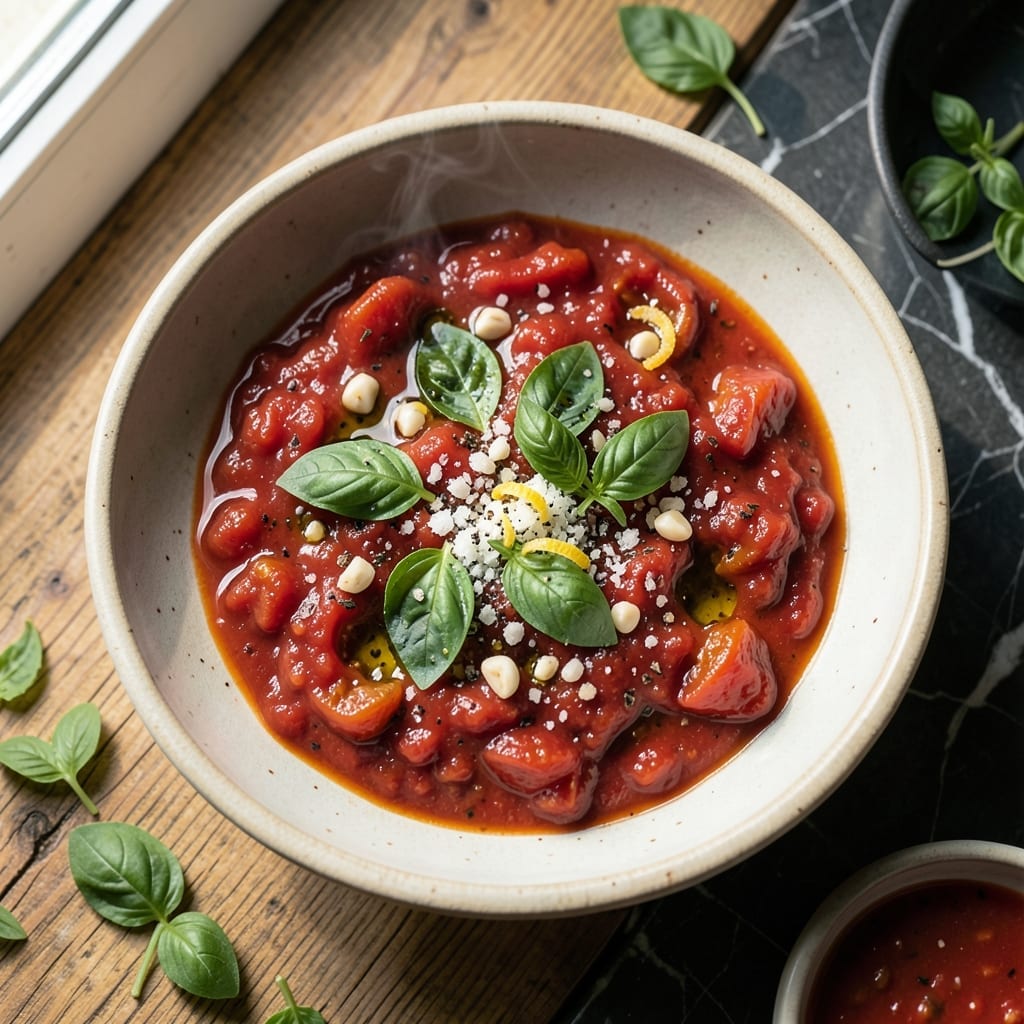
There’s nothing quite like the bright, fresh flavor of pizza sauce made from scratch using ripe tomatoes. This recipe captures the essence of San Marzano-style sauce with simple, high-quality ingredients.
With just a few steps, you’ll create a vibrant sauce that elevates any homemade pizza. The process is straightforward, and the results are far superior to store-bought options.
Ingredients for Homemade Pizza Sauce Recipe Fresh Tomatoes
Nine quality ingredients transform into vibrant San Marzano-style sauce with authentic Italian character.
| Ingredient | Amount | Notes |
|---|---|---|
| San Marzano Tomatoes 🍅 | 28 oz | Canned, whole peeled preferred |
| Extra-Virgin Olive Oil 🫒 | 2 tbsp | High quality, fruity notes |
| Garlic Cloves 🧄 | 4 cloves | Freshly minced for brightness |
| Fresh Basil Leaves 🌿 | ¼ cup | Packed, finely chopped |
| Sea Salt 🧂 | 1 ½ tsp | Fine grain, adjust to taste |
| Black Pepper 🌶️ | ½ tsp | Freshly ground for depth |
| Red Pepper Flakes 🔥 | ½ tsp | Adjust for heat preference |
| Balsamic Vinegar 💧 | 1 tbsp | Aged for complexity |
| Granulated Sugar 🍚 | 1 tsp | Balances acidity naturally |
[recipe_ingredient_scaler]
The tomatoes are non-negotiable—San Marzano whole peeled deliver the right sweetness and low acidity. Eataly or Italian specialty stores carry authentic DOP-certified cans, but most Whole Foods locations stock reliable brands. Look for the bright red, elongated tomatoes (not the round Roma style). The olive oil deserves attention too: California Olive Ranch or Filippo Berio offer consistent quality for everyday cooking.
Fresh tomatoes work in season (about 2 lbs for this quantity), but canned San Marzano are superior for year-round consistency. No fresh basil? Dried oregano at one-third the amount works. Skip the garlic powder—fresh cloves provide the bright, sharp flavor this sauce needs. For a sweeter profile, maple syrup replaces sugar at equal amounts (keeps it vegan while matching the flavor balance).
Sauce keeps 5 days refrigerated in an airtight container. For longer storage, freeze in ice cube trays then transfer to bags—good for 6 months. The flavor actually improves after 24 hours as everything melds together. Always taste before using: acidity varies by tomato batch.
Why You’ll Love This Recipe
- No Fuss Blending: I just dump everything in the blender—San Marzano tomatoes, garlic, basil—and pulse. Honestly, it’s faster than opening a jar.
- Sunshine in a Jar: That first whiff of fresh basil and sweet tomatoes simmering in olive oil? It’s like summer bottled up for pizza night.
- Freezer Friendly: I double the batch and freeze half, so I’ve got sauce ready for impromptu pizza or pasta nights.
- Pantry Hero: Five ingredients, most of which I always have on hand, and it still tastes better than store-bought. Between us, it’s my little weeknight secret.
Step-by-Step Instructions for Pizza Sauce from San Marzano Tomatoes
This method transforms canned San Marzano tomatoes into a vibrant, restaurant-quality sauce with minimal effort.
Step 1: Prepare and Drain the Tomatoes
Place the 28 oz San Marzano Tomatoes in a colander set over a bowl. Use your hands to gently crush the tomatoes, allowing the excess liquid to drain away. This step removes about 1 cup of watery liquid, which would otherwise make your sauce thin and bland.
Reserve the drained liquid for adjusting consistency later if needed, though the sauce typically won’t require it. The tomatoes should look broken down and chunky, not waterlogged. This process enhances the natural sweetness and concentration of flavor in the sauce.
Step 2: Sauté Aromatics in Olive Oil
Heat the 2 tbsp Extra-Virgin Olive Oil in a medium saucepan over medium-low heat. Add the 4 cloves Garlic Cloves, minced, and sauté for 30-45 seconds until just fragrant but not browned. Garlic burns easily, so keep the heat moderate and stir constantly.
This step builds the aromatic foundation of the sauce. The olive oil carries the garlic’s flavor through the sauce, while the gentle heat prevents bitterness. The moment the garlic starts to sizzle excessively, remove the pan from heat briefly to cool it down.
Step 3: Simmer Tomatoes with Seasonings
Add the drained San Marzano Tomatoes to the saucepan, breaking them up further with a wooden spoon. Stir in the 1.5 tsp Sea Salt, 0.5 tsp Black Pepper, 0.5 tsp Red Pepper Flakes, 1 tbsp Balsamic Vinegar, and 1 tsp Granulated Sugar.
Increase the heat to medium and bring to a gentle simmer. Reduce heat to low and let it cook uncovered for 20-25 minutes, stirring occasionally. The sauce should thicken slightly and develop a deeper color. The sugar balances the tomatoes’ natural acidity, while the balsamic adds subtle depth.
Step 4: Finish with Fresh Basil
Remove the saucepan from heat and stir in the 0.25 cup Fresh Basil Leaves, finely chopped. The residual heat will wilt the basil slightly while preserving its bright, aromatic qualities. Let the sauce cool for 10 minutes before using.
Taste and adjust seasoning if needed, though the initial measurements should provide perfect balance. The basil should remain vibrant green and fragrant, not dull and overcooked. For smooth texture, pulse briefly with an immersion blender, though I prefer the rustic chunkiness for pizza applications.
Pro Tips For Making Homemade Pizza Sauce Recipe Fresh Tomatoes
- Hand-Crush Tomatoes: Skip the blender—Sounds weird, but it works: crushing San Marzano tomatoes by hand gives you the perfect chunky texture without turning the sauce into a watery puree.
- Bloom the Garlic: Cook minced garlic in olive oil on low heat for exactly 30 seconds until just fragrant—I learned this the hard way after burning three batches. Any longer and it turns bitter.
- Salt the Tomatoes First: Sprinkle sea salt on the tomatoes and let them sit for 10 minutes before cooking to draw out excess water. This isn’t the prettiest method, but it’s the tastiest.
- Finish with Fresh Basil: Stir in torn basil leaves at the very end, off the heat. My grandmother swore by this, and she was right: heat turns basil bitter, so adding it last keeps the flavor bright.
Troubleshooting Great homemade pizza sauce recipe fresh tomatoes
🔥 Sauce Too Watery?
Using overly ripe tomatoes or skipping the straining step can leave excess liquid in your sauce, making it runny.
Quick Fix: Simmer the sauce uncovered for 10-15 extra minutes, stirring frequently, or strain out excess liquid with a fine-mesh sieve.
🍳 Bitter or Acidic Taste?
Fresh tomatoes can sometimes taste sharp, especially if they’re underripe or the sauce lacks balancing flavors.
Quick Fix: Stir in a pinch of sugar or a splash of balsamic vinegar to mellow the acidity. A pinch of baking soda (½ tsp max) can also neutralize bitterness.
🥘 Bland or Lacking Depth?
If your sauce tastes flat, it may need more seasoning or umami-rich ingredients to enhance the flavor profile.
Quick Fix: Add a minced garlic clove, a dash of red pepper flakes, or a tablespoon of tomato paste. Finish with fresh basil or oregano for brightness.
🌡️ Sauce Too Thick?
Over-reducing the sauce or using too little liquid (like water or olive oil) can make it pasty or hard to spread.
Quick Fix: Thin it with a splash of water, tomato juice, or olive oil, stirring until smooth. Adjust seasoning if needed after thinning.
Nutrition Facts

Trained in classic French technique but raised on slow-cooked ribs and spicy rubs, she blends culinary skill with smoke and soul.
- Recipe for Boneless Pork Chops in Cast Iron Skillet: Sear and Baste to Juicy Perfection - October 3, 2026
- Recipe for Boneless Cross Rib Roast: Slow-Roasted Beef with Herb Crust - October 3, 2026
- Hamburgers in Sauce Recipe Crock Pot: Slow-Cooked Savory Delight - October 3, 2026