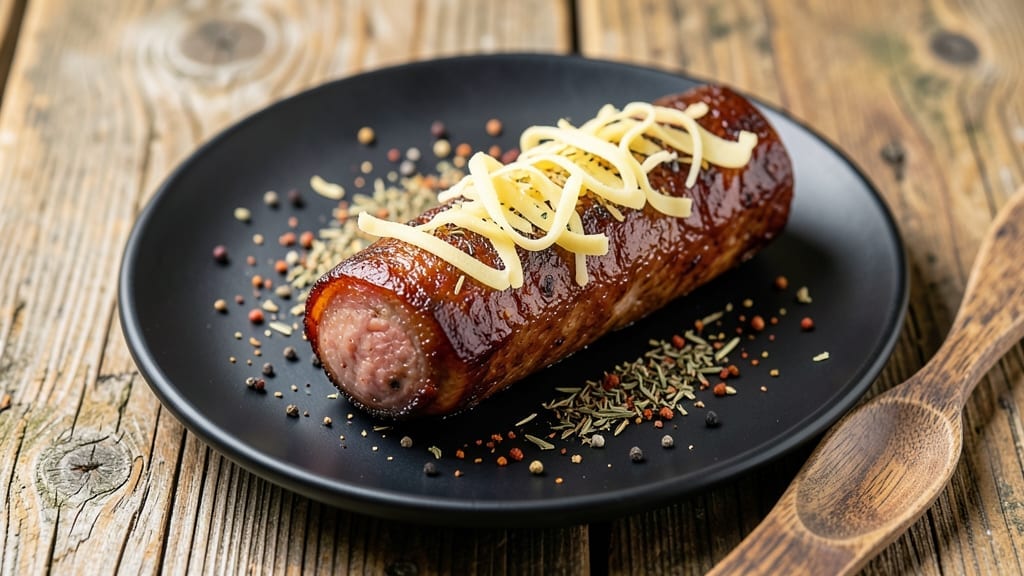
Creating homemade smoked pork sausage from scratch delivers that unmistakable crispy bark and juicy core that store-bought simply can’t match. Growing up in small-town Georgia, I learned from my grandfather that the secret lies in the seasoning blend and slow-smoking technique—both of which we’ll perfect together.
This isn’t just a recipe; it’s a tradition you can recreate in your own kitchen with just a few key tools and patience.
The process begins with grinding fresh pork shoulder and blending spices like fennel, black pepper, and a touch of nutmeg—each playing a crucial role in flavor development. We’ll stuff the mixture into natural casings (or use pre-made ones for convenience) and tie them into uniform links.
The smoking phase is where the magic happens: low-and-slow at 225°F with hickory wood transforms tough meat into melt-in-your-mouth perfection, ensuring that crispy bark you crave without drying out the inside.
What you’ll end up with is sausage that’s rich, aromatic, and packed with texture—crispy on the outside, tender on the inside. The best part?
These sausages keep well in the fridge for up to two weeks or can be frozen for months, making them perfect for meal prep or holiday gatherings.
Whether you plan to grill them for breakfast, pan-fry for dinner, or enjoy them cold with mustard, this recipe delivers restaurant-quality results every time.
Here’s where it gets interesting—this method works just as well for beginners as it does for seasoned pitmasters. We’ll cover everything from stuffing techniques to proper smoking times, plus tips for achieving that perfect balance of crisp and juicy.
Let’s get started on a batch that’ll have your family asking for seconds.
Ingredients for homemade smoked pork sausage
Fresh pork shoulder and aromatic spices create that signature sausage flavor you can’t buy.
| Ingredient | Amount | Notes |
|---|---|---|
| Pork Shoulder 🥩 | 3 lb | Bone-in, well-marbled preferred |
| Ground Fennel Seeds 🌿 | 1 tbsp | Toasted for deeper aroma |
| Coarse Ground Black Pepper 🌶️ | 2 tbsp | Freshly cracked preferred |
| Ground Nutmeg 🌿 | ½ tsp | Freshly grated nutmeg |
| Granulated Garlic 🧄 | 1 tbsp | Not garlic powder |
| Coarse Sea Salt 🧂 | 1 ½ tbsp | Kosher preferred |
| Ice Cold Water 💧 | ½ cup | For binding mixture |
| Natural Hog Casings 🎣 | 1 package | Or pre-made links |
| Butcher's Twine 🧵 | 1 roll | For tying links |
| Hickory Wood Chips 🌳 | 1 lb | For smoking flavor |
| Yellow Mustard 🍯 | 1 tbsp | For lubricating casings |
| Apple Cider Vinegar 🍎 | 1 tbsp | For acidity balance |
| Cornmeal 🌽 | ¼ cup | For dredging before smoking |
[recipe_ingredient_scaler]
The pork shoulder is everything here—bone-in, well-marbled cuts from local butchers or Costco give you that melt-in-your-mouth texture. Look for bright red meat with good fat distribution (that’s where the flavor hides). If you’re buying pre-ground pork, ask for coarse grind—it binds better. For the spices, Penzeys Spices has the best fennel seeds, but any bulk bin works. Toast your fennel seeds in a dry pan for 30 seconds before grinding—that aroma is non-negotiable. And trust me, the nutmeg makes all the difference (even though it’s just a pinch).
No natural casings? Pre-made links from Butcher’s Broom save time—just skip the stuffing step. Running short on hickory chips? Oak or cherry work too, but hickory’s the classic. The yellow mustard isn’t just for flavor—it lubricates the casings so the meat slides in smoothly. No vinegar? Lemon juice at half the amount works in a pinch. For the cornmeal, Bob’s Red Mill is my go-to—it’s fine enough to coat but not so fine it clouds the water. And if you’re making a big batch, double the spices—they’ll keep for months in an airtight container.
This mixture keeps in the fridge for 2 days before stuffing—perfect for meal prep. Stuffed sausages last 2 weeks refrigerated or 6 months frozen. For smoking, 225°F is non-negotiable—any hotter and you’ll dry them out. I like to smoke them 1.5 hours per pound, then finish on the grill for that crispy bark. The cornmeal coating? Don’t skip it—it’s what gives you that perfect crust. And if you’re not using them all at once, freeze them in a single layer first to prevent sticking.
Why You’ll Love This Recipe
- No Fuss, All Flavor: Mixing the spices into the pork takes less than 10 minutes—just toss everything together, let it chill for 30 minutes, and you’re ready to stuff. No fancy prep, just pure hands-on seasoning magic with the fennel, nutmeg, and granulated garlic working their charm.
- Crispy Edge, Creamy Center: That cornmeal crust? It’s not just for show—it turns the outside into a satisfying crunch while keeping the inside juicy and tender. The hickory smoke and nutmeg give it warmth, and the apple cider vinegar keeps it from tasting too heavy. Trust me, the first bite is addictive.
- Feeds a Crowd (or Just You): Make a batch, and you’ve got dinner for four or leftovers for lunch. The stuffed links freeze like a dream for up to six months, so you can pull them out on a lazy Sunday without missing a beat. Plus, they’re the perfect protein for sandwiches, salads, or just eating straight from the smoker.
- Budget-Friendly Luxury: Three pounds of pork shoulder isn’t cheap, but when you divide it into links, you’re getting restaurant-quality sausage for a fraction of the cost. The spices are cheap, the technique is simple, and the results? Worth every penny. Plus, no pre-made sausage here—just pure, homemade goodness.
Step-by-step instructions for homemade smoked pork sausage
Here’s how to craft restaurant-quality smoked pork sausage with a perfect crispy bark and juicy interior.
Prepare the Meat and Seasoning Mixture
Start by grinding the 3 lb pork shoulder through a coarse meat grinder plate—this creates the right texture for juicy sausage. While the meat is still warm, spread it out on a clean surface and let it cool slightly. In a small bowl, combine the 1 tbsp ground fennel seeds, 2 tbsp coarse ground black pepper, ½ tsp ground nutmeg, 1 tbsp granulated garlic, and 1½ tbsp coarse sea salt. Mix well to distribute the spices evenly.
Now, work the seasoning mixture into the pork shoulder by hand, pressing firmly to ensure every bite gets that aromatic blend. The fennel seeds will give your sausage that distinctive, slightly sweet depth, while the nutmeg adds warmth. Don’t rush this step—thorough mixing guarantees flavor in every link. Once fully incorporated, cover the meat and refrigerate for 30 minutes to firm up slightly before stuffing.
Prepare the Casings and Stuff the Sausage
Soak the 1 package natural hog casings in ½ cup ice cold water for 15-20 minutes until pliable. Meanwhile, prepare a sausage stuffer or use a funnel attached to a large plastic bag with a small cut in the corner. Add the chilled pork mixture to the stuffer and begin filling the casings, twisting off 6-inch links as you go. If the casings stick, dip your fingers in the ice cold water and gently slide them along.
For extra security, tie each link with butcher’s twine every 3-4 inches to prevent bursting. I like to make 4-6 links per package—this size smokes beautifully without drying out. Once all links are stuffed, place them on a tray lined with parchment paper and refrigerate for 1 hour to firm up completely. This chilling step is crucial for maintaining shape during smoking.
Create the Cornmeal Coating and Smoke
In a shallow dish, combine the ¼ cup cornmeal with 1 tbsp yellow mustard and 1 tbsp apple cider vinegar. Mix well to form a dry, slightly sticky coating. This mixture serves two purposes: it creates a golden crust during smoking and balances the richness of the pork. Remove the sausage links from the refrigerator and roll each one in the cornmeal mixture, pressing gently to adhere evenly. Place them on a wire rack set over a baking sheet.
While the sausage rests, prepare your smoker by adding 1 lb hickory wood chips to the smoking box. Preheat the smoker to 225°F—this low-and-slow temperature ensures tender, juicy meat with a perfect bark. Once the smoker reaches temperature, place the coated sausage links on the grill grates, leaving space between each for proper airflow. Smoke for 1 hour 15 minutes, checking occasionally to ensure the wood chips maintain steady smoke production.
Finish with Crispy Bark and Rest
After 1 hour 15 minutes, increase the smoker temperature to 250°F and continue smoking for another 30-45 minutes until the sausage reaches an internal temperature of 155°F and develops a deep, golden-brown bark. The cornmeal coating will crisp up beautifully, creating that irresistible crunch. Watch closely during this final stage—you want the bark to be crispy but not burnt.
Remove the sausage from the smoker and let it rest for 10 minutes before serving. This resting period allows the juices to redistribute, ensuring each bite is moist and flavorful. Slice into rounds and serve immediately with crusty bread or your favorite sides. The result? Juicy, aromatic pork sausage with a crispy exterior that’ll have everyone asking for seconds.
Pro Tips For Making Homemade Smoked Pork Sausage
- Toast the Fennel: I learned this the hard way—skipping the toast on the 1 tbsp ground fennel seeds means your sausage tastes flat. Dry-toast them in a pan for 30 seconds until fragrant; that aroma locks into the meat during the 30-minute fridge rest. Trust me, the difference is night and day.
- Chill the Casings Right: The ½ cup ice cold water for soaking the casings isn’t just for pliability—it’s for control. If the water’s lukewarm, the casings stretch unevenly and burst mid-stuff. Keep that bowl of water icy, and your fingers dipped in it too when sliding the meat through. No more sticky messes.
- Twine Every 3 Inches: I used to tie links loosely, thinking it was optional. Then I watched them balloon like overinflated balloons at 250°F. Butcher’s twine every 3-4 inches isn’t just decoration—it’s the only thing keeping your 6-inch links from splitting open. Do it tight, or regret it later.
- Vinegar Before Cornmeal: Mixing the 1 tbsp apple cider vinegar into the cornmeal coating isn’t just about taste—it’s about adhesion. Without it, the ¼ cup cornmeal flakes off during smoking, leaving you with a sad, uneven crust. A little acidity makes the coating stick like glue, so your bark crisps up perfectly.
Common mistakes when making this dish
Overstuffing the Casings
One of my biggest pet peeves is when people cram too much meat into the casings. This creates uneven links that burst during smoking or leave you with thin, dry sausages. I recommend filling each casing to about 70% capacity—just enough to create a nice, thick link without stretching.
If you’re using a stuffer, press gently and stop when the casing is ½ inch thick. Trust me, the extra effort prevents a complete disaster. 🔥
Skipping the Chill Time
After stuffing, many beginners rush to smoke without chilling the sausages for 1 hour. This is a recipe for disaster—the meat won’t hold its shape, and the casings will sag or burst.
I always refrigerate mine until they’re firm to the touch. It’s worth the wait for perfect, uniform links that smoke beautifully. This step is non-negotiable if you want professional results.
Ignoring the Cornmeal Coating
The cornmeal mixture isn’t just decoration—it’s what gives your sausage that perfect golden crust. Skipping it means you’ll end up with a bland, greasy exterior instead of that crispy, flavorful bark. I mix ¼ cup cornmeal with 1 tbsp mustard and 1 tbsp vinegar for that sticky adhesion.
Don’t skip this step, or you’ll miss out on the texture that makes these sausages irresistible.
Temperature Fluctuations
Smoking at inconsistent temperatures is a common mistake that ruins texture. If your smoker jumps from 225°F to 275°F, you’ll end up with dry, overcooked sausage. I use a reliable thermometer and maintain 225°F for the first 1.5 hours, then carefully increase to 250°F for the finish.
Consistency is key—your sausage’s life depends on it.
Under-Tying the Links
Tying your sausages with butcher’s twine every 3-4 inches prevents them from unraveling during smoking. Many beginners either skip tying entirely or use loose knots that come undone. I use a double knot for security and space them evenly. This ensures your sausages maintain their shape and cook evenly throughout.
Rushing the Rest
After smoking, I always let the sausages rest for at least 10 minutes before slicing. Skipping this step means you’ll lose all those precious juices to the cutting board.
I’ve seen too many people slice immediately and end up with dry, stringy sausage. That short rest period is what makes the difference between good and great.
Nutrition facts
Frequently asked questions
Why does my homemade smoked pork sausage need that long chill time before smoking?
Chilling the stuffed sausages for 1 hour in the fridge is essential to firm up the meat and casings. This prevents sagging or bursting during smoking, ensuring uniform links that cook perfectly. Skipping this step often leads to uneven shapes and potential leaks—trust the process for professional results!
Can I use pre-made sausage links instead of natural hog casings?
Pre-made links save time and effort, especially for beginners. Just skip the stuffing step and focus on tying the links securely with butcher’s twine every 3-4 inches. The texture and flavor will be nearly identical—just ensure they’re high-quality for the best results.
What’s the best way to prevent my sausage from drying out during smoking?
Keep the smoker at a consistent 225°F for the first 1.5 hours, then gradually increase to 250°F. Avoid high heat, and always use a reliable thermometer to monitor internal temps. The cornmeal coating also helps retain moisture while adding that crispy bark you love!
How do I know when the sausage is done?
Check for an internal temperature of 155°F using a meat thermometer—this ensures it’s safe and juicy. The bark should also be deep golden-brown and crispy. Overcooking can dry it out, so pull it off the heat just as it hits that temp. Patience here pays off!
Can I freeze the smoked sausage for later?
Yes! After smoking, let them cool completely, then wrap individually in plastic wrap or foil. They’ll keep for up to 6 months in the freezer. Thaw overnight in the fridge before reheating—microwaving or pan-searing works best to restore that crispy bark.

Trained in classic French technique but raised on slow-cooked ribs and spicy rubs, she blends culinary skill with smoke and soul.
- Smoked Brisket Recipe: Low and Slow to Fall-Apart Tenderness - November 2, 2026
- Smoked Turkey Breast Recipe: Juicy Pink Center With Crispy Skin Every Time - November 2, 2026
- Leftover Smoked Pulled Pork Chili Recipe: Rustic Flavor Revival in One Pot - November 2, 2026