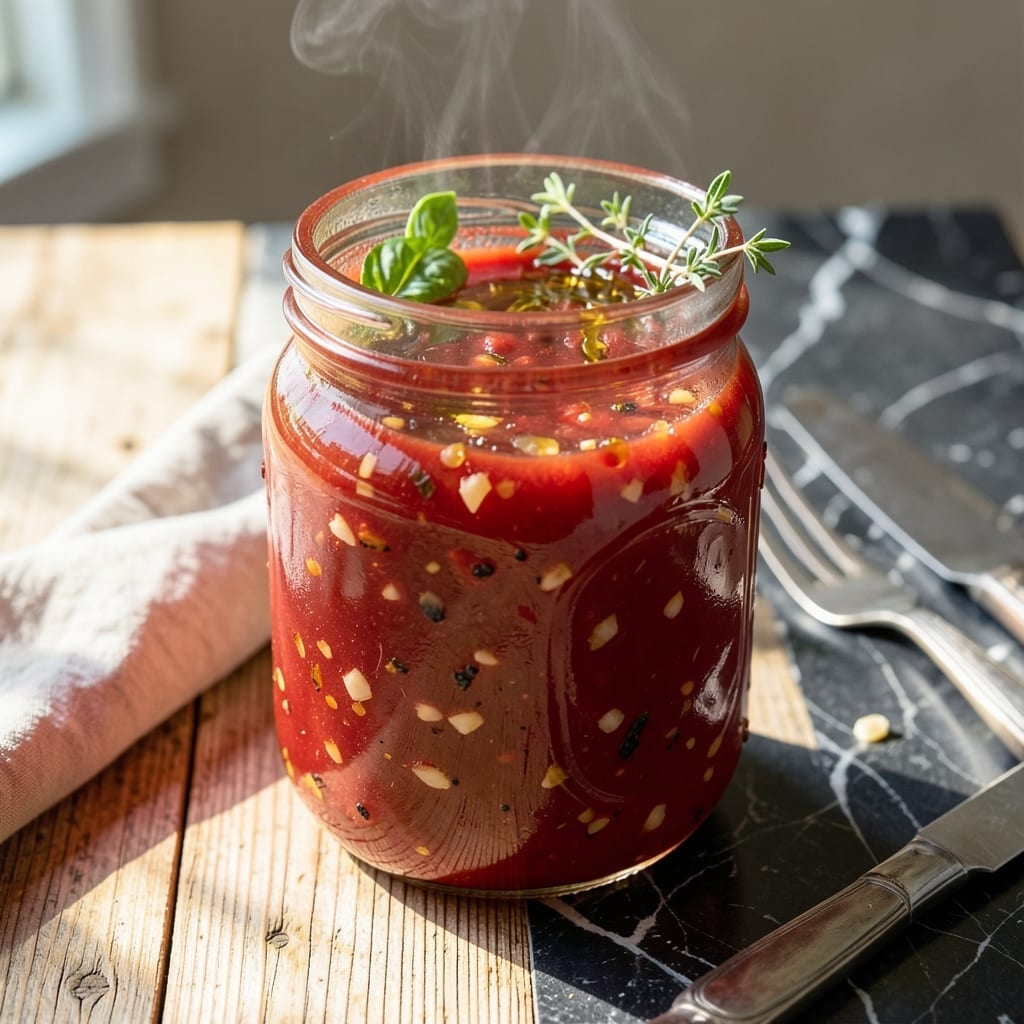
Preserving summer’s bounty has never been more rewarding than with this time-tested method for canning tomato sauce at home. The process transforms fresh garden tomatoes into a rich, versatile sauce that captures peak flavor.
This homemade approach ensures you’ll have high-quality tomato sauce ready for pasta, stews, or pizzas all year. The technique is straightforward yet delivers professional results every time.
Ingredients for Homemade Tomato Sauce Recipe Canning
Transform garden tomatoes into rich, versatile sauce with these quality ingredients for year-round flavor.
| Ingredient | Amount | Notes |
|---|---|---|
| Roma Tomatoes 🍅 | 20 lb | Fresh, ripe, cored and quartered |
| Yellow Onion 🧅 | 2 whole | Medium, finely diced |
| Garlic Cloves 🧄 | 8 cloves | Peeled and minced |
| Extra-Virgin Olive Oil 🫒 | ½ cup | High quality, cold-pressed |
| Fresh Basil Leaves 🌿 | 1 cup | Loosely packed, chopped |
| Fresh Oregano Sprigs 🍃 | ½ cup | Leaves stripped, chopped |
| Sea Salt 🧂 | 2 tbsp | Fine grain, adjust to taste |
| Canning Salt 🧂 | 1 tsp | Optional, for preservation |
| Red Wine Vinegar 💧 | ½ cup | For acidity balance |
| Black Pepper 🌶️ | 1 tsp | Freshly ground preferred |
[recipe_ingredient_scaler]
Roma tomatoes are ideal here—their low water content and meaty texture create a thicker sauce. Source from local farmers markets during peak season (late summer to early fall) for the best flavor. Avoid overripe or bruised tomatoes, as they can introduce bitterness. For large batches, Costco or Sam’s Club often sell bulk Roma tomatoes at reasonable prices during harvest season.
No fresh herbs? Dried basil and oregano at one-third the amount work in a pinch, though fresh delivers superior aroma. Skip the canning salt if unavailable—regular sea salt is fine, but avoid iodized table salt as it can cloud the sauce. The vinegar ensures safe acidity; apple cider vinegar can substitute if needed, but maintain the same volume.
Processed sauce keeps for 12-18 months in a cool, dark pantry. Once opened, refrigerate and use within 5-7 days. For best results, store jars away from direct sunlight and heat sources to preserve color and flavor integrity.
Why You’ll Love This Recipe
- One-Pot Wonder: I toss in the Roma tomatoes, onion, and garlic, then let the pot do the work—no fancy techniques or constant stirring.
- Sun-Kissed Flavor: The fresh basil and slow-simmered tomatoes taste like summer in a jar, with that rich, sweet depth only homemade can deliver.
- Pantry Superhero: I can this sauce in batches and reach for it all year—pasta night, pizza base, or even soups in a pinch.
- Budget-Friendly Staple: Roma tomatoes are cheap in season, and a few dollars worth makes enough sauce to last months. Honestly, my grocery bill thanks me.
Step-by-Step Instructions for Homemade Tomato Sauce Canning
Master this preserving technique to capture peak tomato flavor for year-round enjoyment.
Step 1: Prepare and Blanch the Tomatoes
Wash and core all 20 lb Roma Tomatoes, then cut them into quarters. I prefer to remove the cores with a small paring knife for cleaner processing. The uniform size of Roma tomatoes makes them ideal for sauce as they have less water content than other varieties.
Bring a large pot of water to a rolling boil. Prepare an ice bath in a separate large bowl. Working in batches, blanch the tomatoes for 30-60 seconds until the skins begin to split. Immediately transfer them to the ice bath to stop the cooking process. The skins will slip right off when you squeeze the tomatoes gently.
Step 2: Sauté the Aromatics
Heat the 0.5 cup Extra-Virgin Olive Oil in a large, heavy-bottomed pot over medium heat. Add the 2 whole Yellow Onion, finely diced, and cook for 5-7 minutes until translucent and just beginning to caramelize at the edges.
Add the 8 cloves Garlic Cloves, minced, and cook for 1 minute until fragrant but not browned. Garlic burns easily, so keep it moving in the pan. This aromatic base builds depth of flavor that will infuse the entire batch of sauce.
Step 3: Simmer and Reduce the Sauce
Add all the peeled tomatoes to the pot, crushing them by hand as you go. Stir in the 2 tbsp Sea Salt, 1 tsp Canning Salt, and 1 tsp Black Pepper. Bring to a gentle boil, then reduce heat to maintain a steady simmer.
Cook uncovered for 1-2 hours, stirring occasionally, until the sauce thickens to your desired consistency. The volume will reduce by about one-third. For a smoother texture, use an immersion blender to puree the sauce directly in the pot.
Step 4: Finish with Fresh Herbs and Acid
Stir in the 1 cup Fresh Basil Leaves and 0.5 cup Fresh Oregano Sprigs, both chopped. These fresh herbs add brightness and complexity to the sauce. Simmer for an additional 10 minutes to allow the flavors to meld.
Add the 0.5 cup Red Wine Vinegar and stir well. The vinegar not only balances the natural sweetness of the tomatoes but also ensures a safe pH level for canning. Taste and adjust seasoning if needed, though the flavors will concentrate slightly during processing.
Step 5: Process for Safe Canning
Ladle the hot sauce into sterilized canning jars, leaving ½-inch headspace at the top. Remove any air bubbles with a plastic knife or bubble tool. Wipe the rims clean with a damp cloth to ensure a proper seal.
Process the jars in a water bath canner for 35 minutes for pints or 40 minutes for quarts, adjusting for altitude as necessary. The sauce is safely preserved when the jar lids have sealed completely, which you’ll hear as a satisfying “pop” as they cool.
Pro Tips For Making Homemade Tomato Sauce Recipe Canning
- Simmer Low and Slow: After burning my first batch, I learned to keep the heat at a gentle simmer—around medium-low—for at least 45 minutes to deepen the flavors without scorching the onions or garlic.
- Seed the Tomatoes: I used to skip this, but removing the seeds and excess juice from Roma tomatoes gives a thicker, richer sauce that doesn’t water down during canning.
- Skip the Overcrowding: Resist the urge to dump all the tomatoes in at once; cook them in batches if needed to avoid a watery, unevenly cooked sauce.
- Add Basil Last: Fresh basil loses its bright flavor if simmered too long, so stir it in during the last 5 minutes of cooking—just enough to infuse the sauce without turning it bitter.
Dietary Considerations for These Flavors
Keto-Friendly Options
For a keto-friendly homemade tomato sauce, skip added sugars and thickeners like cornstarch. Use low-carb sweeteners like erythritol if needed, and boost flavor with herbs, garlic, and olive oil. A splash of balsamic vinegar adds depth without carbs.
Gluten-Free Modifications
This recipe is naturally gluten-free if you avoid cross-contamination. Skip flour-based thickeners and use xanthan gum or arrowroot powder instead. Always check labels on canning supplies to ensure they’re certified gluten-free.
Allergen Awareness
Common allergens like garlic and onions can be omitted or replaced with asafetida (hing) for a similar flavor. For nightshade sensitivities, consider a roasted red pepper base as an alternative to tomatoes.
Vegetarian and Vegan Adjustments
This sauce is inherently vegetarian. For vegans, ensure no animal-based additives (like anchovies or butter) are used. Enhance umami with mushrooms, nutritional yeast, or miso paste for a richer taste.
Low-Sodium Alternatives
Reduce or eliminate added salt, and use fresh herbs, citrus zest, or smoked paprika for flavor. If canning, opt for no-salt-added tomato products and balance acidity with a pinch of baking soda if needed.
Nutrition Facts

Trained in classic French technique but raised on slow-cooked ribs and spicy rubs, she blends culinary skill with smoke and soul.
- Recipe for Boneless Pork Chops in Cast Iron Skillet: Sear and Baste to Juicy Perfection - October 3, 2026
- Recipe for Boneless Cross Rib Roast: Slow-Roasted Beef with Herb Crust - October 3, 2026
- Hamburgers in Sauce Recipe Crock Pot: Slow-Cooked Savory Delight - October 3, 2026