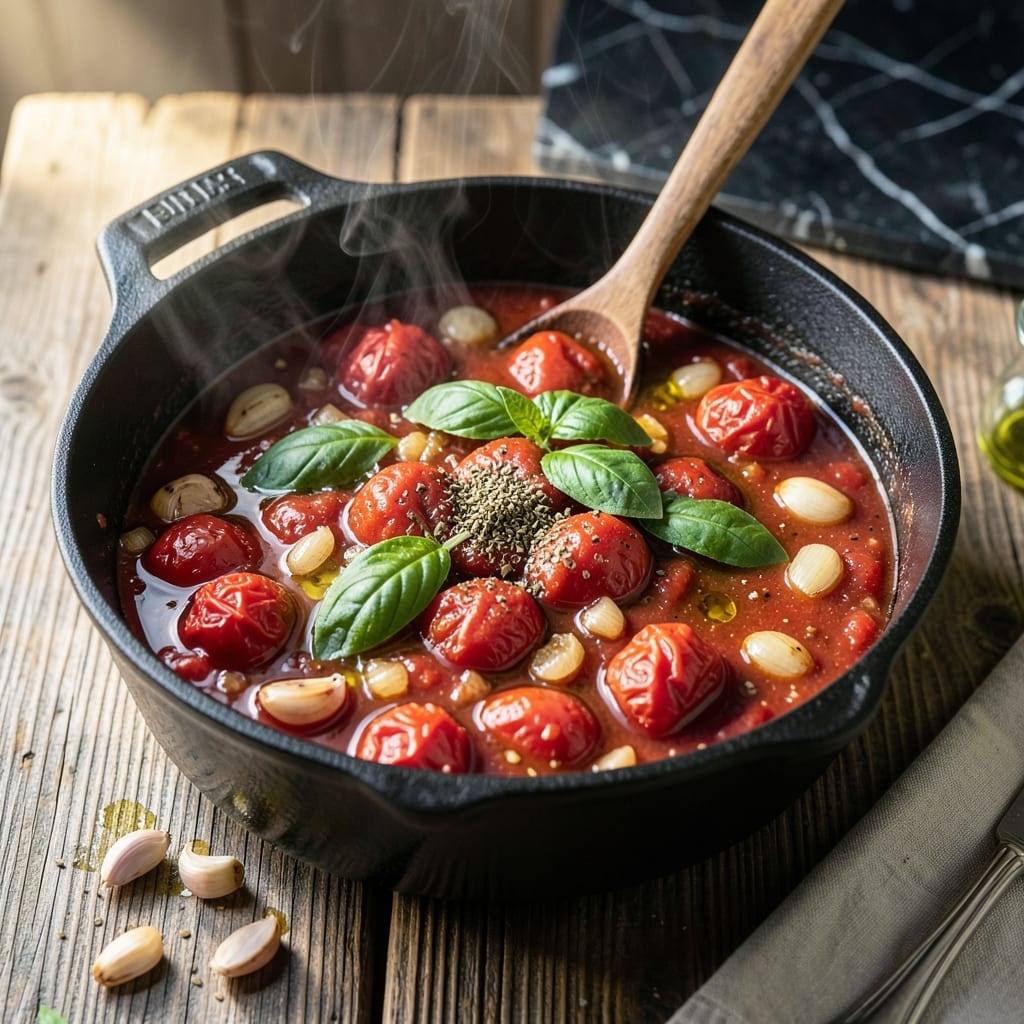
Nothing beats the vibrant flavor of sauce made from peak-season tomatoes simmered down to silky perfection. This proven method captures summer in every spoon without complicated techniques.
With just fresh tomatoes, basic aromatics, and time, you’ll create a rich, homemade sauce that outshines any store-bought version. Freeze or can extras to enjoy garden-ripe taste year-round.
Ingredients for Homemade Tomato Sauce Recipe with Fresh Tomatoes
Peak-season tomatoes plus a few pantry staples transform into this vibrant sauce.
| Ingredient | Amount | Notes |
|---|---|---|
| Fresh Roma Tomatoes 🍅 | 8 lb | Ripe, cored and quartered |
| Extra-Virgin Olive Oil 🫒 | ¼ cup | For sautéing aromatics |
| Yellow Onion 🧅 | 1 whole | Medium, finely diced |
| Garlic Cloves 🧄 | 6 cloves | Minced for depth of flavor |
| Fresh Basil Leaves 🌿 | ½ cup | Loosely packed, torn by hand |
| Dried Oregano 🍃 | 1 tsp | Mediterranean variety preferred |
| Crushed Red Pepper Flakes 🌶️ | ½ tsp | Adjust to taste preference |
| Sea Salt 🧂 | 1 ½ tsp | Fine grain for even distribution |
| Freshly Ground Black Pepper 🌶️ | ½ tsp | Cracked just before using |
| Tomato Paste 🍅 | 2 tbsp | For concentrated tomato flavor |
[recipe_ingredient_scaler]
Tomatoes are everything here. Roma or San Marzano are ideal for their low water content and sweet flesh. Hit your local farmers market at peak season—look for tomatoes that are heavy for their size with vibrant color and no bruises. I always grab a few extra pounds to can or freeze for winter. For the olive oil, California Olive Ranch or Colavita are reliable grocery store picks.
Short on tomatoes? Canned San Marzano tomatoes (28 oz cans) work in a pinch—just drain well and break them up by hand. No fresh basil? Dried basil at one-third the amount is fine, but add it earlier in cooking. Want more complexity? A splash of balsamic vinegar or a pinch of sugar balances acidity. The garlic can be adjusted to taste, but don’t skip it entirely.
Sauce keeps in the fridge for 5 days or can be frozen for 6 months. Portion into airtight containers—leaving headspace for expansion. For canning, use a tested recipe and proper equipment. Always taste and adjust seasoning after storage.
Why You’ll Love This Recipe
- One-Pot Wonder: I just dump everything in a single pot—Roma tomatoes, garlic, basil—and let it simmer while I do other things.
- Sunshine in a Jar: The sweetness of fresh tomatoes mixed with that olive oil and basil aroma is ridiculously good.
- Meal Prep Hero: I make a big batch on Sunday and use it for pasta, pizza, or soups all week long.
- Budget Keeper: Honestly, it costs less than store-bought and tastes ten times better.
Step-by-Step Instructions for Homemade Tomato Sauce
Here’s how I turn garden-fresh tomatoes into rich, velvety sauce with minimal effort.
Step 1: Prep and Sauté the Aromatics
Heat the 0.25 cup Extra-Virgin Olive Oil in a large, heavy-bottomed pot over medium heat. Add the finely diced Yellow Onion and sauté for 5-7 minutes until it turns translucent and golden at the edges—this builds the flavor foundation.
Next, add the minced Garlic Cloves and cook for 30 seconds until fragrant. Be careful not to let it brown. Stir in the 2 tbsp Tomato Paste and cook for another 2 minutes, which deepens its flavor and eliminates any raw taste.
Step 2: Add Tomatoes and Seasonings
Increase the heat to medium-high and add all 8 lb Fresh Roma Tomatoes (cored and quartered). Stir well to combine with the aromatics. The tomatoes will release a lot of liquid—that’s exactly what you want.
Now, add the 1 tsp Dried Oregano, 0.5 tsp Crushed Red Pepper Flakes, 1.5 tsp Sea Salt, and 0.5 tsp Freshly Ground Black Pepper. Stir everything together and bring the mixture to a gentle boil.
Step 3: Simmer Until Thickened
Once boiling, reduce the heat to low so the sauce maintains a steady simmer. Partially cover the pot and let it cook for 45-60 minutes, stirring occasionally to prevent sticking.
You’ll notice the sauce gradually thickening and the tomatoes breaking down. Use a wooden spoon to mash any larger pieces against the side of the pot—this helps create a uniform texture. The sauce is ready when it has reduced by about a third and coats the back of a spoon.
Step 4: Finish with Fresh Basil
Remove the pot from the heat and stir in the 0.5 cup Fresh Basil Leaves (torn by hand). The residual heat will wilt the basil perfectly without overcooking it, infusing the sauce with its bright, aromatic flavor.
Let the sauce sit for 10 minutes to allow the flavors to meld together. Taste and adjust the seasoning if needed—sometimes a pinch more Sea Salt or a dash of Crushed Red Pepper Flakes can elevate it just right.
Pro Tips For Making Homemade Tomato Sauce Recipe With Fresh Tomatoes
- Blanch the Tomatoes: Drop Roma tomatoes in boiling water for 30 seconds, then ice bath—this makes peeling them a breeze and saves you 20 minutes of frustration with a knife.
- Sweat the Onions: Cook the yellow onion in olive oil on medium-low for at least 8 minutes until translucent; I learned this the hard way after too many batches tasted raw and sharp.
- Skip the Seeds: Scoop out the seeds and gel from the tomatoes before chopping—sounds tedious, but it actually changes the outcome by removing excess bitterness and water.
- Add Basil Late: Stir in fresh basil leaves during the last 5 minutes of cooking; adding them earlier turns them bitter and dull, and nobody wants sad basil in their sauce.
Serving Suggestions for This Dish
Plating Styles 🍽️
For a casual meal, serve your homemade tomato sauce in a rustic bowl or drizzled over pasta on a simple plate. A formal presentation calls for elegant white dishware with a neat swirl of sauce, while a buffet setup benefits from a warm chafing dish to keep it fresh.
Garnishing Techniques ✨
Enhance the dish with fresh herbs like basil or oregano, or add a drizzle of olive oil for a glossy finish. For extra flair, sprinkle grated Parmesan or red pepper flakes. A balsamic reduction swirl can add a sophisticated touch to the plating.
Portion Sizes
For individual servings, ladle about ½ cup of sauce over pasta or as a dip. For family-style dining, place a larger bowl in the center of the table, letting everyone serve themselves. Adjust portions based on whether the sauce is the star or a complement to the dish.
Serving Temperature 🌡️
Serve the tomato sauce warm for the best flavor. Let it rest for 5-10 minutes after cooking to allow the flavors to meld. If using it as a dip or topping, ensure it’s at room temperature for a smoother texture.
Nutrition Facts

Trained in classic French technique but raised on slow-cooked ribs and spicy rubs, she blends culinary skill with smoke and soul.
- Recipe for Boneless Pork Chops in Cast Iron Skillet: Sear and Baste to Juicy Perfection - October 3, 2026
- Recipe for Boneless Cross Rib Roast: Slow-Roasted Beef with Herb Crust - October 3, 2026
- Hamburgers in Sauce Recipe Crock Pot: Slow-Cooked Savory Delight - October 3, 2026