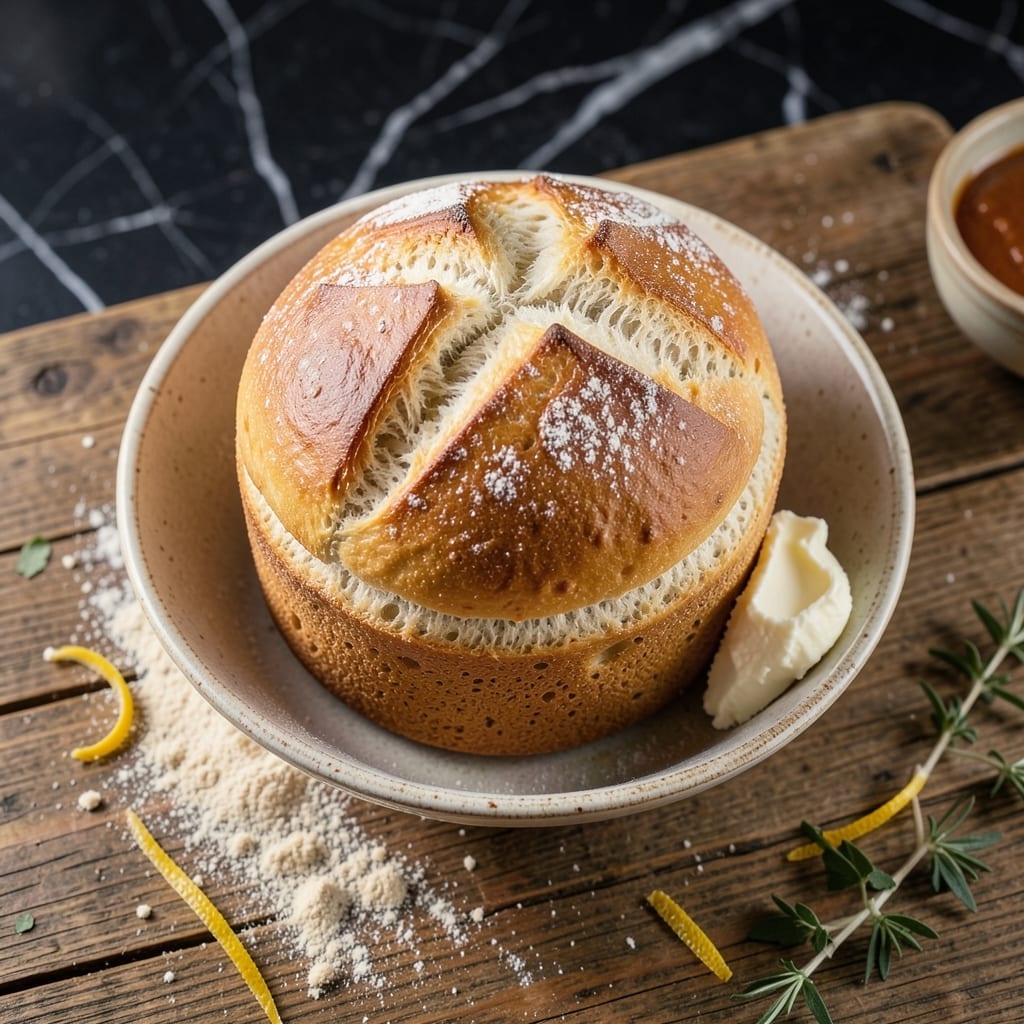
Nothing beats the satisfaction of pulling a warm, homemade loaf from the oven. This method delivers a pillowy soft texture with a golden crust, using just a handful of pantry staples.
Instant yeast makes this recipe accessible to bakers of all skill levels, with no special equipment required. The dough comes together quickly and rises reliably, ensuring consistent results every time.
In under 3 hours, you’ll have a fresh-baked loaf that fills your kitchen with an irresistible aroma. The secret lies in proper kneading and just the right amount of rise time.
Slice it thick for sandwiches or serve warm with butter for a simple pleasure. The process is as rewarding as the final product.
Ingredients for Homemade White Bread Recipe with Instant Yeast
A handful of pantry staples transforms into a pillowy soft, golden-crusted loaf with ease.
| Ingredient | Amount | Notes |
|---|---|---|
| Bread Flour 🌾 | 4 cups | All-purpose works in a pinch |
| Instant Yeast 🍞 | 2 ¼ tsp | One packet or bulk equivalent |
| Granulated Sugar 🍚 | 2 tbsp | Feeds the yeast activation |
| Kosher Salt 🧂 | 2 tsp | Diamond Crystal preferred |
| Whole Milk 🥛 | 1 cup | Warmed to 110-115°F |
| Unsalted Butter 🧈 | 2 tbsp | Melted and cooled slightly |
| Large Egg 🥚 | 1 whole | Room temperature for best rise |
| Water 💧 | ¼ cup | Warmed to 110-115°F |
| Vegetable Oil 🫒 | 1 tbsp | For greasing bowl and loaf pan |
| Honey 🍯 | 1 tbsp | Optional for brushed finish |
[recipe_ingredient_scaler]
The flour is the foundation here. King Arthur Bread Flour yields the best texture, but Gold Medal All-Purpose works if that’s what you have. Instant yeast is non-negotiable—check the label to ensure it’s not active dry. For milk, whole milk adds richness, but 2% can be used without sacrificing much. The butter should be unsalted to control sodium levels precisely.
No bread flour? Use all-purpose and add 1 tbsp vital wheat gluten per cup. Out of whole milk? 2% or even evaporated milk works. The egg can be omitted (replace with 1/4 cup additional warm water), but it adds tenderness. For a vegan version, swap honey for maple syrup and butter for coconut oil—the rise time may increase slightly.
Store flour in an airtight container for up to 6 months. Yeast keeps in the freezer for 1 year. The baked loaf stays fresh for 2-3 days at room temperature, or freeze for 3 months tightly wrapped.
Why You’ll Love This Recipe
- No Fuss Rising: Instant yeast means I skip the proofing step—just mix, knead, and let it do its thing while I fold laundry.
- Buttery Soft Crumb: The whole milk gives it this rich, tender texture that makes store-bought loaves taste like cardboard.
- Sandwich Savior: I make two loaves on Sunday and we’re set for toast, PB&Js, and even French toast all week.
- Pantry Friendly: Bread flour, yeast, and a few staples I always have on hand. Honestly, it’s cheaper than the bakery and twice as good.
Step-by-Step Instructions for Homemade White Bread With Instant Yeast
Here’s the method. Straightforward, tested, works every time.
Step 1: Activate Yeast and Combine Wet Ingredients
In a stand mixer bowl, combine the 1 cup Whole Milk warmed to 110-115°F with the 2.25 tsp Instant Yeast and 2 tbsp Granulated Sugar. Let it sit for 5 minutes until foamy—this confirms your yeast is active and ready to work.
Add the 2 tbsp Unsalted Butter (melted and cooled), 1 whole Large Egg, and 0.25 cup Water at the same temperature. Whisk gently to combine. The mixture should look smooth and slightly frothy.
Step 2: Incorporate Dry Ingredients and Knead
Attach the dough hook to your stand mixer. Add the 4 cups Bread Flour and 2 tsp Kosher Salt to the wet mixture. Mix on low speed until the dough starts to come together, then increase to medium speed.
Knead for 8-10 minutes until the dough is smooth, elastic, and pulls away from the sides of the bowl. It should be slightly tacky but not sticky. If it feels too wet, add 1 tablespoon of flour at a time; if too dry, add 1 teaspoon of water.
Step 3: First Rise Until Doubled
Lightly grease a large bowl with 1 tbsp Vegetable Oil. Transfer the dough to the bowl, turning once to coat all sides. Cover with a clean kitchen towel or plastic wrap.
Let it rise in a warm, draft-free place for 1 to 1.5 hours or until doubled in size. I like to preheat my oven to 100°F, turn it off, and place the bowl inside for a consistent environment. The dough is ready when it springs back slowly when poked lightly with a finger.
Step 4: Shape, Second Rise, and Bake
Punch down the dough to release the air. Turn it out onto a lightly floured surface and shape it into a loaf. Place it seam-side down in a greased 9×5-inch loaf pan.
Cover and let it rise again for 30-45 minutes until it domes about 1 inch above the pan rim. Preheat your oven to 375°F. Bake for 25-30 minutes until the top is golden brown and the internal temperature reaches 190-200°F.
Step 5: Cool and Finish
Remove the loaf from the pan immediately and transfer it to a wire rack. While still warm, brush the top with 1 tbsp Honey diluted with 1 teaspoon of water for a glossy finish, if desired.
Let it cool completely for at least 1 hour before slicing. This waiting period allows the crumb structure to set, ensuring clean slices and that signature pillowy soft texture. Resist the urge to cut early—patience pays off with bread.
Pro Tips For Making Homemade White Bread Recipe With Instant Yeast
- Warm the Milk: Heat the whole milk to about 110°F—any hotter and you’ll kill the instant yeast, any cooler and it won’t activate properly. I learned this the hard way after my first few loaves refused to rise.
- Measure Flour Right: Spoon bread flour into your measuring cup and level it off—scooping directly from the bag packs it down and adds up to 25% more, making your bread dense.
- Skip the Rush: Let the dough double in size during the first rise, even if it takes an extra 15-20 minutes. After burning three batches by pulling them too early, I finally figured out patience is what gives that light, airy crumb.
- Use a Bench Scraper: Sounds weird, but it works: a bench scraper makes dividing and shaping the dough a breeze, and it helps you get a clean lift when transferring to the baking sheet.
Make-Ahead Tips for This homemade white bread recipe with instant yeast
Overnight Refrigeration
After kneading, place the dough in a greased bowl, cover tightly with plastic wrap, and refrigerate for up to 24 hours. This slow rise develops deeper flavor and a more complex crumb structure. I often start mine before bed and bake fresh in the morning.
Dough Prep Ahead
You can prepare the dough through the first rise, then shape and refrigerate the loaf in the pan. Cover with oiled plastic wrap and store for 12-16 hours. Remove from fridge 1 hour before baking to allow it to warm slightly. 💡
Freezer Storage
Baked and cooled loaves freeze beautifully for up to 3 months. Wrap tightly in plastic wrap, then in a freezer bag. Slice before freezing for easy single-serving portions. Thaw at room temperature while still wrapped to prevent drying.
Par-Baked Option
Bake the loaf for 15 minutes at 375°F, then cool completely and freeze. Finish baking from frozen by adding 10-12 minutes to the original baking time. This method preserves that fresh-baked texture.
Room Temperature Rise
If your kitchen is warm, the first rise can happen overnight on the counter. Cover well to prevent drying. In cooler homes, the 100°F oven trick works perfectly for maintaining consistent warmth.
Morning Freshness
For Sunday brunch, prep the dough the night before and let it do its final rise in the fridge. Bake first thing for that warm, comforting aroma filling your home. Just add 5-10 minutes to the baking time. 🥖
Nutrition Facts
Frequently Asked Questions
Can I use all-purpose flour instead of bread flour?
Yes, but add 1 tbsp vital wheat gluten per cup of flour for better texture. Bread flour’s higher protein creates that signature chewy structure, but all-purpose works in a pinch.
Why did my loaf turn out dense?
Dense bread usually means the dough didn’t rise enough. Check your yeast freshness, ensure liquids are 110-115°F, and give it the full 1-1.5 hour first rise. Patience is key!
How do I know when the bread is fully baked?
Look for a golden brown crust and an internal temperature of 190-200°F. If it sounds hollow when tapped on the bottom, it’s done. Overbaking dries it out, so check at 25 minutes.
Can I make this without a stand mixer?
Knead by hand for 10-12 minutes until smooth and elastic. The process takes more effort but yields the same delicious result. Use a floured surface to prevent sticking.

Trained in classic French technique but raised on slow-cooked ribs and spicy rubs, she blends culinary skill with smoke and soul.
- Recipe for Boneless Pork Chops in Cast Iron Skillet: Sear and Baste to Juicy Perfection - October 3, 2026
- Recipe for Boneless Cross Rib Roast: Slow-Roasted Beef with Herb Crust - October 3, 2026
- Hamburgers in Sauce Recipe Crock Pot: Slow-Cooked Savory Delight - October 3, 2026