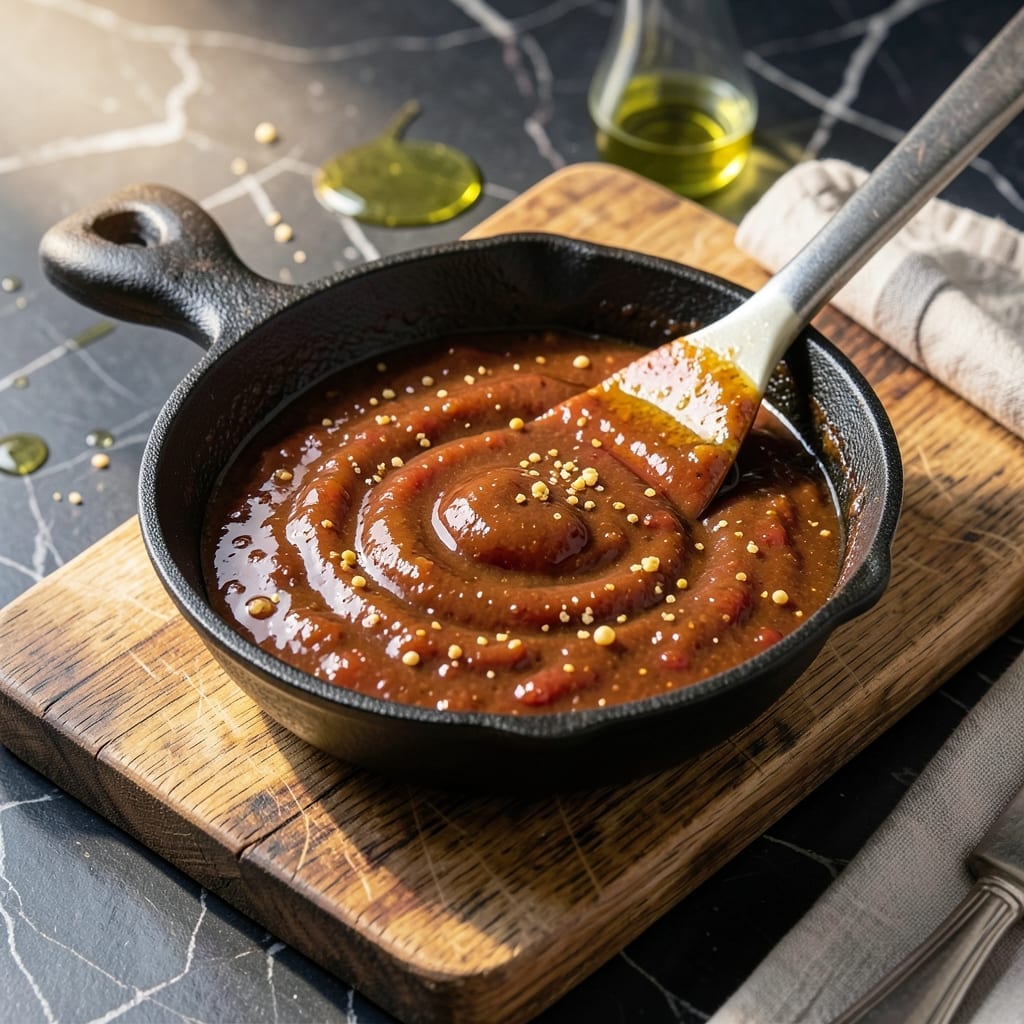
This sauce delivers the perfect balance of sweet and tangy, with a deep honeyed finish that elevates any wing. A foolproof blend of simple pantry staples creates a glaze that clings beautifully.
No cooking required—just whisk and serve. The combination of honey, vinegar, and spices ensures a rich, complex flavor that’s ready in 5 minutes.
Ingredients for Honey Barbecue Wing Sauce
A foolproof blend of pantry staples creates this tangy-sweet glaze with deep honeyed finish.
| Ingredient | Amount | Notes |
|---|---|---|
| Honey 🍯 | 1 cup | Pure, unfiltered preferred |
| Ketchup 🍅 | ¾ cup | High-quality for best flavor |
| Apple Cider Vinegar 🍏 | ¼ cup | For tangy balance |
| Worcestershire Sauce 💧 | 1 tbsp | Adds depth to sauce |
| Dijon Mustard 🟡 | 1 tbsp | Smooth, sharp flavor |
| Garlic Powder 🧄 | 1 tsp | Fine ground texture |
| Onion Powder 🧅 | 1 tsp | Complements garlic flavor |
| Smoked Paprika 🌶️ | ½ tsp | For smoky depth |
| Salt 🧂 | ½ tsp | Fine sea salt preferred |
| Black Pepper 🌶️ | ¼ tsp | Freshly ground preferred |
[recipe_ingredient_scaler]
The honey is the foundation here. Local raw honey adds complexity, but any pure honey works—avoid the clover-heavy stuff as it can be too mild. Heinz ketchup is the gold standard for flavor consistency, though organic versions bring a brighter acidity. Apple cider vinegar is non-negotiable; its fruity tang is what balances the sweetness without overpowering the honey’s depth.
No honey? Maple syrup at a 1:1 ratio works in a pinch (though the flavor profile shifts). Out of apple cider vinegar? White vinegar plus a pinch of sugar mimics the tang. For a spicier kick, swap smoked paprika for chipotle powder. The Worcestershire adds umami—if avoiding fish-based versions, coconut aminos is a solid substitute with a similar depth.
This keeps in an airtight container in the fridge for up to 2 weeks. The flavors meld and deepen over time, so making it a day ahead is ideal. For longer storage, freeze in ice cube trays for 3 months—thaw and whisk before using.
Why You’ll Love This Recipe
- 5-Minute Mix: I just dump everything in a bowl—honey, ketchup, the vinegar—and whisk. No simmering, no fuss.
- Sweet & Tangy: The honey and apple cider vinegar hit that perfect balance, sticky with just enough zing.
- Crowd Pleaser: I’ve served this at game days and weeknight dinners. Even the picky eaters clean their plates.
- Budget Stretcher: A batch costs pennies and keeps for weeks. I use it on wings, ribs, even as a dipping sauce.
Step-by-Step Instructions for Honey Barbecue Wing Sauce
Master this balanced sauce by combining sweet, tangy, and smoky elements with precise technique.
Step 1: Combine Liquid Base Ingredients
In a medium saucepan over medium heat, add the 1 cup Honey and 0.75 cup Ketchup. Stir with a silicone spatula as the honey begins to thin and incorporate with the ketchup. This initial stage prevents the honey from sticking to the bottom of the pan.
Next, pour in the 0.25 cup Apple Cider Vinegar. The mixture will appear thin at first, but the vinegar’s acidity will balance the sweetness of the honey. Continue stirring until the liquids are fully combined and small bubbles form at the edges.
Step 2: Incorporate Flavor-Building Components
Add the 1 tbsp Worcestershire Sauce and 1 tbsp Dijon Mustard to the saucepan. The Worcestershire sauce introduces umami depth, while the Dijon mustard contributes a sharp, tangy backbone that complements the honey’s sweetness.
Stir for 1-2 minutes until the mustard is fully dissolved and the sauce begins to thicken slightly. The mixture should develop a glossy sheen as the ingredients meld together. Watch for the first signs of gentle simmering around the pan’s perimeter.
Step 3: Season and Develop Depth
Sprinkle in the 1 tsp Garlic Powder, 1 tsp Onion Powder, 0.5 tsp Smoked Paprika, 0.5 tsp Salt, and 0.25 tsp Black Pepper. These dry ingredients should be added gradually while stirring to prevent clumping.
The smoked paprika adds a subtle wood-fired aroma, while the garlic and onion powders provide a savory foundation. The salt enhances all flavors, and the black pepper introduces a mild heat. Continue cooking for 2-3 minutes, stirring frequently, until the sauce thickens enough to coat the back of a spoon.
Step 4: Simmer to Perfection
Reduce the heat to low and let the sauce simmer for an additional 5-7 minutes. This final stage allows the flavors to meld completely and the sauce to reach the ideal consistency—thick enough to cling to wings but still pourable.
Stir occasionally to prevent sticking, and remove from heat once the sauce has a syrupy texture. Taste and adjust seasoning if needed, though the balance of sweet, tangy, and smoky should already be well-harmonized.
Pro Tips For Making Honey Barbecue Wing Sauce
- Simmer Low and Slow: Let the sauce gently simmer for 10-12 minutes on medium-low heat—I learned this the hard way after scorching two batches by cranking it too high. The honey needs time to thicken without burning.
- Balance the Vinegar: Apple cider vinegar can overpower quickly, so start with 1 tablespoon, taste, then add more if needed. My grandmother swore by this, and she was right: it’s easier to add than to fix.
- Skip the Cold Honey: Measure the honey first and let it sit at room temperature for 10 minutes. Sounds weird, but it works: cold honey seizes up and makes the sauce clump instead of blending smooth.
- Add Mustard Last: Stir in the Dijon mustard after the sauce has cooled slightly—about 2 minutes off the heat. This keeps its sharpness intact instead of letting it mellow out too much during cooking.
Essential Equipment for This Dish
Saucepan Selection
For this sauce, I always reach for my 2-quart stainless steel saucepan—it conducts heat evenly and prevents hot spots that can burn honey. Avoid nonstick pans; the sauce needs to reduce and develop a fond at the bottom. All-Clad is my go-to brand for durability. 🔥
Whisk Choice
A balloon whisk is essential for emulsifying the honey and vinegar smoothly. The wide surface area helps incorporate air, creating a glossier finish. I prefer OXO’s 11-inch whisk for its comfortable grip and balanced weight.
Measuring Tools
Precision matters here. Use liquid measuring cups for honey and vinegar, and levelled dry measuring spoons for spices. I keep a set of stainless steel tablespoons from Cuisinox in my drawer—they last forever.
Simmer Control
Maintaining a gentle simmer is key to avoiding scorching. I rely on my induction cooktop for precise temperature control, but a gas range works too. Keep the heat at medium-low once the sauce starts thickening.
Storage Containers
For leftovers, transfer the cooled sauce to glass mason jars—they’re airtight and won’t absorb odors. I use Ball’s 16-ounce jars for single batches. Label with the date; the sauce keeps beautifully for 2 weeks. ❄️
Cleanup Helper
Honey can be sticky, so I soak my whisk and saucepan in warm, soapy water immediately after use. A silicone brush helps remove residue from the pan’s edges before washing.
Nutrition Facts
Frequently Asked Questions
Can I make this sauce ahead of time?
The flavors deepen after 24 hours in the fridge. Store in an airtight container for up to 2 weeks.
What if I don’t have apple cider vinegar?
Use white vinegar plus 1 tsp sugar as a substitute. The tang will be sharper, but the sweetness balances it. Avoid balsamic—it overpowers.
How do I fix sauce that’s too thin?
Simmer uncovered for 3-5 minutes longer. If still thin, mix 1 tsp cornstarch with water, stir in, and heat until thickened.
Can I freeze leftover sauce?
Yes! Freeze in ice cube trays for up to 3 months. Thaw in the fridge overnight and whisk before using.

Trained in classic French technique but raised on slow-cooked ribs and spicy rubs, she blends culinary skill with smoke and soul.
- Recipe for Boneless Pork Chops in Cast Iron Skillet: Sear and Baste to Juicy Perfection - October 3, 2026
- Recipe for Boneless Cross Rib Roast: Slow-Roasted Beef with Herb Crust - October 3, 2026
- Hamburgers in Sauce Recipe Crock Pot: Slow-Cooked Savory Delight - October 3, 2026