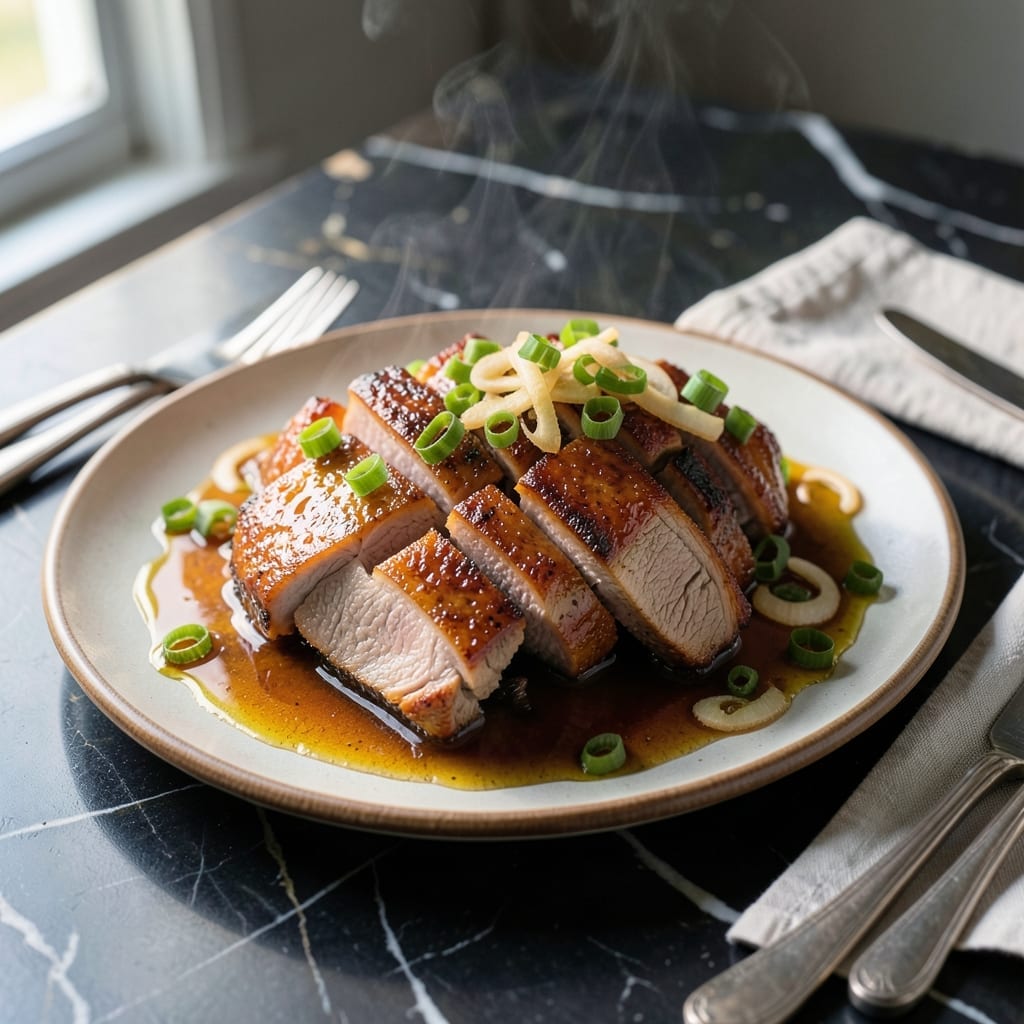
This pork recipe delivers juicy results with minimal effort. The honey glaze creates a sticky, caramelized crust that seals in moisture.
I developed this method to ensure tender meat every time. Simple ingredients combine to create a dish that impresses without complicated techniques.
Ingredients for Honey Glazed Pork
Simple, quality ingredients create that signature sticky, caramelized finish on tender pork.
| Ingredient | Amount | Notes |
|---|---|---|
| Pork Shoulder 🥩 | 2 lb | Boneless, cut into 2-inch chunks |
| Honey 🍯 | ½ cup | Pure, unprocessed preferred |
| Soy Sauce 🫒 | ¼ cup | Low-sodium if available |
| Apple Cider Vinegar 🍏 | 2 tbsp | Balances sweetness of glaze |
| Garlic Cloves 🧄 | 4 cloves | Minced for maximum flavor |
| Fresh Ginger 🌿 | 1 tbsp | Peeled and finely grated |
| Olive Oil 🫒 | 2 tbsp | Divided for cooking and glaze |
| Kosher Salt 🧂 | 1 tsp | Adjust to taste preference |
| Black Pepper 🌶️ | ½ tsp | Freshly ground preferred |
| Dijon Mustard 🟡 | 1 tbsp | Adds depth to glaze |
| Red Pepper Flakes 🔥 | ¼ tsp | Optional for subtle heat |
| Fresh Thyme 🌿 | 1 tbsp | Chopped, or 1 tsp dried |
[recipe_ingredient_scaler]
The pork shoulder is non-negotiable here—well-marbled cuts from a trusted butcher or Whole Foods ensure the juicy results promised. Look for pieces with visible fat streaking; this melts during cooking, basting the meat from within. For the honey, local, raw varieties (found at farmers markets) offer superior depth, but any pure honey will work. Fresh ginger and garlic should be plump and firm, not shriveled or soft.
No pork shoulder? Pork butt (despite the name, it’s from the shoulder) works identically. Substitute maple syrup or agave for honey at a 1:1 ratio, though the flavor profile will shift slightly. Low-sodium soy sauce can be replaced with tamari for gluten-free needs. The apple cider vinegar is key for balance—white vinegar in a pinch, but it lacks the fruity nuance.
The cooked pork reheats well, maintaining moisture for 3-4 days refrigerated. For longer storage, freeze portions in airtight containers for up to 3 months. The glaze thickens as it cools—reheat gently with a splash of water to restore its sticky consistency.
Why You’ll Love This Recipe
- One Pan Magic: I toss everything in a single dish—pork shoulder, honey, soy sauce—and let the oven do the work.
- Sweet & Tangy Fix: The honey caramelizes with the apple cider vinegar for that sticky, finger-licking glaze.
- Crowd Pleaser: I serve this for Sunday dinner and my picky nephew always asks for seconds.
- Budget Stretch: A pork shoulder feeds my family for days, and the leftovers make killer sandwiches.
Step-by-Step Instructions for Honey Glazed Pork
This method ensures tender pork with a glossy, caramelized glaze every time.
Step 1: Season and Sear the Pork Shoulder
Pat the 2 lb Pork Shoulder chunks dry with paper towels. Season generously with the 1 tsp Kosher Salt and 0.5 tsp Black Pepper, ensuring all surfaces are evenly coated. Heat 1 tbsp Olive Oil in a large skillet over medium-high heat until shimmering.
Add the pork in a single layer, being careful not to overcrowd the pan. Sear undisturbed for 4-5 minutes per side until deeply browned. You’ll know it’s ready to flip when the meat releases easily from the pan with a gentle nudge.
Transfer the seared pork to a plate and set aside. The browning process develops a flavorful fond in the pan, which will enrich the glaze later.
Step 2: Build the Glaze Foundation
In the same skillet, reduce the heat to medium. Add the remaining 1 tbsp Olive Oil, then stir in the 4 cloves Garlic Cloves and 1 tbsp Fresh Ginger. Sauté for 30-45 seconds until fragrant but not browned.
Immediately pour in the 0.5 cup Honey, 0.25 cup Soy Sauce, and 2 tbsp Apple Cider Vinegar. Stir to combine, scraping up any browned bits from the bottom of the pan. The vinegar balances the sweetness of the honey, creating a complex flavor profile.
Bring the mixture to a gentle simmer, then reduce the heat to medium-low and let it cook for 2-3 minutes until slightly thickened. The glaze should coat the back of a spoon but still be pourable.
Step 3: Finish the Glaze and Coat the Pork
Stir in the 1 tbsp Dijon Mustard, 0.25 tsp Red Pepper Flakes, and 1 tbsp Fresh Thyme. Simmer for an additional 1-2 minutes to allow the flavors to meld. The mustard adds depth and a slight tang, while the thyme and red pepper flakes introduce aromatic and subtle heat notes.
Return the seared pork to the skillet, spooning the glaze over each piece to coat thoroughly. Reduce the heat to low and let it cook for 5-7 minutes, turning the pork occasionally, until the glaze thickens into a sticky, glossy coating.
Watch closely during this stage—the honey can burn if the heat is too high. You want the glaze to cling to the pork and caramelize slightly, not turn black.
Step 4: Rest and Serve
Transfer the glazed pork to a serving dish and let it rest for 5 minutes. This brief rest allows the juices to redistribute, ensuring every bite remains moist and flavorful.
Spoon any remaining glaze from the pan over the pork before serving. The pork should be tender with a sticky, caramelized exterior. Garnish with additional fresh thyme if desired.
Serve immediately while the glaze is still warm and glossy. The combination of sweet honey, savory soy, and aromatic spices creates a perfect balance in every bite.
Pro Tips For Making Honey Glazed Pork
- Sear the Pork First: I learned this the hard way—browning the pork shoulder in a hot pan for 3-4 minutes per side before glazing locks in juices and gives that sticky-sweet crust everyone loves.
- Thin the Honey: Sounds weird, but warming the honey with 1 tablespoon of apple cider vinegar before brushing makes it spread easier and cling better to the pork.
- Skip the Overcrowding: Resist the urge to pile all the pork in one pan—give each piece space so the glaze caramelizes instead of steaming.
- Rest Before Serving: After pulling it from the oven, tent the pork with foil and wait a solid 10 minutes—it keeps the meat moist and lets the glaze thicken up nicely.
Pro Cooking Tips for Great Honey Glazed Pork
Perfect Searing
Don’t rush the sear—medium-high heat is key. I wait until the olive oil shimmers before adding pork. Pat those 2-inch chunks completely dry first for maximum browning. The fond left behind becomes your glaze’s flavor foundation.
Glaze Balance
The apple cider vinegar isn’t just for acidity—it prevents the honey from becoming cloyingly sweet. I let the glaze simmer until it coats a spoon but still drips slowly. This stage takes 2-3 minutes at medium-low heat. 🔥
Aromatic Timing
Add garlic and ginger after removing pork—they’ll burn if cooked too long. Just 30-45 seconds releases their oils without bitterness. Fresh thyme goes in last to preserve its delicate flavor.
Low and Slow Finish
Return pork to the glaze on low heat. Those final 5-7 minutes let the sauce thicken while basting the meat. Turn pieces often for even coating. Watch closely—honey burns easily.
Resting Matters
That 5-minute rest isn’t optional. It lets juices settle so every bite stays moist. I tent loosely with foil to keep it warm. The glaze will thicken slightly as it cools.
Pro Tip
If your glaze thickens too much, stir in 1-2 tbsp water to loosen. For extra shine, brush with a little more honey just before serving. This trick comes from my French training days. 💛
Nutrition Facts
Frequently Asked Questions
Can I use a different cut of pork?
Yes! Pork butt works identically to shoulder. For quicker cooking, try pork tenderloin but reduce cooking time to 3-4 minutes per side. Avoid lean cuts like loin as they can dry out.
What if my glaze is too thin?
Simmer it longer at medium-low heat for 1-2 extra minutes. If it thickens too much, stir in 1-2 tbsp water. The glaze should coat the back of a spoon.
Can I make this in advance?
The pork keeps well refrigerated for 3-4 days. Reheat gently with a splash of water to restore the glaze’s consistency. Freeze for up to 3 months in airtight containers.
Is there a substitute for honey?
Maple syrup or agave work at a 1:1 ratio. These will slightly alter the flavor but maintain the sticky texture. Avoid artificial sweeteners as they don’t caramelize.

Trained in classic French technique but raised on slow-cooked ribs and spicy rubs, she blends culinary skill with smoke and soul.
- Recipe for Boneless Pork Chops in Cast Iron Skillet: Sear and Baste to Juicy Perfection - October 3, 2026
- Recipe for Boneless Cross Rib Roast: Slow-Roasted Beef with Herb Crust - October 3, 2026
- Hamburgers in Sauce Recipe Crock Pot: Slow-Cooked Savory Delight - October 3, 2026