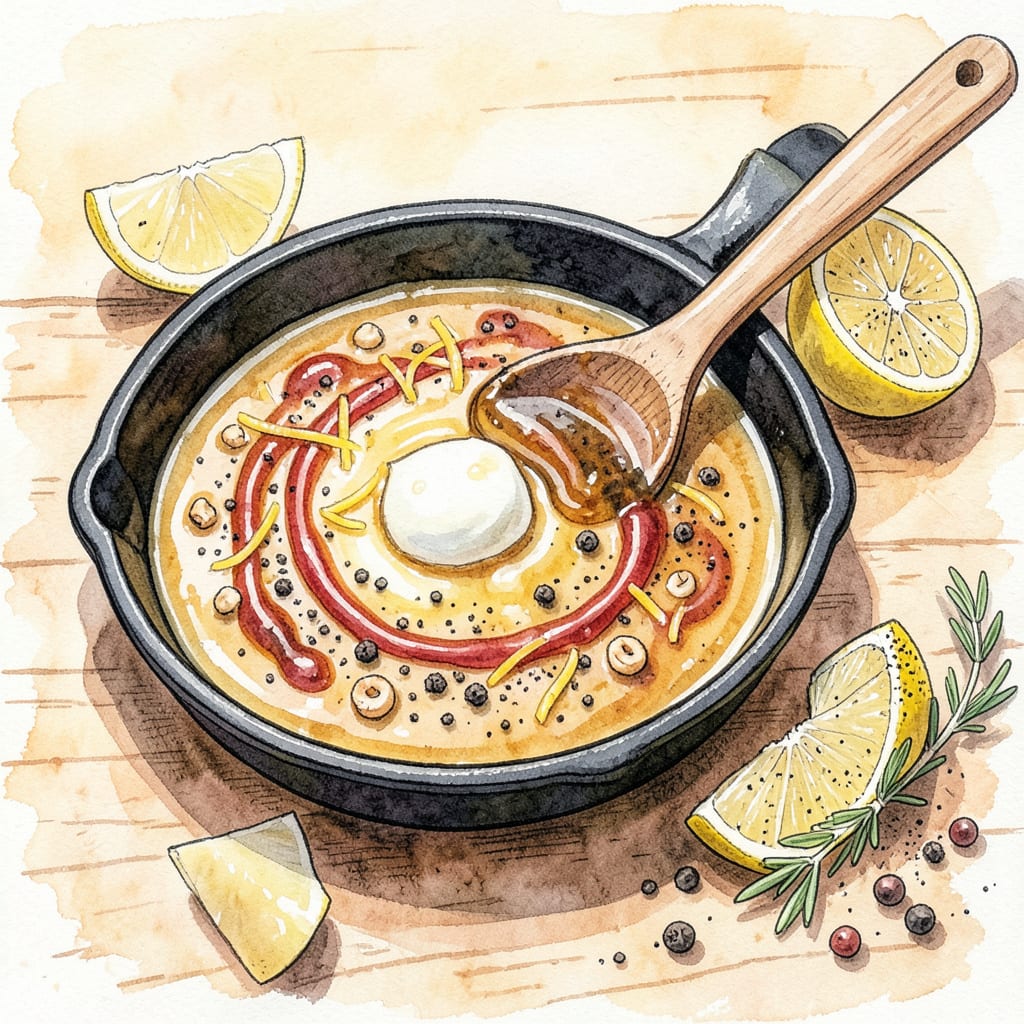
This sauce represents the perfect marriage of contrasting flavors—sweet honey, bright citrus, and bold pepper heat. The balance is precise: enough warmth to make it exciting, enough sweetness to keep it approachable. I developed this version after years of experimenting with spicy-sweet combinations, always searching for that ideal ratio where no single element overpowers the others.
What makes this sauce exceptional is its versatility. A quick simmer transforms simple ingredients into a glossy, complex drizzle that elevates everything it touches. The lemon zest adds aromatic brightness, while freshly cracked black pepper provides depth beyond basic heat. Use it as a finishing touch for grilled meats, a dip for crispy appetizers, or a bold accent for roasted vegetables.
Ingredients for Hot Honey Lemon Pepper Sauce
Nine carefully balanced ingredients create this complex sweet-spicy-tangy sauce with professional-grade depth and versatility.
| Ingredient | Amount | Notes |
|---|---|---|
| Pure Honey 🍯 | ¾ cup | Raw, unfiltered preferred for depth |
| Fresh Lemon Juice 🍋 | ¼ cup | Newly squeezed for maximum brightness |
| Lemon Zest 🍋 | 1 tbsp | Finely grated from organic lemons |
| Coarsely Ground Black Pepper 🌶️ | 1 ½ tbsp | Freshly cracked for optimal aroma |
| Unsalted Butter 🧈 | 4 tbsp | European-style for superior richness |
| Hot Sauce 🔥 | 2 tbsp | Cayenne-based for clean heat |
| Garlic Cloves 🧄 | 2 cloves | Minced to fine consistency |
| Kosher Salt 🧂 | ½ tsp | Diamond Crystal for precise seasoning |
| Apple Cider Vinegar 🍏 | 1 tsp | Balances sweetness with acidity |
[recipe_ingredient_scaler]
The honey quality is paramount—local, raw, unfiltered varieties from farmers markets or Savage Bee Co. provide the nuanced sweetness this sauce demands. For the pepper, freshly cracking whole Tellicherry peppercorns yields superior aroma compared to pre-ground. The butter should be European-style (82-86% fat) like Plugrá or Kerrygold; their lower water content prevents separation during simmering. Lemon selection matters: Meyer lemons offer floral notes, while standard Eurekas provide brighter acidity.
For heat adjustments, Crystal or Tabasco deliver clean spice without vinegar interference, while Sriracha adds garlic complexity. Vinegar substitutions: white wine vinegar maintains clarity, while rice vinegar offers milder acidity. Butter alternatives: ghee provides deeper browning, or coconut oil (refined) for dairy-free versions—though flavor profiles will shift. The garlic can be omitted for milder applications, but its aromatic base is recommended for full-bodied results.
The finished sauce maintains optimal quality refrigerated in an airtight container for 10-14 days. For extended storage, freeze in ice cube trays (portioned for easy use) for up to 3 months—thaw gently over low heat to prevent separation. Reheat with 1 tsp water per ¼ cup sauce to restore original consistency. The high sugar content prevents microbial growth, but surface crystallization may occur; simply reheat and whisk to re-emulsify.
Why You’ll Love This Recipe
- 5-Minute Magic: I’ve made this sauce while my pasta boiled. No chopping, no fancy tools—just melt butter, whisk in honey, lemon, and pepper. Honestly, it’s faster than waiting for takeout.
- Sweet Heat Obsession: That first hit of honeyed warmth, then the sharp lemon zing and black pepper’s bite? It’s like sunshine and spice had a delicious baby. I’ve caught people licking the spoon—no shame.
- Drizzle on Everything: Grilled chicken, crispy tofu, even vanilla ice cream (don’t knock it till you try it). I batch-make this on Sundays and suddenly, sad leftovers taste intentional. My teen even uses it as pizza dip.
- Pantry Hero: Five ingredients I always have, zero waste. Butter goes rancid? Unlikely with how fast we use this. And at $0.50 per serving, it’s my secret for making cheap cuts taste like a steakhouse special.
Step-by-Step Instructions for Hot Honey Lemon Pepper Sauce
This straightforward method balances sweetness, heat, and zesty brightness with precision timing.
Step 1: Infuse the Butter with Garlic and Pepper
In a medium saucepan over medium-low heat, melt the 4 tbsp unsalted butter until it begins to foam. Immediately add the 2 cloves garlic cloves (minced to fine consistency) and 1.5 tbsp coarsely ground black pepper. Stir continuously for 2-3 minutes until the garlic turns light golden brown and the pepper becomes fragrant.
Watch the heat carefully—garlic burns quickly at higher temperatures. The butter should never brown; maintain a gentle simmer. This infusion creates the aromatic foundation for your sauce, with the pepper releasing its essential oils into the fat. Remove from heat immediately once the garlic reaches the perfect color.
Step 2: Create the Acidic Base
To the same saucepan (off heat), add the 0.25 cup fresh lemon juice, 1 tbsp lemon zest, and 1 tsp apple cider vinegar. The residual heat will gently warm the mixture. Whisk vigorously for 30 seconds until fully combined, then return to low heat.
Simmer the mixture for 2 minutes, stirring constantly. You’ll notice the raw lemon aroma mellowing as the acids begin to integrate with the butter. The sauce should maintain a smooth consistency without separating. This step tempers the sharpness of the lemon while preserving its bright character.
Step 3: Balance with Sweetness and Heat
Reduce heat to the lowest setting and whisk in the 0.75 cup pure honey in a slow, steady stream. Continue whisking for 3-4 minutes until the honey fully dissolves and the sauce achieves a uniform, glossy appearance. The color will deepen slightly to a warm amber.
Add the 2 tbsp hot sauce and 0.5 tsp kosher salt, then whisk for an additional 1 minute. The sauce should coat the back of a spoon with a velvety texture. Taste and adjust the salt if needed, though the hot sauce likely provides sufficient seasoning. The final consistency should be pourable but thick enough to cling to foods.
Regional Styles of This Recipe
Southern Comfort Style
Down in the Carolinas, we’d take this sauce and give it a smoky backbone by swapping the regular honey for sourwood honey—it’s got that deep, almost caramelized flavor that pairs perfectly with smoked meats. I’d also add 1 tsp smoked paprika when infusing the butter, giving it that low-and-slow pit vibe. This version shines on pulled pork sandwiches or as a glaze for smoked chicken wings. 🔥
For extra Southern flair, stir in 1 tbsp bourbon at the end—just enough to add complexity without overpowering. The alcohol cooks off, leaving behind those rich oak notes that make everything taste like it came straight from a roadside BBQ joint. I learned this trick from an old pitmaster friend who swore by his secret bourbon stash.
Coastal California Twist
Out here by the Pacific, we’d brighten this sauce with Meyer lemon juice instead of regular lemons—their floral sweetness balances the heat beautifully. I’d also reduce the black pepper to 1 tbsp and add 1 tsp crushed red pepper flakes for a different kind of warmth. This version is perfect for drizzling over grilled seafood like halibut or shrimp skewers.
For a true West Coast touch, finish with 1 tsp finely chopped fresh rosemary—I forage mine from the coastal hills. The piney aroma complements the citrus perfectly. This variation became my go-to after a motorcycle ride along Highway 1 inspired me to incorporate more local herbs into my sauces.
Texas Bold Version
Everything’s bigger in Texas, including the flavor in this sauce. I’d double the hot sauce to 4 tbsp and use chipotle powder instead of black pepper for a smoldering heat. The honey gets swapped for mesquite honey, which has that distinctive earthy sweetness that Texans love. This version stands up to brisket and beef ribs without getting lost.
For the ultimate Lone Star experience, add 1 tsp ground cumin when infusing the butter. The earthy warmth cuts through the richness, creating a sauce that’s complex enough for competition-level BBQ. I first tasted this style at a small-town cook-off where the pitmaster called it his “secret weapon.”
Northeast Maple Infusion
Up in Vermont, we’d give this sauce a seasonal twist by replacing half the honey with dark maple syrup. The deeper caramel notes pair wonderfully with the lemon’s brightness. I’d also add 1 tsp ground ginger for warmth, making it perfect for autumn dishes. This version is incredible on roasted squash or as a glaze for ham.
The key here is using Grade B maple syrup—it’s darker and more robust than the breakfast syrup most people use. I discovered this combination during a fall foraging trip when I wanted to capture those crisp New England flavors in a sauce. The result tastes like autumn in a bottle.
Southwest Chipotle Kick
For a Santa Fe-inspired version, I’d blend in 2 tbsp adobo sauce (from canned chipotles) along with the hot sauce. The smoky, fruity heat transforms the sauce completely. Reduce the lemon juice to 3 tbsp to balance the intensity. This variation is my secret weapon for tacos al pastor or grilled corn.
Finish with 1 tsp ground coriander to add citrusy depth that complements the chipotle. The combination reminds me of the street food I tried during a motorcycle trip through New Mexico. The smoky-sweet balance is what makes this version so addictive—it’s got that perfect contrast that keeps you coming back for more.
Pacific Northwest Herbaceous
In the damp forests of Oregon, we’d make this sauce more herb-forward. I’d infuse the butter with 2 sprigs fresh thyme along with the garlic, then finish with 1 tbsp chopped fresh dill. The herbal notes cut through the sweetness beautifully. This version is incredible with wild salmon or roasted root vegetables.
The key is using local wildflower honey—its complex floral notes shine when paired with fresh herbs. I first developed this version after a particularly successful herb-foraging expedition near the Columbia River. The combination of honey and dill might sound unusual, but it creates a sophisticated balance that’s become a signature at my pop-up dinners.
Nutrition Facts

Trained in classic French technique but raised on slow-cooked ribs and spicy rubs, she blends culinary skill with smoke and soul.
- Recipe for Boneless Pork Chops in Cast Iron Skillet: Sear and Baste to Juicy Perfection - October 3, 2026
- Recipe for Boneless Cross Rib Roast: Slow-Roasted Beef with Herb Crust - October 3, 2026
- Hamburgers in Sauce Recipe Crock Pot: Slow-Cooked Savory Delight - October 3, 2026