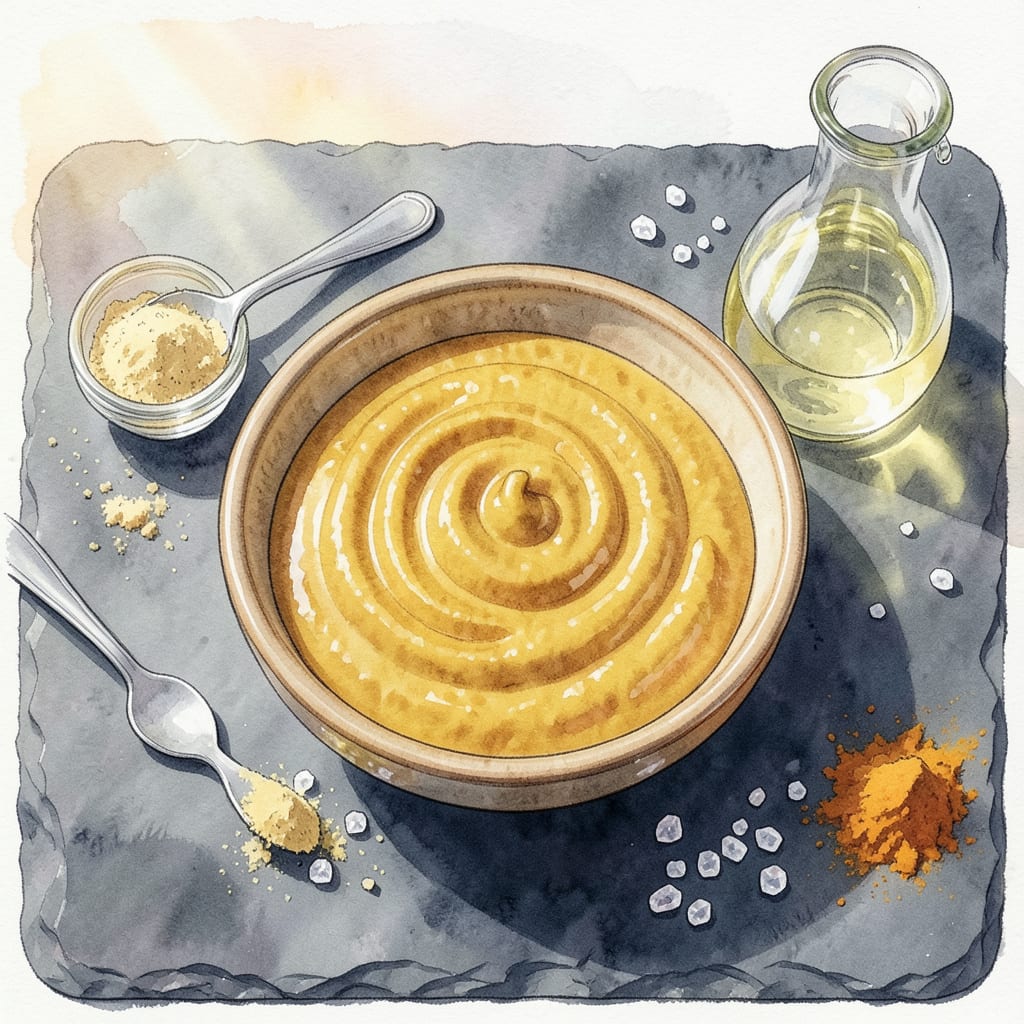
This hot mustard delivers the perfect balance of fiery intensity and tangy depth, transforming ordinary dishes into bold flavor experiences. Developed through precise ingredient ratios and controlled hydration, it achieves that signature lingering heat without overwhelming the palate. The secret lies in the mustard powder’s quality and the gradual incorporation of liquid—too much too soon dilutes the potency.
Unlike store-bought versions, this homemade condiment maintains its sharpness for up to 3 months when stored properly in an airtight container. Its versatility shines when paired with dumplings, charcuterie boards, or as a sandwich spread. The heat level is easily adjustable by modifying the liquid ratio during preparation, ensuring consistent results whether you prefer mild warmth or face-melting intensity.
Ingredients for Hot Mustard
Eight carefully balanced components create this intensely flavorful, heat-controlled condiment with professional-grade results.
| Ingredient | Amount | Notes |
|---|---|---|
| Dry Mustard Powder 🌿 | ½ cup | High-quality, freshly opened container |
| Cold Water 💧 | ⅓ cup | Filtered or distilled preferred |
| White Wine Vinegar 🍷 | ¼ cup | 5% acidity for balance |
| Granulated Sugar 🍬 | 2 tsp | Organic cane preferred |
| Kosher Salt 🧂 | 1 tsp | Diamond Crystal brand recommended |
| Turmeric Powder 🌶️ | ¼ tsp | For color enhancement only |
| Garlic Powder 🧄 | ½ tsp | Freshly opened container |
| Ground White Pepper 🌶️ | ¼ tsp | Subtle heat without color |
[recipe_ingredient_scaler]
The mustard powder quality is paramount. Colman’s Dry Mustard remains the gold standard for its consistent heat and flavor profile. Turmeric should be freshly purchased (within 6 months) as it loses potency rapidly. For the vinegar, Heinz White Wine Vinegar provides the ideal 5% acidity that balances the mustard’s intensity without overpowering. Specialty stores like Penzeys offer superior-quality spices, though well-stocked supermarkets carry adequate alternatives. The water temperature must be ice-cold to prevent premature enzyme activation in the mustard powder.
For heat adjustment, modify the water ratio: reduce by 1 tbsp for face-melting intensity or increase by 1 tbsp for milder results. Sugar can be substituted with agave nectar at 1:1 ratio for a vegan liquid sweetener option. The garlic powder may be replaced with 1 fresh garlic clove, finely minced (though this reduces shelf stability). In professional kitchens, citric acid (1/8 tsp) is sometimes added to enhance preservation without affecting flavor profile. White pepper is preferred over black for its cleaner heat without visible specks.
Optimal storage requires an airtight glass container to prevent moisture absorption and flavor degradation. Refrigeration extends potency to 3 months, though the condiment remains safe for 6 months with gradual heat reduction. The mixture thickens significantly after 24 hours—this is normal. For commercial applications, pH testing strips can verify acidity remains in the safe zone (below 4.6) throughout storage. Always use a clean, dry utensil to prevent contamination that could accelerate spoilage.
Step-by-Step Instructions for Hot Mustard
This method ensures a smooth, potent condiment with balanced heat and complexity.
Step 1: Bloom the Mustard Powder
In a non-reactive bowl, combine the 0.5 cup dry mustard powder with the 0.33 cup cold water. Whisk vigorously until completely smooth and no dry pockets remain. The mixture will initially appear thick and pasty—this is expected as the mustard begins to hydrate.
Let the mixture stand at room temperature for 10 minutes. During this time, the mustard’s volatile compounds activate, developing the initial sharpness. You’ll notice the color deepening slightly as the powder fully absorbs the moisture.
Step 2: Incorporate the Acidic Elements
After the resting period, whisk in the 0.25 cup white wine vinegar until fully incorporated. The vinegar will thin the mixture slightly while providing the necessary acidity to balance the mustard’s intensity. The aroma will become more pronounced at this stage.
Add the 2 tsp granulated sugar and continue whisking until completely dissolved. The sugar serves as a counterpoint to the heat, creating a more rounded flavor profile. The mixture should now have a pourable consistency with no visible sugar granules.
Step 3: Season and Develop the Flavor Profile
Whisk in the 1 tsp kosher salt, 0.25 tsp turmeric powder, 0.5 tsp garlic powder, and 0.25 tsp ground white pepper. Each spice contributes specific qualities: the turmeric provides golden color without affecting flavor, while the garlic powder adds depth and the white pepper introduces subtle heat.
Allow the mixture to rest for an additional 15 minutes at room temperature. This final resting period lets the flavors meld completely. The mustard will thicken slightly as the spices fully integrate.
Step 4: Adjust and Store for Optimal Maturation
Taste the mustard and adjust the seasoning if needed, though the full heat won’t develop until after refrigeration. The texture should be smooth and pourable, similar to heavy cream. If it’s too thick, add water 1 teaspoon at a time until reaching the desired consistency.
Transfer to a clean glass jar with a tight-fitting lid. Refrigerate for at least 24 hours before using to allow the flavors to mature fully. The mustard will continue to develop heat and complexity over the next 3-5 days, reaching its peak intensity.
Common Mistakes When Making Great hot mustard
Overhydrating the Powder
The most common mistake I see is adding too much liquid too soon. Remember, 0.33 cup cold water is your starting point—adding more than 1 tbsp extra will dilute the mustard’s heat significantly. I learned this the hard way when my first batch tasted more like mustard-flavored water than a potent condiment. 💡
Skipping the Resting Period
Rushing the process by skipping the 10-minute bloom time or the 15-minute final rest prevents the mustard from reaching its full potential. These pauses allow the enzymes to activate properly and the flavors to meld. I’ve noticed batches that skip resting develop a harsh, one-dimensional heat instead of that complex, lingering burn we want.
Using Warm Water
The water must be ice-cold to prevent premature enzyme activation, which would make your mustard bitter rather than pleasantly sharp. I keep a pitcher of water in the fridge specifically for this recipe. Even room-temperature water can affect the final flavor profile, so don’t cut corners here.
Incorrect Storage Containers
Storing in plastic containers or non-airtight jars leads to flavor degradation and moisture absorption. I exclusively use glass jars with tight-fitting lids—they maintain the mustard’s potency for the full 3 months. Metal containers can react with the vinegar, so avoid those completely.
Ignoring the Maturation Period
Using the mustard immediately after making it means missing out on its full potential. The flavors need at least 24 hours in the fridge to develop that signature depth. I’ve found the heat actually increases during the first 3-5 days, so patience really pays off with this condiment.
Using Old Spices
Stale turmeric or garlic powder won’t give you the vibrant color and complex flavor this recipe deserves. I restock my spices from Penzeys every 6 months for maximum potency. The difference between fresh and old spices in this recipe is like night and day—trust me on this one. 🌿
Nutrition Facts

Trained in classic French technique but raised on slow-cooked ribs and spicy rubs, she blends culinary skill with smoke and soul.
- Recipe for Boneless Pork Chops in Cast Iron Skillet: Sear and Baste to Juicy Perfection - October 3, 2026
- Recipe for Boneless Cross Rib Roast: Slow-Roasted Beef with Herb Crust - October 3, 2026
- Hamburgers in Sauce Recipe Crock Pot: Slow-Cooked Savory Delight - October 3, 2026