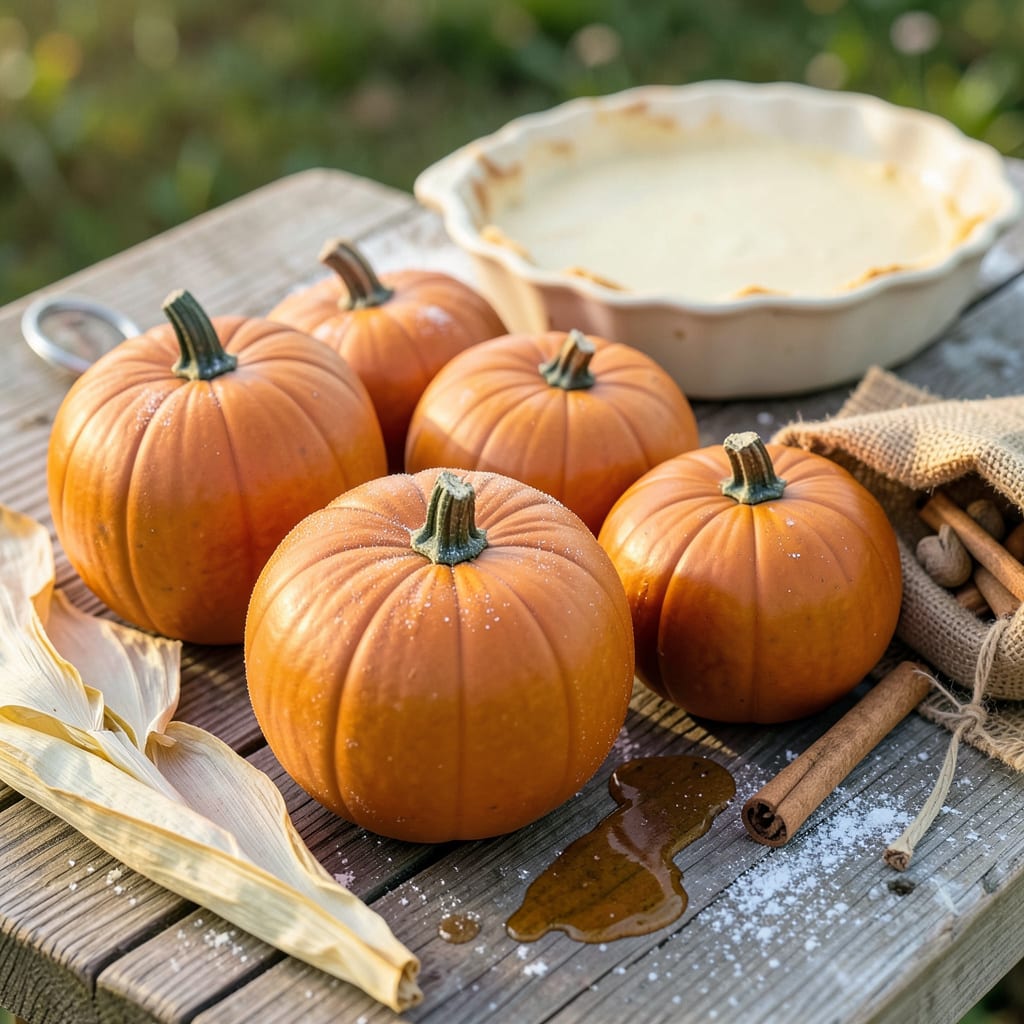
Pie pumpkins typically weigh 2 to 6 pounds and measure 6 to 8 inches in diameter. Their compact size and dense, sweet flesh make them ideal for baking, unlike larger carving pumpkins.
I’ve found these smaller varieties pack a flavor punch that their giant jack-o’-lantern cousins can’t match. 🔥 The secret lies in their breeding—developed specifically for culinary use rather than decoration. When I’m selecting pumpkins for my famous spiced custard, I always look for ones that feel heavy for their size, which indicates that rich, concentrated flesh perfect for pies. Their manageable weight also makes them easier to handle when you’re prepping multiple batches for holiday baking.
💡 In This Article
- Why Pie Pumpkins Are Smaller Than Carving Pumpkins
- How to Select the Best Pie Pumpkins for Baking
Why Pie Pumpkins Are Smaller Than Carving Pumpkins
Pie pumpkins are bred for flavor concentration rather than size, which explains their compact dimensions. These varieties develop thicker flesh walls—typically 1-1.5 inches thick—compared to carving pumpkins that have thinner walls (about 0.5 inches).
The breeding process selects for higher sugar content (about 10-12% Brix versus 5-8% in carving types) and lower water content, creating that dense, custard-like texture we love in pies. 🔥
The agricultural science behind this involves selective breeding over generations. Growers prioritize traits like smaller seed cavities and finer flesh texture rather than massive size. A 6-pound pie pumpkin might yield 4-5 cups of purée, while a 20-pound carving pumpkin of the same volume would produce only 2-3 cups of watery, stringy flesh.
The cell structure in pie varieties contains more pectin, which breaks down into that velvety consistency when cooked.
You’ll notice the difference when you cut into them. Pie pumpkins have flesh that’s deep orange—almost red-orange—indicating higher beta-carotene levels (about 30% more than carving types). Their skin is also harder and less porous, which helps retain moisture during baking.
I’ve found that when roasted at 375°F, their natural sugars caramelize beautifully without turning fibrous, unlike larger pumpkins that often develop a mealy texture. ✨
The growing season matters too. Pie varieties typically mature in 85-100 days compared to 120+ days for giant pumpkins. This shorter cycle means they develop concentrated flavors rather than diluting their sugars into excessive growth. The vines themselves are more compact, directing energy into fruit quality rather than sprawling vegetation.
It’s this careful balance of genetics and growing conditions that makes them perfect for baking.
Here’s a telling comparison: A 6-inch pie pumpkin might weigh 4 pounds because of its dense flesh, while a 12-inch carving pumpkin could weigh the same but be mostly hollow. That density translates directly to flavor—about 3 times more purée per pound of pumpkin.
When I’m developing recipes, this consistency lets me standardize measurements without worrying about watery results. 💫
The stem tells part of the story too. Pie pumpkins have thicker, drier stems that indicate their breeding for storage rather than quick decay. Their smaller size means the entire fruit matures evenly, avoiding the uneven ripening that plagues giant varieties.
This uniformity is why professional bakers (and home cooks like me) can rely on them for consistent results every time.

Trained in classic French technique but raised on slow-cooked ribs and spicy rubs, she blends culinary skill with smoke and soul.
- Recipe for Boneless Pork Chops in Cast Iron Skillet: Sear and Baste to Juicy Perfection - October 3, 2026
- Recipe for Boneless Cross Rib Roast: Slow-Roasted Beef with Herb Crust - October 3, 2026
- Hamburgers in Sauce Recipe Crock Pot: Slow-Cooked Savory Delight - October 3, 2026