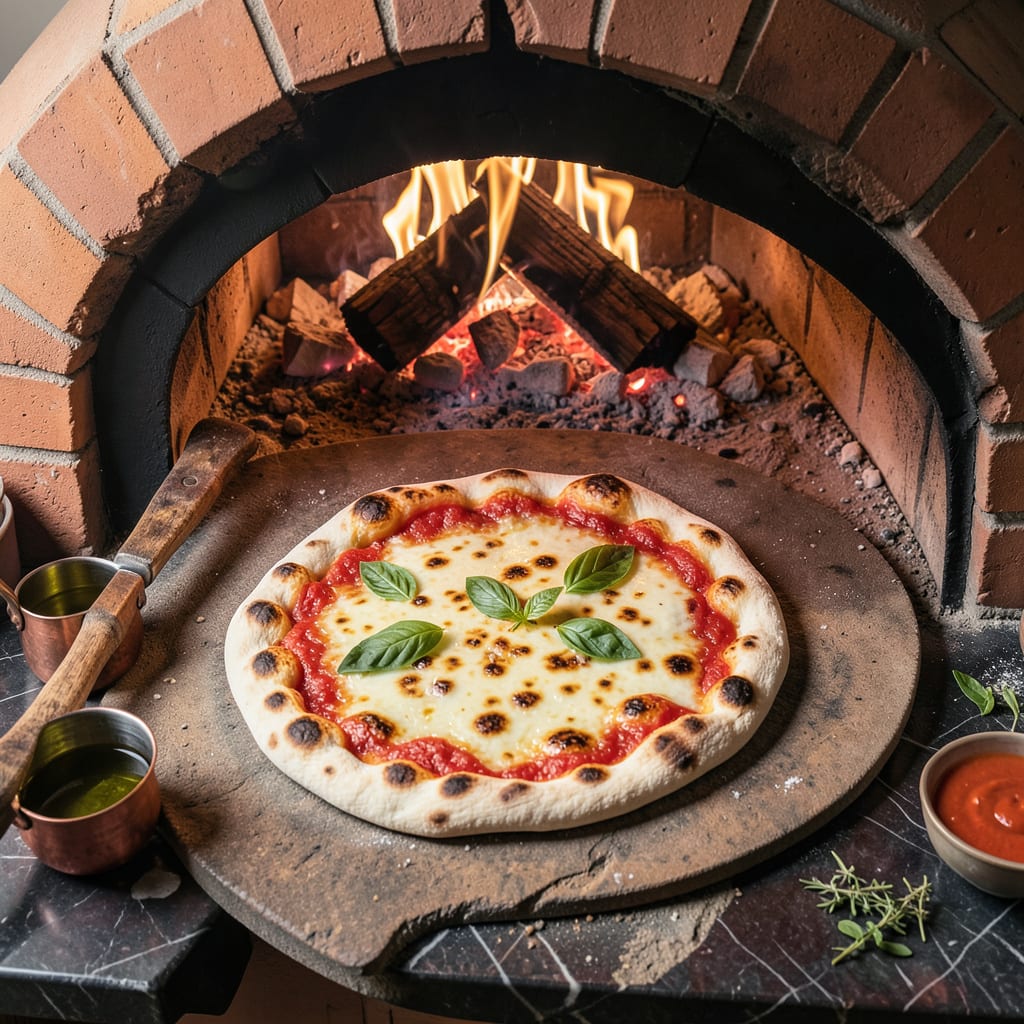
Pizza ovens use intense, even heat—typically 700°F to 900°F—to cook pizzas in 60-90 seconds. High temperatures create a crispy crust through rapid moisture evaporation while retaining a soft interior, with radiant heat from the dome and conductive heat from the stone or deck.
What sets these ovens apart is their ability to mimic the conditions of traditional wood-fired brick ovens—something I’ve experienced firsthand during my culinary training. 🔥 The dome shape isn’t just for looks; it creates a heat vortex that ensures every inch of the pizza cooks uniformly. This is why Neapolitan-style pizzas develop that signature leopard-spotted char in under 2 minutes, while the center stays perfectly tender.
From my years working with high-heat cooking, I’ve learned that the stone or deck acts like a thermal battery, absorbing and radiating heat with precision. This is crucial for achieving that coveted crispy-yet-chewy texture that defines artisanal pizza. ✨ The secret lies in how the oven’s design forces heat to circulate in a way that standard kitchen ovens simply can’t replicate.
💡 In This Article
- The Heat Transfer Science Behind Pizza Oven Performance
- Wood-Fired vs. Gas vs. Electric Pizza Ovens: Key Differences
The Heat Transfer Science Behind Pizza Oven Performance
What makes pizza ovens so effective is their mastery of three heat transfer types working simultaneously. The dome’s curved surface creates a radiant heat environment where infrared energy bombards the pizza from all angles—like standing in direct sunlight but at 800°F.
Meanwhile, the cooking surface (stone, brick, or steel) delivers conductive heat directly to the dough’s underside, creating that signature crispy base in seconds. 🔥
The dome shape isn’t accidental—it creates a natural convection current that circulates hot air in a perfect vortex. This convective heat ensures even cooking while preventing cold spots.
Traditional Neapolitan ovens maintain 900°F+ at the dome’s apex while keeping the floor around 750°F, creating a temperature gradient that cooks the top and bottom at precisely different rates. The thermal mass of the materials (often volcanic stone or firebrick) acts like a battery, storing and radiating heat with surgical precision.
Here’s where the magic happens: at these temperatures, moisture in the dough flashes to steam almost instantly, creating those signature air pockets in the crust.
The rapid dehydration forms a crisp exterior while the interior remains moist—what chefs call the “crispy-chewy paradox.” I’ve seen this firsthand when testing ovens; a pizza that takes 2 minutes at 700°F develops completely different texture than one cooked for 90 seconds at 900°F. ✨
The cooking surface material dramatically affects results. Porous volcanic stone absorbs moisture from the dough, creating extra crispiness, while dense steel decks conduct heat more aggressively for faster cooking. Professional ovens often use a combination—firebrick for the floor to retain heat and a steel dome to reflect radiant energy.
This dual approach explains why restaurant-quality pizzas develop that perfect char without burning.
Temperature zones become crucial for different styles. New York-style pizzas thrive at 650-700°F for a slower cook that develops their foldable crust, while Neapolitan requires 900°F+ for 60-second perfection. The oven’s ability to maintain these precise zones separates amateur setups from professional-grade equipment.
I always tell students: the oven doesn’t just cook the pizza—it transforms the dough through carefully controlled thermal reactions.
What most home cooks miss is the recovery time. A proper pizza oven can return to optimal temperature within 5-10 minutes after loading, while home ovens might take 30+ minutes. This rapid recovery comes from the oven’s thermal mass and efficient heat circulation—key factors that make commercial pizza production possible at scale. 💫

Trained in classic French technique but raised on slow-cooked ribs and spicy rubs, she blends culinary skill with smoke and soul.
- Recipe for Boneless Pork Chops in Cast Iron Skillet: Sear and Baste to Juicy Perfection - October 3, 2026
- Recipe for Boneless Cross Rib Roast: Slow-Roasted Beef with Herb Crust - October 3, 2026
- Hamburgers in Sauce Recipe Crock Pot: Slow-Cooked Savory Delight - October 3, 2026