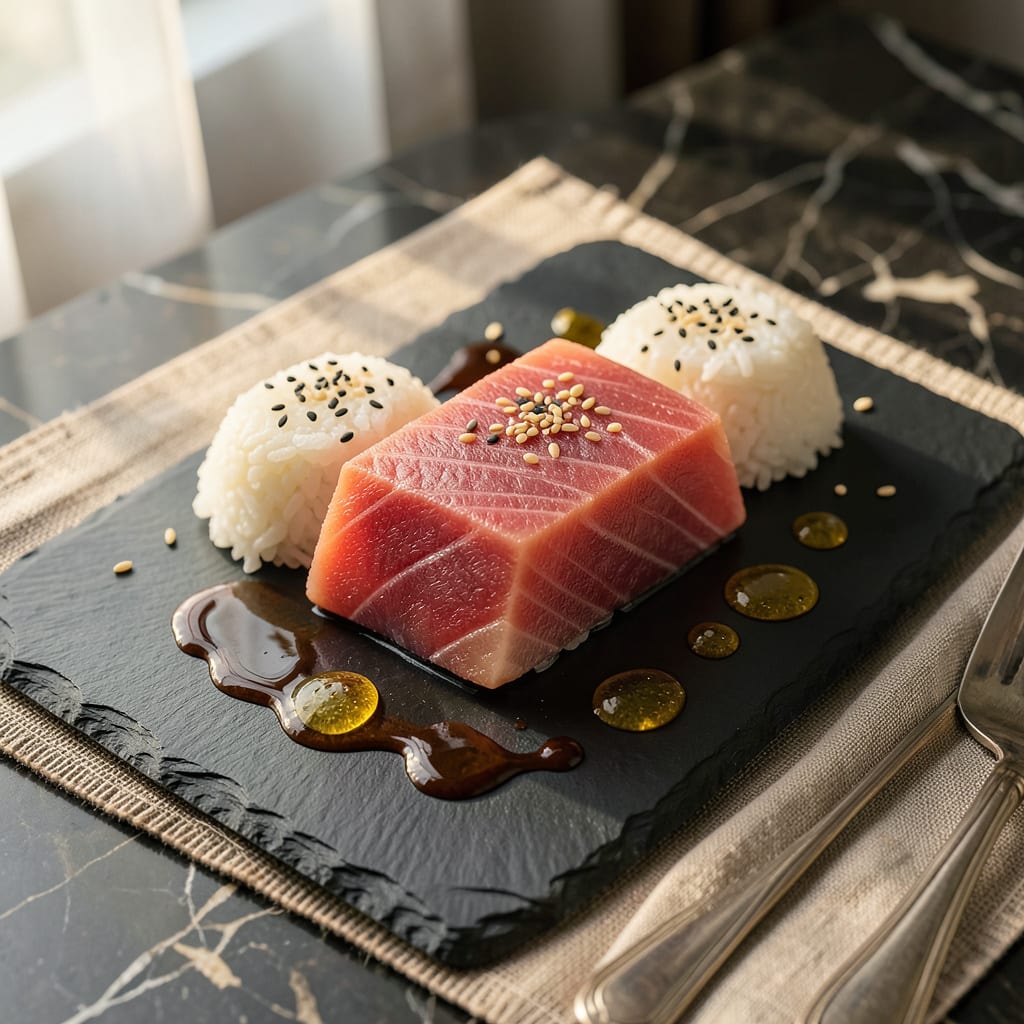
Raw ahi tuna should never sit out longer than 2 hours at room temperature (or 1 hour if above 90°F). After this, harmful bacteria multiply rapidly, increasing food poisoning risks. Always refrigerate promptly or discard if left out too long.
This isn’t just about freshness—it’s about food safety. The 40°F to 140°F range is what food scientists call the “danger zone,” where bacteria like salmonella and listeria thrive. Ahi’s delicate texture and high protein content make it particularly vulnerable, which is why I always treat it like a ticking clock once it leaves the fridge. 🔥
What surprises many home cooks is that even sushi-grade tuna isn’t immune to these rules. The “sushi-grade” label refers to how it was handled for parasites, not bacteria—so temperature control remains critical. I’ve seen too many people assume premium quality means extended countertop time, but that’s a risky misconception.
💡 In This Article
- Why Ahi Tuna Spoils Quickly at Room Temperature
- Safe Handling and Storage Tips for Fresh Ahi Tuna
Why Ahi Tuna Spoils Quickly at Room Temperature
The moment raw ahi tuna hits the 40°F to 140°F “danger zone,” bacteria like Vibrio and Salmonella start doubling every 20-30 minutes. This isn’t just about spoilage—it’s about toxic byproducts forming.
The fish’s high protein content (about 26g per 100g) provides ample fuel for microbial growth, while its natural enzymes begin breaking down flesh within hours. 🔥
What makes ahi particularly vulnerable is its lean muscle structure. Unlike fatty fish that have some protective oils, ahi’s dense protein matrix absorbs oxygen rapidly when exposed to air. This triggers oxidation that turns the vibrant red flesh brown and creates that telltale “fishy” aroma.
I’ve watched this happen in real-time during restaurant prep—what starts as glossy, ruby-red sashimi can develop a dull film in under 90 minutes at room temperature. ⚡
The sushi-grade label creates false confidence for many home cooks. This designation means the fish was frozen at -4°F for 7 days (or -31°F for 15 hours) to kill parasites—not bacteria. Once thawed, it follows the same spoilage rules as any raw seafood.
The freezing process actually makes the proteins more susceptible to degradation when exposed to warmth, which is why professional kitchens keep sushi-grade tuna on ice until the last possible moment. ✨
Here’s what’s happening at the cellular level: as the fish warms, ATP (the energy molecule in cells) breaks down into inosine and hypoxanthine. These compounds create that metallic, bitter taste associated with spoiled seafood. Meanwhile, psychrophilic bacteria (cold-loving microbes) that survived refrigeration suddenly find ideal conditions to multiply.
At 70°F, some strains can grow 1000x faster than at fridge temps. 💫
Even the texture changes dramatically. Fresh ahi has a firm, almost velvety resistance when pressed. After 2 hours at room temperature, the muscle fibers begin losing their structural integrity. You’ll notice it becomes softer and more prone to falling apart—this isn’t tenderness, it’s the proteins unraveling.
The difference is subtle at first but becomes obvious when you try to slice it for sashimi or sear it for poke bowls. 🌟
Pro tip from my restaurant days: we used to test ahi freshness by pressing a finger gently into the flesh. High-quality, properly chilled tuna should bounce back immediately.
If your finger leaves an indentation that lingers for more than 2 seconds, that’s a clear sign the proteins have started breaking down—even if it’s still within the “safe” time window. This simple test reveals what’s happening at the molecular level before you even taste it. ⚡
The color transformation tells the story too. That stunning ruby-red hue comes from myoglobin proteins that begin oxidizing the moment they’re exposed to air and warmth. Within 30-45 minutes, you’ll see the edges start turning brownish-red.
By the 2-hour mark, the entire surface can take on a dull, brick-like color—visual proof that the fish is past its prime, even if it hasn’t reached dangerous bacterial levels yet. 💛

Trained in classic French technique but raised on slow-cooked ribs and spicy rubs, she blends culinary skill with smoke and soul.
- Recipe for Boneless Pork Chops in Cast Iron Skillet: Sear and Baste to Juicy Perfection - October 3, 2026
- Recipe for Boneless Cross Rib Roast: Slow-Roasted Beef with Herb Crust - October 3, 2026
- Hamburgers in Sauce Recipe Crock Pot: Slow-Cooked Savory Delight - October 3, 2026