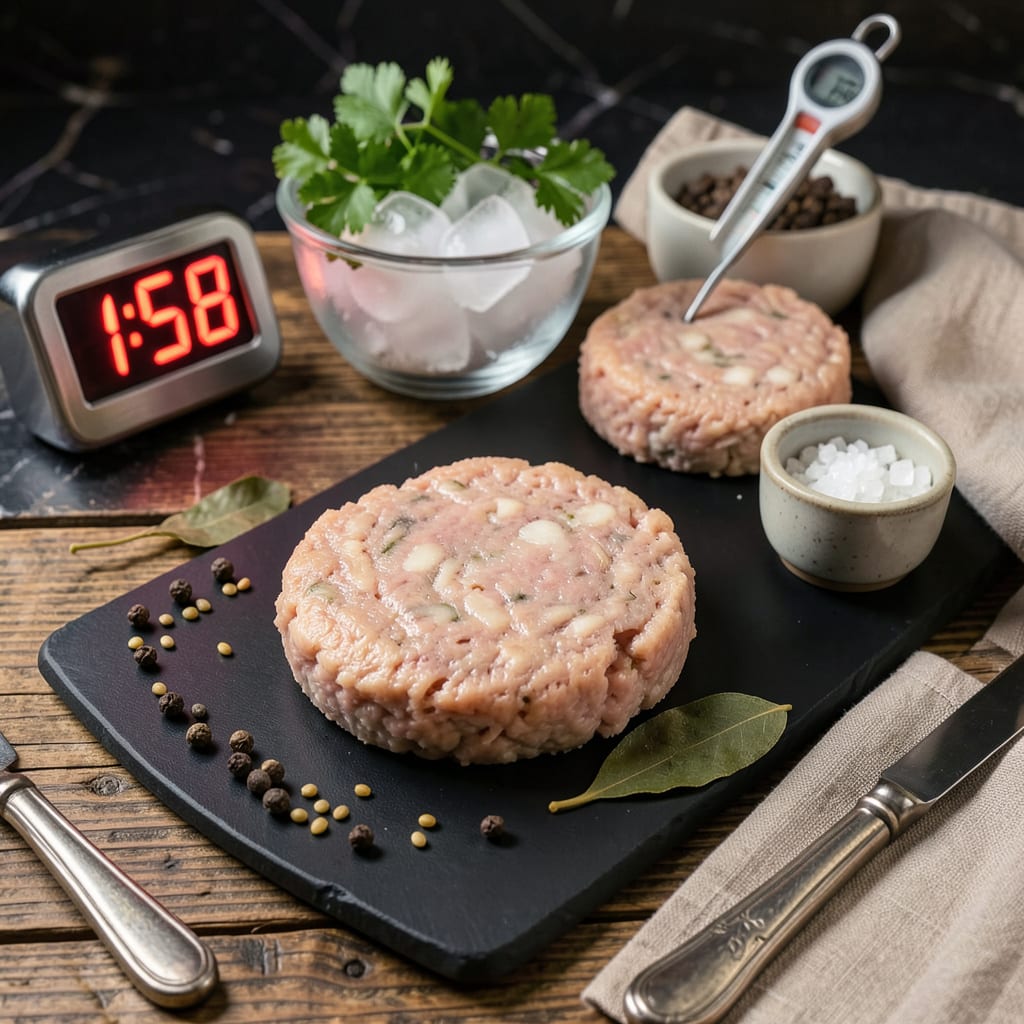
Ground turkey should never sit at room temperature for more than 2 hours (or 1 hour if above 90°F). Beyond this, harmful bacteria like Salmonella and E. coli can multiply rapidly, making it unsafe to eat.
This isn’t just about food going bad—it’s about food becoming a breeding ground for pathogens that can cause serious illness. 🔥 The 40°F–140°F range is what food scientists call the “danger zone,” where bacteria growth accelerates exponentially. Ground turkey is particularly vulnerable because grinding exposes more surface area to potential contamination. I’ve seen too many cases where people underestimate this risk, especially during summer picnics or holiday meal prep.
What many don’t realize is that bacteria double every 20 minutes in ideal conditions. That means after just 4 hours, you could have 16 times more bacteria than when you started. ✨ This is why professional kitchens are obsessive about temperature control—it’s not just about quality, it’s about safety.
💡 In This Article
- Why Room Temperature Is Dangerous for Ground Turkey
- Safe Handling and Storage Tips for Ground Turkey
Why Room Temperature Is Dangerous for Ground Turkey
The 40°F–140°F range is where bacterial growth goes into overdrive. Ground turkey is especially vulnerable because grinding exposes so much surface area to oxygen and potential contaminants. Unlike whole cuts where bacteria stay on the surface, ground meat has pathogens mixed throughout.
🔥 This means every bite could contain harmful microbes if left unrefrigerated too long.
At room temperature, bacteria like Salmonella and Campylobacter can double every 20-30 minutes. After just 2 hours, what started as a few harmless cells becomes millions. The USDA confirms this exponential growth—what might seem like a short time on the counter becomes a microbial explosion.
I’ve seen this firsthand in professional kitchens where temperature logs are sacred for this exact reason.
Ground turkey’s moisture content (about 70-75%) creates the perfect breeding ground. Bacteria need water to multiply, and turkey’s natural juices provide ample hydration. ✨ The protein-rich environment gives pathogens all the nutrients they need to thrive. This is why you’ll notice professional chefs working with ground meats keep them chilled right up until cooking.
Temperature abuse doesn’t just affect safety—it changes the meat’s quality. After 90 minutes at room temperature, you’ll start noticing the fat separating and the texture becoming slimy. This isn’t just unappetizing; it’s your first visual clue that bacterial enzymes are breaking down the proteins.
The smell might not change immediately, but the damage is already happening at a microscopic level.
What surprises most people is how quickly this process accelerates in warmer conditions. At 90°F (like a hot kitchen or outdoor picnic), the safe window shrinks to just 1 hour.
💫 I learned this the hard way during a summer BBQ competition where we lost an entire batch of turkey burgers because they sat too long in the prep area.
The danger isn’t just from obvious spoilage—many pathogenic bacteria don’t change the food’s appearance or smell. E. coli O157:H7, for example, can reach dangerous levels without any sensory warning signs. This is why food safety experts emphasize time limits rather than relying on sight or smell tests.
The bacteria that cause food poisoning are often invisible until it’s too late.
Consider this: a single bacterium can multiply to over 2 million in just 7 hours at room temperature. That’s why the 2-hour rule isn’t arbitrary—it’s based on hard microbiological data about how quickly foodborne illness risks escalate. ⚡ Every minute beyond that window increases your chances of food poisoning exponentially.

Trained in classic French technique but raised on slow-cooked ribs and spicy rubs, she blends culinary skill with smoke and soul.
- Recipe for Boneless Pork Chops in Cast Iron Skillet: Sear and Baste to Juicy Perfection - October 3, 2026
- Recipe for Boneless Cross Rib Roast: Slow-Roasted Beef with Herb Crust - October 3, 2026
- Hamburgers in Sauce Recipe Crock Pot: Slow-Cooked Savory Delight - October 3, 2026