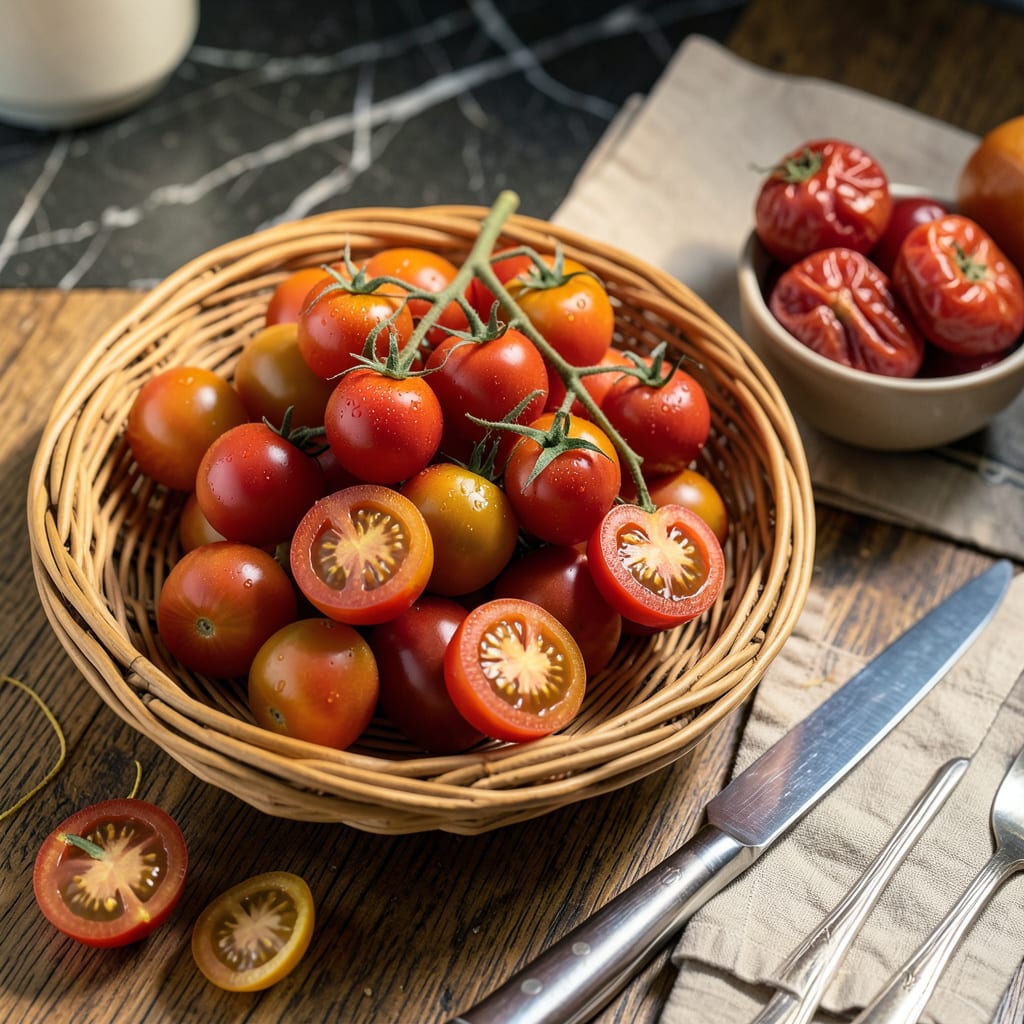
Fresh cherry tomatoes last 5-7 days at room temperature, up to 2 weeks refrigerated, or 6-12 months when frozen. Proper storage is key to preventing spoilage and maintaining flavor.
I’ve found that the secret to extending their freshness lies in controlling moisture and airflow. 🔥 At room temperature, they thrive in a breathable container away from direct sunlight—this prevents condensation that speeds up decay. Refrigeration slows ripening dramatically, but only if you store them unwashed in a partially open bag to maintain humidity balance. For long-term storage, freezing works surprisingly well if you blanch them first to preserve texture.
The difference between a tomato that lasts a week versus one that spoils in days often comes down to how you handle it after purchase. I always inspect for bruises and remove any damaged pieces immediately, as they release ethylene gas that accelerates ripening in nearby tomatoes. This small step can double their usable life in your kitchen.
💡 In This Article
- Factors Affecting Cherry Tomato Shelf Life
- Best Ways to Store Cherry Tomatoes for Maximum Freshness
Factors Affecting Cherry Tomato Shelf Life
What most people don’t realize is that cherry tomatoes are still living organisms after harvest, continuing to respire and release ethylene gas. This natural ripening hormone accelerates decay when concentrated—so storing them in sealed containers creates a gas chamber that speeds up spoilage.
🔥 The ideal storage balances airflow with humidity control, as too much moisture causes mold while too little leads to wrinkling.
Temperature plays a dramatic role in longevity. At room temperature (68-72°F), tomatoes maintain their flavor but ripen 3-4x faster than refrigerated ones. The cold slows enzyme activity that breaks down cell walls, though temperatures below 50°F can damage membranes and create mealy textures.
I’ve found the sweet spot is 55-60°F—cool enough to preserve freshness without sacrificing quality.
Humidity levels between 85-90% keep tomatoes plump without promoting mold. This is why grocery stores use misting systems and why your fridge’s crisper drawer (with humidity control) works better than the main compartment.
The skin’s natural wax coating helps retain moisture, which is why washing before storage removes this protective barrier and cuts shelf life by 2-3 days.
Ripeness at purchase dramatically impacts longevity. Fully red tomatoes last 3-5 days less than partially green ones because they’ve already used most of their internal starch reserves. The color change from green to red represents chlorophyll breaking down as sugars develop—once fully red, the decay process accelerates rapidly. 💫
Ethylene exposure from nearby fruits (apples, bananas) can reduce shelf life by 40%. These high-ethylene producers trigger premature ripening in sensitive tomatoes. I always store them separately, using the “one bad apple” rule literally—remove any damaged tomatoes immediately as their decay spreads ethylene to neighbors.
Light exposure matters more than you’d think. Sunlight breaks down chlorophyll and accelerates softening, while complete darkness can lead to uneven ripening. Indirect light (like in a pantry) provides the best balance, allowing gradual ripening without the stress of direct UV rays that degrade cell walls.
The stem scar is your spoilage early warning system. When this area starts darkening or developing soft spots, it’s the first sign of internal decay. This happens because the stem scar is where moisture and pathogens most easily enter the fruit’s interior.
Checking this daily can help you catch problems before they spread to the entire batch. ✨

Trained in classic French technique but raised on slow-cooked ribs and spicy rubs, she blends culinary skill with smoke and soul.
- Recipe for Boneless Pork Chops in Cast Iron Skillet: Sear and Baste to Juicy Perfection - October 3, 2026
- Recipe for Boneless Cross Rib Roast: Slow-Roasted Beef with Herb Crust - October 3, 2026
- Hamburgers in Sauce Recipe Crock Pot: Slow-Cooked Savory Delight - October 3, 2026