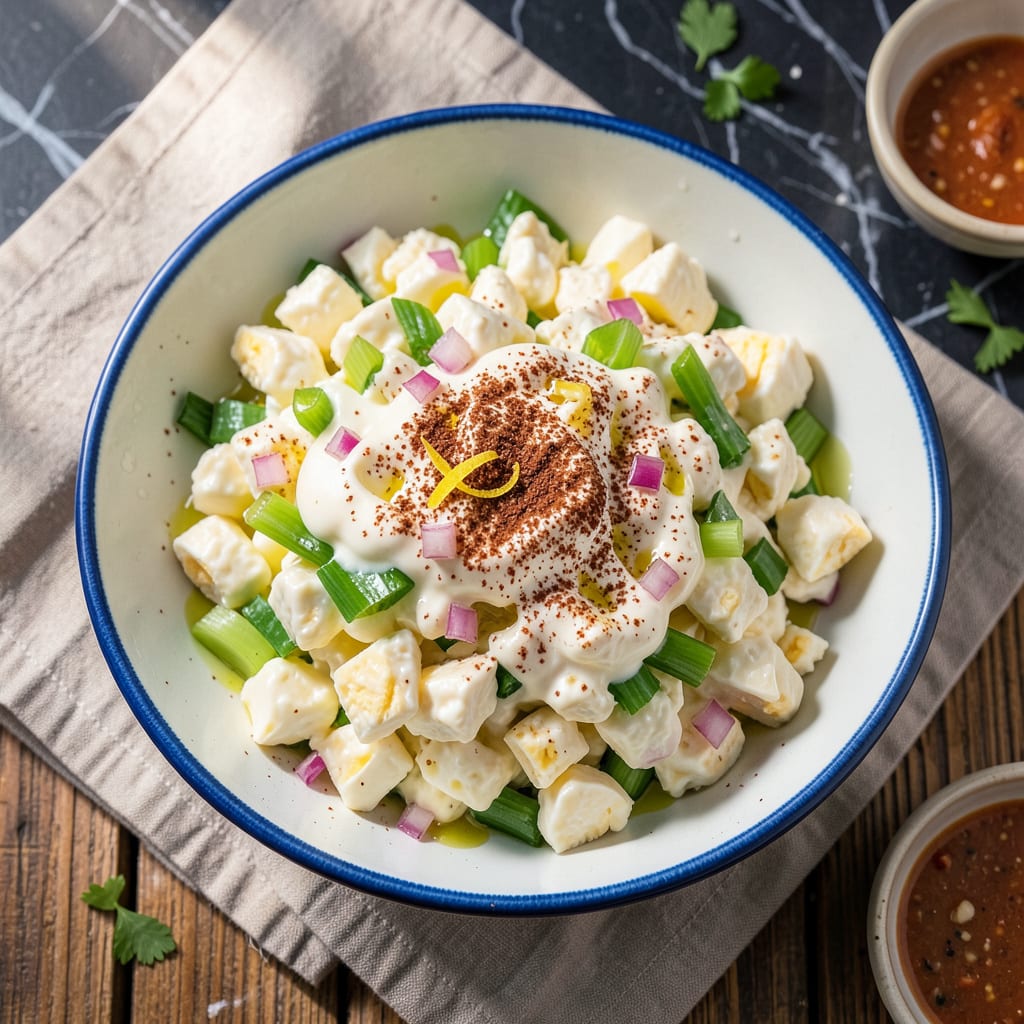
Egg salad should never sit unrefrigerated for more than 2 hours (or 1 hour if above 90°F). After this, harmful bacteria like Salmonella can multiply rapidly, making it unsafe to eat.
This isn’t just about freshness—it’s a food safety red flag. 🔥 The combination of protein-rich eggs and mayo creates the perfect breeding ground for bacteria when left in what I call the “danger zone” (between 40°F and 140°F). I’ve seen too many picnic disasters where people assume “it’s probably fine” only to deal with foodborne illness later.
Think of it like this: every minute past that 2-hour window is rolling the dice with your health. The risk jumps dramatically in warm weather because heat accelerates bacterial growth exponentially. My rule? When in doubt, toss it out—no egg salad is worth a night of misery. ✨
💡 In This Article
- Why Egg Salad Spoils Quickly at Room Temperature
- Safe Handling Tips for Egg Salad at Picnics and Parties
Why Egg Salad Spoils Quickly at Room Temperature
Egg salad becomes a bacterial playground faster than you’d think because of its two main ingredients: cooked eggs and mayonnaise. The proteins in eggs break down during cooking, creating amino acids that bacteria like Salmonella and E. coli feast on. Mayo adds moisture and fat—a perfect medium for microbial growth.
At room temperature, these bacteria can double every 20-30 minutes in the right conditions. 🔥
The “danger zone” for food safety is between 40°F and 140°F, where bacteria thrive. Egg salad sits squarely in this range when left out. What makes it worse? The high moisture content from both eggs and mayo creates an environment where bacteria can move freely and multiply.
Compare this to drier foods like crackers or nuts, which don’t support bacterial growth as easily. ✨
Temperature plays a huge role in how fast things go bad. At 90°F (think summer picnic), bacteria grow twice as fast as at 70°F. That’s why the safe window shrinks from 2 hours to just 1 hour in hot weather.
The proteins in eggs also denature (change structure) when exposed to heat, making them even more susceptible to bacterial colonization. 💫
Here’s what’s happening on a microscopic level: the yolk’s lecithin and albumen proteins start breaking down, releasing nutrients that feed bacteria. Meanwhile, mayo’s emulsified fats protect bacteria from drying out.
This one-two punch is why egg salad is riskier than, say, a simple tuna salad (which has less protein diversity) or a dry chicken salad (with less moisture).
Salmonella is the biggest concern because it’s commonly found in raw eggs and can survive cooking if the eggs weren’t heated to 160°F. Once in the salad, it needs only a short time at room temperature to reach dangerous levels.
Unlike some bacteria that just cause spoilage, Salmonella can make you seriously ill with as few as 15-20 cells. ⚡
The moisture content in egg salad (typically 60-70%) creates what food scientists call “water activity” – a measure of how available the water is for microbial use. Most bacteria need a water activity above 0.91 to grow, and egg salad easily meets this threshold.
This is why dehydrated foods last longer – they literally starve bacteria of the water they need to multiply.
Remember that “sniff test” everyone talks about? It’s useless here. Dangerous bacteria like Salmonella don’t produce odors or visible signs until they’ve multiplied to extreme levels. By the time you can smell or see spoilage, the bacterial count is already in the millions – far beyond safe levels.
When in doubt, it’s always safer to discard egg salad that’s been left out too long. 💛

Trained in classic French technique but raised on slow-cooked ribs and spicy rubs, she blends culinary skill with smoke and soul.
- Indian Lamb Curry Recipe Pressure Cooker: Fragrant Spices in a Fraction of the Time - October 3, 2026
- Recipe for Oven Roasted: Golden Crisp Perfection Without the Fryer - October 3, 2026
- Recipe for Fried Pork Chops With Flour: Crispy Crust and Juicy Centers - October 3, 2026