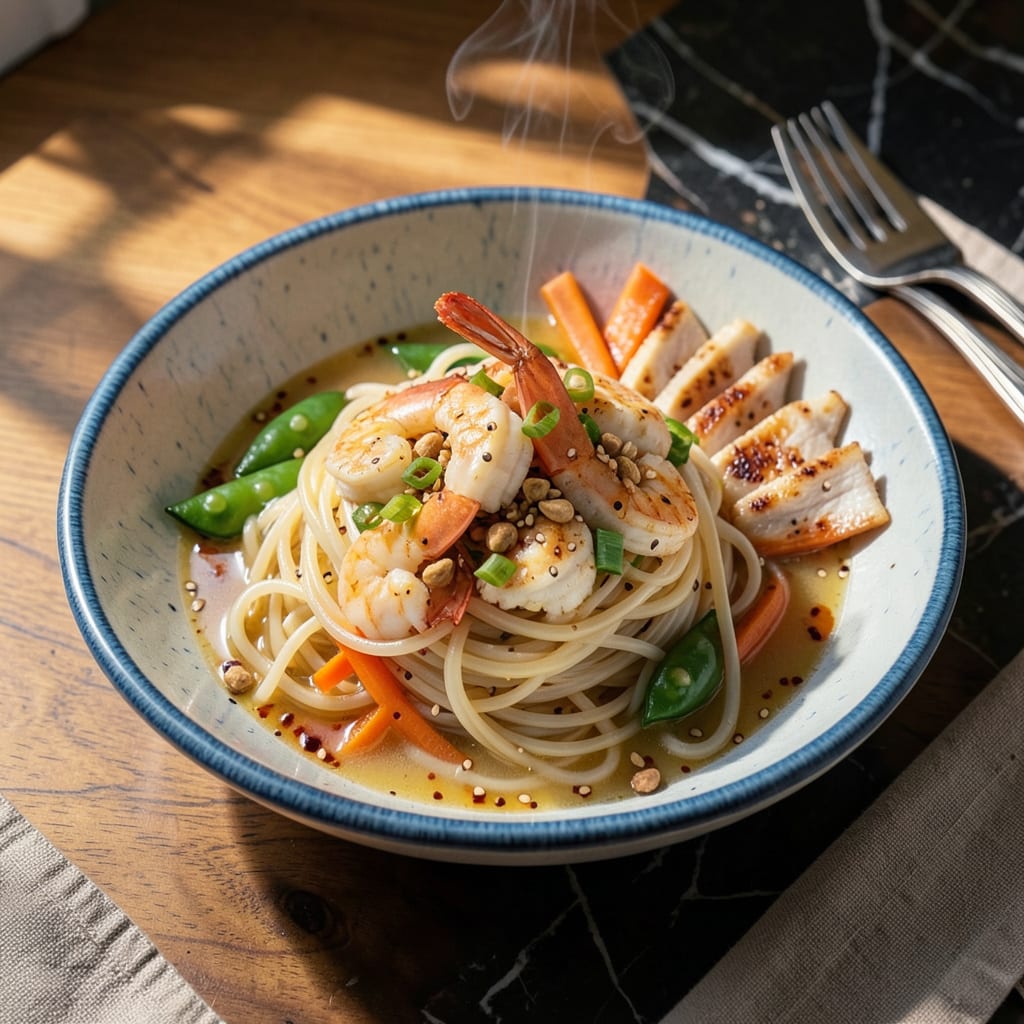
Vermicelli typically cooks in 2 to 5 minutes when boiled in salted water. Thin rice vermicelli softens in just 1-2 minutes, while wheat-based types need 4-5 minutes for al dente texture. Always check package instructions for exact timing.
I’ve found that the secret to perfect results lies in watching the texture transform. 🔥 Rice vermicelli becomes translucent when ready, while wheat versions develop a slight bite that holds up beautifully in stir-fries. The cooking process moves fast—so fast that I recommend having your strainer ready before you even start boiling the water. What many don’t realize is that residual heat continues cooking the noodles after draining, which is why I always rinse them briefly with cool water to halt the process.
💡 In This Article
- Factors That Affect Vermicelli Cooking Time
- Perfect Vermicelli Cooking Techniques for Different Dishes
Factors That Affect Vermicelli Cooking Time
The material composition makes all the difference. Rice vermicelli, made from ground rice flour, absorbs water almost instantly—its porous structure allows moisture to penetrate rapidly, softening in just 60-90 seconds. Wheat-based vermicelli, however, contains gluten proteins that create a more resilient network, requiring 4-5 minutes to reach that perfect al dente bite.
The starch content also varies dramatically: rice noodles contain about 80% starch versus wheat’s 70%, which affects hydration speed. 🔥
Thickness plays a surprisingly big role. Ultra-thin 0.5mm rice sticks might cook in under a minute, while thicker 2mm wheat vermicelli needs nearly five times longer. Water temperature matters too—boiling at 212°F cooks noodles 30% faster than simmering at 190°F.
Altitude changes the game: at 5,000 feet, water boils at 203°F, adding about 1 extra minute to cooking time. The salt concentration alters texture development by strengthening gluten bonds in wheat noodles. ✨
Here’s what’s actually happening at the molecular level: Rice vermicelli undergoes rapid gelatinization where starch granules absorb water and swell. Wheat vermicelli experiences both gelatinization and protein denaturation—the gluten proteins unfold and rebond, creating that chewy texture.
The salt in your water (ideal concentration: 1 tablespoon per quart) helps control this process by tightening the protein network. This is why undersalted water can leave wheat vermicelli mushy instead of springy. 💫
Consider these real-world examples: Vietnamese bún (rice vermicelli) for summer rolls needs just 30 seconds in hot water to soften perfectly. Italian vermicelli (wheat-based) for pasta salads requires 4-5 minutes to maintain structure when tossed with dressing.
The same noodle type can behave differently based on dish application—soup vermicelli cooks faster than stir-fry vermicelli because it doesn’t need to hold up to high-heat tossing. 🌟
Pro tip: The “floating test” works beautifully for rice vermicelli—when the strands rise to the surface, they’re about 90% done. For wheat vermicelli, look for the center to lose its white core (the “al dente window” is roughly 30 seconds after this point).
Remember that carryover cooking continues after draining, which is why I always recommend rinsing with cool water to stop the process immediately. This simple step prevents that dreaded gummy texture that ruins so many noodle dishes. ⚡
What most people don’t realize is that pre-soaking can cut cooking time by 40%. A 10-minute soak in warm water hydrates rice vermicelli enough that it only needs 20-30 seconds of boiling. For wheat vermicelli, a 5-minute soak reduces boiling time to about 2 minutes.
This technique also helps prevent sticking and creates more even texture throughout the noodles. The water-to-vermicelli ratio matters too—use at least 4 cups water per 2 oz noodles to prevent starch buildup that causes clumping. 💛
Temperature shock is your secret weapon. After cooking, plunging vermicelli into ice water for 10 seconds stops the cooking process instantly and removes surface starch. This is particularly crucial for rice noodles in cold dishes like Vietnamese gỏi cuốn (summer rolls) where you want distinct, separate strands.
For hot applications, simply tossing with a bit of oil after draining creates a protective coating that prevents sticking during stir-frying or baking. 🌟

Trained in classic French technique but raised on slow-cooked ribs and spicy rubs, she blends culinary skill with smoke and soul.
- Recipe for Boneless Pork Chops in Cast Iron Skillet: Sear and Baste to Juicy Perfection - October 3, 2026
- Recipe for Boneless Cross Rib Roast: Slow-Roasted Beef with Herb Crust - October 3, 2026
- Hamburgers in Sauce Recipe Crock Pot: Slow-Cooked Savory Delight - October 3, 2026