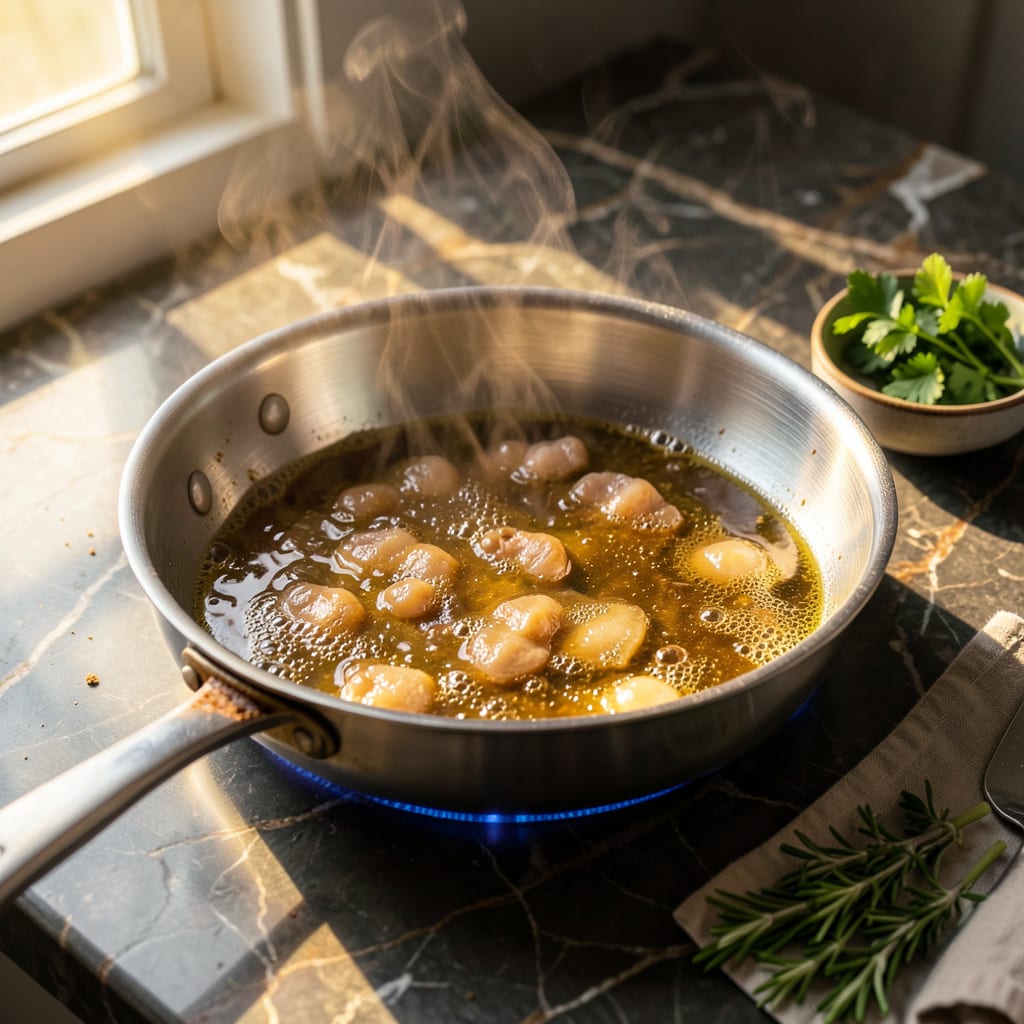
Most cooking grease reaches ideal frying temperature (350–375°F) in 5–10 minutes on medium-high heat, but timing varies by fat type, pan material, and stove power. Always use a thermometer for accuracy.
I’ve learned the hard way that patience pays off when heating fats. 🔥 Butter might hit its sweet spot in just 3-5 minutes but burns easily, while peanut oil can take closer to 10-12 minutes to stabilize at higher temps. The real game-changer? Your cookware—cast iron retains heat differently than thin stainless steel, and that induction burner you love heats twice as fast as your old gas stove. That’s why I always keep a thermometer handy—it’s the only way to know for sure when your fat is perfectly primed for frying.
💡 In This Article
- Factors That Affect Grease Heating Time
- How to Test Grease Temperature Without a Thermometer
Factors That Affect Grease Heating Time
The type of fat you’re using dramatically changes heating time because of molecular structure. Butter (with milk solids) heats to 300°F in about 3-5 minutes but burns quickly, while refined oils like peanut or avocado can take 8-12 minutes to reach 375°F safely.
Lard and tallow heat more slowly than vegetable oils due to their saturated fat content, which requires more energy to break molecular bonds. 🔥
Your pan material acts like a thermal conductor orchestra. Cast iron retains heat so well that it can overshoot your target temperature by 20-30°F if you’re not careful, while thin stainless steel responds faster to heat adjustments. Copper pans (with their 9.8 thermal conductivity rating) heat most evenly but require constant attention.
The thickness matters too—a 1/4-inch cast iron skillet will heat grease 30% faster than a 1/2-inch version.
Stove type creates massive differences in heating efficiency. Induction burners transfer energy directly to magnetic pans, heating oil 50% faster than gas. A standard gas burner might take 8 minutes to heat 2 cups of oil to 350°F, while the same amount on induction could reach temperature in just 4-5 minutes.
Electric coil stoves fall in between but often develop hot spots that create uneven heating. ✨
The volume of grease changes everything through basic physics. Doubling your oil quantity doesn’t double heating time—it increases it exponentially. Heating 1 cup of oil might take 5 minutes, but 4 cups could require 15-20 minutes as the heat must penetrate deeper layers.
This is why deep fryers have built-in thermostats—they maintain consistent temperatures despite large volumes. 💫
Altitude plays a sneaky role too. At 5,000 feet elevation, water boils at 203°F instead of 212°F, and fats heat differently as well. The lower atmospheric pressure means oils reach their smoke points about 10-15°F sooner than at sea level.
I learned this the hard way when my usually-perfect fried chicken came out greasy during a mountain cooking demo. 🌟
Even the starting temperature matters. Refrigerated lard straight from the fridge (40°F) will take 2-3 minutes longer to heat than room-temperature oil (70°F). This is why professional kitchens often store frying oils at room temperature—it creates more consistent cooking results.
The temperature delta between your fat and target temperature determines how quickly the molecules will gain energy. ⚡
Pro tip: Preheating your empty pan for 2-3 minutes before adding fat creates a more even heating surface. This is especially crucial with cast iron, where hot spots can develop if the pan isn’t uniformly heated first.
The initial pan temperature should be about 100°F hotter than your target oil temperature to account for the cooling effect when you add the fat.

Trained in classic French technique but raised on slow-cooked ribs and spicy rubs, she blends culinary skill with smoke and soul.
- Recipe for Boneless Pork Chops in Cast Iron Skillet: Sear and Baste to Juicy Perfection - October 3, 2026
- Recipe for Boneless Cross Rib Roast: Slow-Roasted Beef with Herb Crust - October 3, 2026
- Hamburgers in Sauce Recipe Crock Pot: Slow-Cooked Savory Delight - October 3, 2026