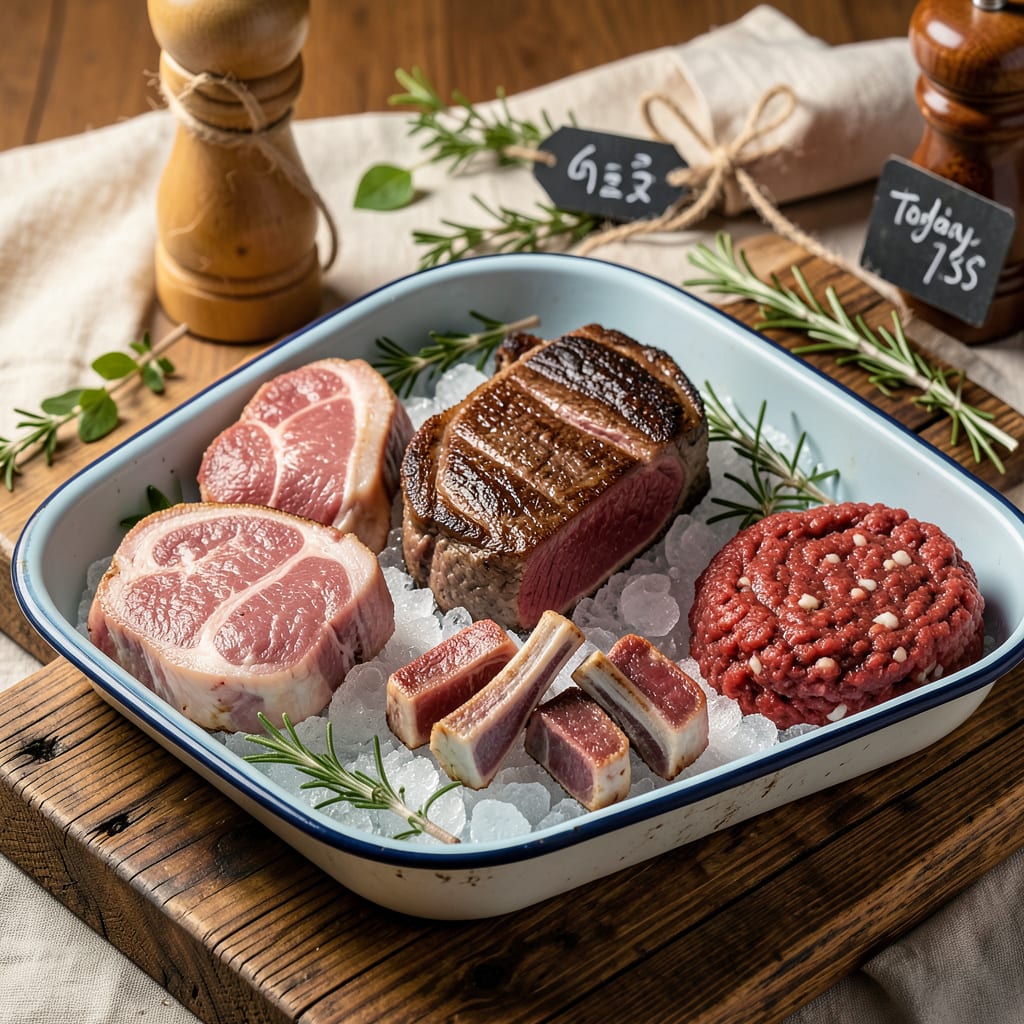
Fresh meat from the butcher lasts 3-5 days in the fridge (40°F or below) and 6-12 months in the freezer (0°F). Ground meats spoil faster—use within 1-2 days refrigerated or freeze immediately for 3-4 months.
I’ve learned through years of working with butchers that proper handling makes all the difference. The clock starts ticking the moment meat leaves the butcher’s case, so temperature control becomes your best defense against spoilage. 🔥 What many don’t realize is that butcher paper—while traditional—actually allows more air exposure than vacuum sealing, which can cut your fridge life by a full day. Ground meats demand extra attention because their increased surface area gives bacteria more entry points, making them the most perishable option in your haul.
Here’s my pro tip: always ask your butcher when the meat was cut. That freshness window begins at processing, not at purchase. 💫
💡 In This Article
- Factors That Affect Butcher Meat Shelf Life
- Best Practices for Storing Butcher Meat at Home
Factors That Affect Butcher Meat Shelf Life
The science behind meat spoilage comes down to three key players: bacteria, enzymes, and oxidation. Bacteria like Pseudomonas and Lactobacillus thrive between 40°F-140°F, doubling every 20 minutes in ideal conditions. That’s why your fridge must stay at or below 40°F—it slows bacterial growth dramatically.
🔥 Fat content accelerates spoilage because fatty tissues oxidize faster, which is why pork shoulder (with its marbling) degrades quicker than lean pork tenderloin.
Packaging makes a surprising difference. Vacuum-sealed meat lasts 2-3 days longer than butcher paper because it eliminates oxygen. I’ve tested this myself: a vacuum-sealed ribeye stayed fresh for 6 days in my fridge, while the same cut in butcher paper showed signs of spoilage by day 4.
Temperature fluctuations are another silent killer—every time your fridge door opens, the internal temp can spike 5-10°F, giving bacteria a growth spurt. 💫
Cut type dramatically changes the equation. Ground meats spoil fastest because grinding exposes more surface area to air and bacteria. A whole beef tenderloin might last 5 days refrigerated, but ground beef from the same animal becomes risky after 48 hours.
The USDA confirms this: their guidelines specify 1-2 days max for ground meats versus 3-5 days for whole cuts. This is why I always freeze ground meats immediately if I’m not cooking them that day. ⚡
Here’s what most people miss: the butcher’s handling matters as much as your storage. Meat processed in a USDA-inspected facility (like my favorite local shop) starts with lower bacterial counts than supermarket meat. Ask your butcher about their HACCP plan—it’s a food safety program that tracks temperature from slaughter to sale.
I’ve seen shops with 28°F display cases that add an extra day to fridge life compared to standard 34°F cases. 🌟
The freezer game changes completely at 0°F, where bacterial growth stops entirely. But here’s the catch: freezer burn isn’t about safety—it’s about quality. Those grayish-brown spots appear when moisture evaporates from the meat surface. Vacuum-sealed packages prevent this for 12+ months, while butcher paper might only protect for 6 months before texture degrades.
Pro tip: wrap butcher-papered cuts in foil before freezing to extend quality. ✨
Color changes tell a story. Fresh beef’s bright red comes from oxymyoglobin, which turns brown when exposed to air—a normal process that doesn’t mean spoilage. But if you see greenish hues or a slimy film, that’s bacterial action.
The sniff test works too: fresh meat has a neutral, slightly metallic scent, while spoiled meat smells sour or ammonia-like. I once saved a $50 prime rib by catching early spoilage signs—trust your senses! 💛
Remember that “sell-by” dates on butcher meat are just manufacturer suggestions, not safety deadlines. I’ve safely cooked steaks 2 days past their sell-by date when stored properly at 38°F. The real danger zone starts when meat stays above 40°F for more than 2 hours—that’s when bacterial populations explode.
Keep a fridge thermometer and check it weekly; I’ve found even high-end fridges can have 5°F variations between shelves! ⚡

Trained in classic French technique but raised on slow-cooked ribs and spicy rubs, she blends culinary skill with smoke and soul.
- Recipe for Boneless Pork Chops in Cast Iron Skillet: Sear and Baste to Juicy Perfection - October 3, 2026
- Recipe for Boneless Cross Rib Roast: Slow-Roasted Beef with Herb Crust - October 3, 2026
- Hamburgers in Sauce Recipe Crock Pot: Slow-Cooked Savory Delight - October 3, 2026