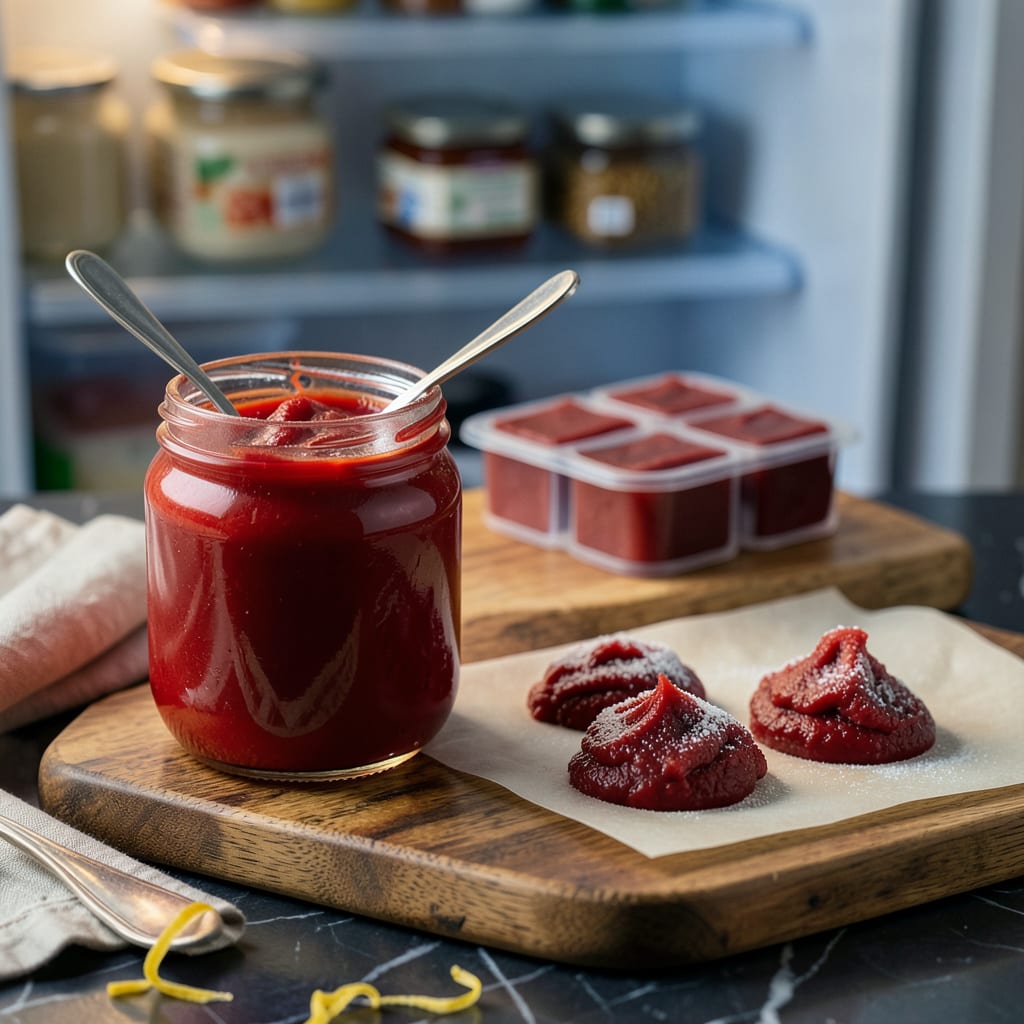
Frozen tomato paste stays safe indefinitely but maintains best quality for 6-12 months. Store it in airtight containers or ice cube trays to prevent freezer burn and flavor loss.
I’ve found that freezing tomato paste is a game-changer for home cooks who want to minimize waste without sacrificing flavor. 🔥 The key lies in proper portioning—small amounts thaw quickly and maintain their rich, concentrated taste. Unlike canned paste that can develop metallic notes over time, frozen portions preserve that just-opened freshness. I always recommend using oxygen-free containers and labeling with dates to track quality over time.
What many don’t realize is that tomato paste’s natural acidity actually helps preserve its quality in the freezer. The cold stops enzyme activity that would normally break down flavor compounds, keeping that deep umami richness intact for months. This method works particularly well for recipes where you only need 1-2 tablespoons at a time—no more opening a whole can for a single use!
💡 In This Article
- Why Freezing Extends Tomato Paste Shelf Life
- Best Freezing Methods for Tomato Paste
Why Freezing Extends Tomato Paste Shelf Life
Freezing tomato paste essentially hits the pause button on all the natural processes that cause food to degrade. At temperatures below 0°F (-18°C), bacterial growth comes to a complete halt because microorganisms can’t reproduce in these conditions.
The cold also dramatically slows down enzyme activity—those natural compounds in tomatoes that would normally break down cell walls and cause texture changes over time. 🔥
What’s particularly fascinating is how freezing affects oxidation, the chemical reaction that causes flavor deterioration. Tomato paste contains lycopene and other antioxidants that are relatively stable when frozen, unlike when exposed to air at room temperature.
Studies show that frozen tomato products retain about 80-90% of their original lycopene content after 6 months, compared to just 50-60% in refrigerated samples over the same period. The absence of oxygen in properly sealed containers creates an environment where these beneficial compounds remain intact.
The moisture content in tomato paste (about 75-80%) actually becomes an advantage in freezing. When water molecules freeze, they form a protective matrix around the tomato solids, preventing the concentration of flavors that occurs during other preservation methods.
This is why frozen paste maintains that bright, concentrated tomato essence that canned versions sometimes lose after opening. I’ve noticed this particularly when using frozen paste in sauces—it delivers that immediate depth of flavor that fresh tomatoes provide.
Comparing storage methods reveals why freezing wins for long-term quality. At room temperature, opened tomato paste lasts only 5-7 days before mold growth becomes likely. Refrigeration extends this to about 10-14 days, but the paste gradually develops a sour note as lactic acid bacteria proliferate.
Freezing, however, maintains the original pH balance (around 4.3-4.5) that gives tomato paste its characteristic tangy richness without any off-flavors developing. ✨
The cellular structure of tomatoes also benefits from freezing. Unlike canning which can make tomato products mushy through heat processing, freezing preserves the paste’s natural thickness.
The ice crystals that form are small enough that they don’t rupture cell walls significantly—this is why thawed paste maintains its smooth, spreadable consistency rather than becoming watery or separated.
One aspect I’ve observed in my kitchen is how frozen tomato paste behaves differently than fresh in cooking applications. The freezing process actually makes the pectin (a natural thickening agent) more effective when heated.
This means you’ll often need slightly less frozen paste to achieve the same body in sauces compared to fresh—about 10-15% less in my experience. The concentrated flavors also bloom more quickly when added to hot oil, creating that rich base for sauces in half the time. 💫
It’s worth noting that commercial frozen tomato paste often undergoes a quick-freeze process that creates smaller ice crystals than home freezing. While your home-frozen paste might show slight texture changes after 8-10 months, it remains perfectly usable for cooking—just maybe not ideal for applications where texture is critical, like spreading on pizza bases.
The flavor, however, stays remarkably consistent throughout the entire 12-month window when properly stored.

Trained in classic French technique but raised on slow-cooked ribs and spicy rubs, she blends culinary skill with smoke and soul.
- Recipe for Boneless Pork Chops in Cast Iron Skillet: Sear and Baste to Juicy Perfection - October 3, 2026
- Recipe for Boneless Cross Rib Roast: Slow-Roasted Beef with Herb Crust - October 3, 2026
- Hamburgers in Sauce Recipe Crock Pot: Slow-Cooked Savory Delight - October 3, 2026