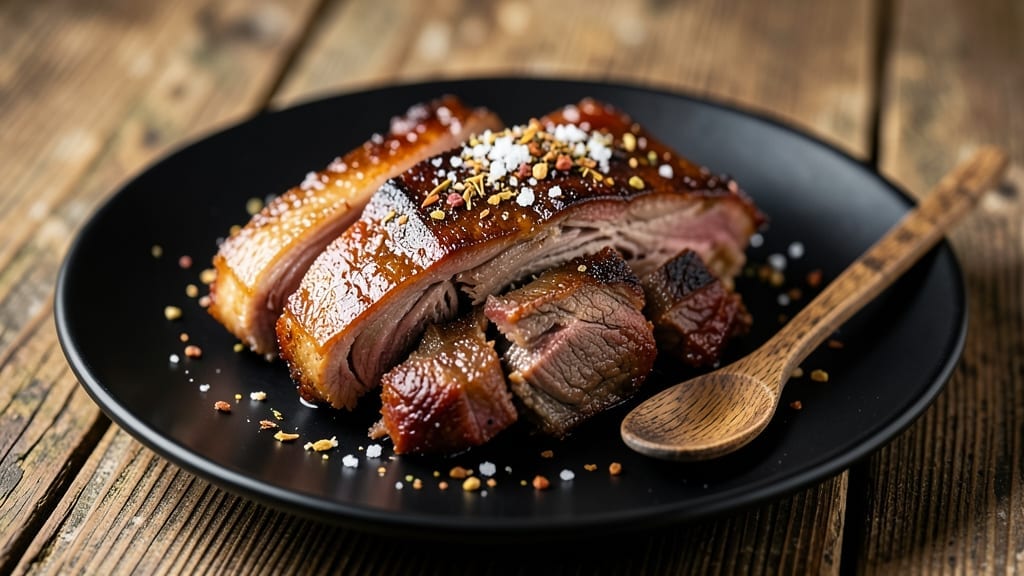
When you smoke pulled pork, the process actually creates a slightly acidic environment that slows bacterial growth—but only if it stays cold. I’ve found that wrapping it tightly in butcher paper or aluminum foil before refrigerating makes a huge difference, as it minimizes air exposure where bacteria thrive.
For those extra-long barbecues, freezing portions in airtight containers lets you stretch that shelf life for months while keeping the flavor intact. 🔥
One trick I swear by? Labeling containers with the date—because even with perfect storage, the texture can start drying out after 4 days. If you notice the meat smells sharp or feels slimy, toss it immediately; those are clear signs bacteria have taken over.
And remember, reheating to 165°F kills most pathogens, but it won’t reverse texture changes from neglect.
💡 In This Article
- How Temperature and Storage Affect Pulled Pork Freshness
- Reheating and Preserving Leftover Smoked Pulled Pork
How temperature and storage affect pulled pork freshness
The smoking process itself creates a natural antibacterial environment due to the wood smoke’s phenolic compounds, which can slightly extend shelf life compared to raw pork. However, the real game-changer is temperature control.
Bacteria like Listeria monocytogenes and Salmonella thrive between 40°F (4°C) and 140°F (60°C), doubling their numbers every 20 minutes in this danger zone. Once your pulled pork cools below 40°F (4°C), growth slows dramatically—but only if it stays consistently cold. 💫
Vacuum sealing works wonders because it removes oxygen, which bacteria need to multiply. Without air, the meat’s natural pH (around 5.8-6.2) becomes more effective at inhibiting microbial growth. Studies show vacuum-sealed pork stays safe 5-7 days in the fridge compared to 3-4 days for loosely wrapped portions.
The key is sealing within 2 hours of cooking to prevent surface contamination from airborne bacteria.
Here’s what’s actually happening at the molecular level: The smoking process lowers water activity in the meat by 10-15% through dehydration, making it harder for bacteria to access moisture. But when pork sits exposed in the fridge, surface moisture evaporates unevenly, creating micro-environments where bacteria can colonize.
That’s why I always double-wrap—first in butcher paper to maintain moisture, then in plastic wrap to block oxygen. 🔥
The pH level plays a critical role too. Smoked pork typically has a slightly lower pH (5.8) due to lactic acid buildup during the smoking process, which acts as a natural preservative.
However, if you add acidic marinades (like vinegar or citrus) before smoking, the pH drops further (5.5-5.7), potentially extending freshness by 12-24 hours. This is why competition BBQ teams often use vinegar-based rubs—they’re not just for flavor, but for microbial control.
One common misconception is that smoked pork lasts longer because of the smoke flavor. In reality, the smoke’s preservation effect is minimal compared to proper refrigeration.
The real difference comes from storage technique: A 1-pound portion vacuum-sealed and refrigerated properly will maintain its texture and safety for 5 days, while the same portion wrapped loosely in foil may only last 3 days before bacterial counts become risky. 🌟
For visual learners, think of it like this: Imagine your pulled pork as a sponge. When properly stored, the “pores” (surface areas) stay dry and cold, slowing bacterial growth. But when exposed to air, those pores absorb moisture from the fridge, creating a damp environment where bacteria multiply like wildfire.
That’s why I always recommend storing portions in glass containers with tight lids—they’re non-porous and maintain a consistent cold environment.
What most people don’t realize is that the smoking temperature (typically 225-250°F) also affects shelf life. Higher temperatures (275°F+) can create a slightly drier surface that inhibits some bacterial growth, but this comes at the cost of moisture loss.
The sweet spot is 225°F for 8-12 hours, which gives you that perfect balance of tenderness and extended freshness when stored properly. ✨

Trained in classic French technique but raised on slow-cooked ribs and spicy rubs, she blends culinary skill with smoke and soul.
- Smoked Beef Ribs Recipe: Fall-Apart Tenderness with Smoky Depth - November 4, 2026
- Dry Rub Wings Recipe: Smoky-Spiced Crunch Without the Mess - November 4, 2026
- Corned Brisket Slow Cooker Recipe: Fall-Apart Tender With Smoky Depth - November 4, 2026