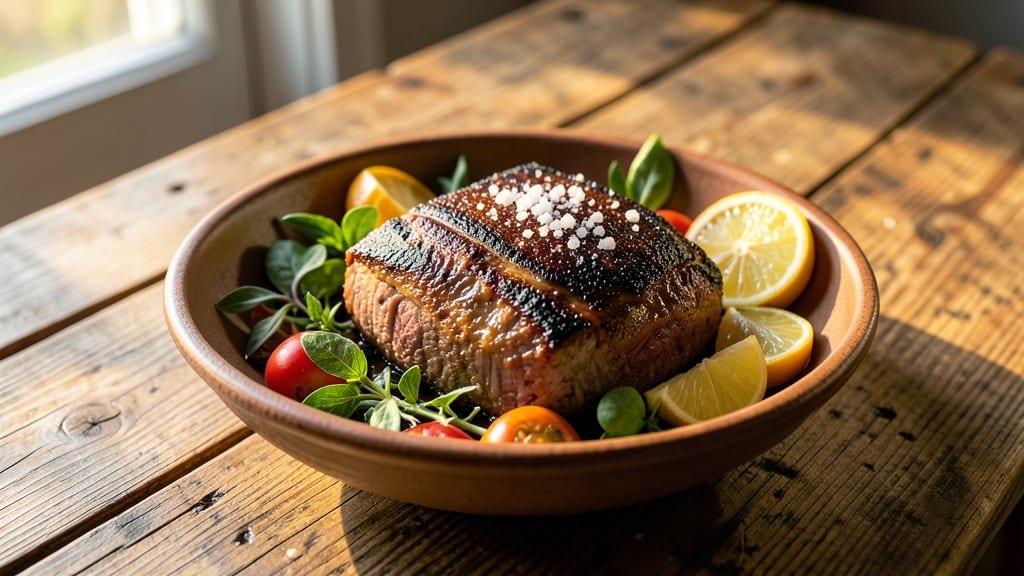
This smoked beef brisket recipe delivers the kind of fork-tender, melt-in-your-mouth perfection that turns casual cookouts into legendary meals. The secret lies in mastering the low-and-slow process—patiently transforming tough beef into succulent slices that practically fall apart at the touch.
After years of perfecting this technique, I’ve developed a method that balances time, temperature, and technique to guarantee restaurant-quality results at home.
The foundation starts with a well-trimmed brisket, generously seasoned and smoked at a precise 225°F for hours until the internal temperature reaches 203°F. This slow cooking breaks down collagen into gelatin, creating that signature juicy texture while allowing the bark to develop a rich, caramelized crust.
The choice of wood—hickory or oak—adds depth, but the real magic happens during the wrap phase, where the brisket’s moisture is preserved for maximum tenderness.
By the time it’s done, you’ll have a brisket so tender it slices like butter, with layers of smoky flavor that make every bite unforgettable.
The crust will be dark and crackling, while the meat inside remains juicy and rich, ready to be sliced against the grain for perfect pull-apart texture. This is the kind of dish that transforms a simple gathering into a memorable feast—worth every minute of the wait.
Serve with classic sides like creamy coleslaw, buttery cornbread, or pickled jalapeños to cut through the richness. The leftovers reheat beautifully, making this the ultimate recipe for feeding a crowd or meal prepping for the week. Let’s get started on creating your showstopping brisket.
Ingredients for smoked beef brisket
The essential components for restaurant-quality smoked brisket—where precision meets patience for melt-in-your-mouth perfection.
| Ingredient | Amount | Notes |
|---|---|---|
| Beef Brisket 🥩 | 8 lb | Whole packer cut, fat cap intact |
| Yellow Mustard 🍯 | ½ cup | For bark adhesion (Dijon works too) |
| Kosher Salt 🧂 | ¾ cup | Diamond Crystal preferred for purity |
| Black Peppercorns 🌶️ | ½ cup | Freshly cracked for optimal flavor |
| Garlic Powder 🧄 | 2 tbsp | Not garlic salt, pure garlic flavor |
| Onion Powder 🧅 | 2 tbsp | Freshly ground preferred |
| Smoked Paprika 🌶️ | 1 tbsp | For authentic smoky depth |
| Brown Sugar 🍯 | ¼ cup | Light or dark, packed measurement |
| Butcher Paper 📄 | 2 sheets | For wrap phase moisture retention |
| Hickory Wood Chips 🌳 | 2 lb | Oak chips for milder smoke profile |
| Apple Juice 🍎 | ½ cup | Spritzing during cook (optional) |
| Yellow Onion 🧅 | 1 whole | Quartered for spritz solution |
| Fresh Thyme 🌿 | 2 sprigs | For spritzing, aromatic pairing |
| Butter 🧈 | ½ cup | Cold, cubed for basting |
[recipe_ingredient_scaler]
The beef brisket is non-negotiable—opt for a whole packer cut weighing 8 pounds with intact fat cap for optimal moisture retention. Costco or local butcher shops typically carry the best quality, though most grocery stores stock pre-cut briskets. Look for vibrant red meat with good marbling—this ensures juiciness during the long cook. The fat cap should be thick enough to render down and baste the meat naturally, so avoid pre-trimmed cuts. If your butcher offers dry-aged brisket, even better—it develops deeper flavor. For wood, hickory chips deliver that classic BBQ intensity, while oak provides a milder, more versatile profile. Purchase food-grade chips from Traeger or Cookshack to ensure quality and avoid contaminants.
No Diamond Crystal kosher salt? Morton works in a pinch, though it contains anti-caking agents that may slightly alter texture. Freshly cracked black peppercorns are worth the effort—pre-ground loses potency quickly. For the spritz solution, apple juice adds subtle sweetness, but white grape juice or even water with a splash of vinegar will suffice. The butcher paper must be unbleached—bleached varieties can impart an off-flavor. If you’re short on time, pre-made BBQ rubs (like Stubb’s) can substitute, though they lack the custom balance of this recipe’s dry rub. For the garlic and onion powders, Penzeys or Simply Organic brands offer superior quality, but store-bought versions work fine if they’re recent purchases.
Store uncooked brisket in its original packaging in the coldest part of your fridge for up to 5 days before smoking. Once cooked, wrap tightly in butcher paper and refrigerate for 3-4 days—the flavors deepen as it rests. For long-term storage, slice against the grain, portion into airtight containers, and freeze for up to 3 months. The wood chips should be kept in a sealed container in a cool, dry place for 6-12 months. Spritz ingredients (onion, thyme, apple juice) can be prepped ahead and stored in the fridge for 5 days. The basting butter stays fresh at room temperature for 1 week or frozen for 6 months. Always let the brisket rest 2 hours post-cook before slicing—this ensures clean cuts and maximum juiciness.
Why You’ll Love This Recipe
- Let’s talk real talk: beef brisket is cheap compared to steaks or filet mignon, and this recipe turns it into something special. The spices and wood chips are minimal, and the butcher paper is a one-time investment. You’re getting melt-in-your-mouth meat for a fraction of the cost of other showstopper dishes—plus, the leftovers stretch even further. Win-win.
- No-Fuss Seasoning: Honestly, the rub here is that easy—just toss together the kosher salt, cracked peppercorns, garlic powder, onion powder, smoked paprika, and brown sugar. No fancy measuring or blending. Slap it on the brisket, let it sit overnight, and boom—you’ve got a perfectly seasoned slab ready to hit the smoker. The fat cap gets coated too, so you don’t miss a single flavorful inch.
- Smoky Perfection in Bites: That crispy bark from the yellow mustard and hickory wood chips? It’s like a smoky hug for every slice. The garlic and onion powders add warmth, while the brown sugar caramelizes just enough to balance the saltiness. I’ll be real: the first bite is that satisfying—tender, juicy, and packed with layers of flavor you won’t find in store-bought.
- Feeds a Crowd (or Your Leftovers): Eight pounds of brisket isn’t just for Sunday dinners—it’s your secret weapon for game days, potlucks, or even lazy weeknight meals. Slice it against the grain, and you’ve got enough for sandwiches, tacos, or just plain old buttery perfection. And if you do have leftovers? They taste even better the next day, thanks to that butcher paper wrap keeping everything moist.
Step-by-step instructions for smoked beef brisket
Mastering low-and-slow smoking transforms tough brisket into melt-in-your-mouth perfection.
Prepare the Dry Rub and Season the Brisket
In a medium bowl, combine the ¾ cup kosher salt, ½ cup freshly cracked black peppercorns, 2 tablespoons garlic powder, 2 tablespoons onion powder, 1 tablespoon smoked paprika, and ¼ cup brown sugar. Mix thoroughly until the dry ingredients are evenly distributed and the salt crystals are fully coated with spices.
Pat the 8 lb beef brisket completely dry with paper towels, removing any excess moisture from the surface. This step is critical—wet surfaces prevent proper bark formation. Apply the dry rub generously to all sides of the brisket, pressing firmly so the spices adhere. Pay special attention to the fat cap, ensuring it’s well-coated. Let the seasoned brisket rest uncovered in the refrigerator for at least 4 hours or overnight. This resting period allows the salt to penetrate the meat and the spices to develop their full flavor profile.
Set Up the Smoker and Begin the Cook
Soak the 2 lb hickory wood chips in water for 30 minutes before use. Preheat your smoker to 225°F using the soaked wood chips. Maintain a consistent temperature—fluctuations above 235°F can cause the bark to form too quickly, while temperatures below 215°F risk prolonged cooking times. Place a water pan in the smoker to help regulate humidity and prevent the brisket from drying out.
Once the smoker reaches 225°F and produces clean, blue smoke (not thick white smoke), place the brisket fat-side up on the grill grates. The fat cap should face upward to render and baste the meat as it cooks. Close the lid and resist the urge to open it during the initial 4-6 hours of cooking. Each time you open the smoker, you release heat and moisture, extending the cook time. Instead, use a leave-one-hole-open technique to check the temperature without losing too much heat.
Spritz and Monitor for the Stall
After 4 hours of smoking, prepare the spritz solution by combining the ½ cup apple juice and 1 quartered yellow onion in a blender or bowl. Add the 2 sprigs fresh thyme and blend until smooth. Strain the mixture through a fine-mesh sieve to remove any pulp. Transfer the spritz to a spray bottle for easy application.
Every 90 minutes during the cook, spritz the brisket generously with the apple juice mixture. This step keeps the surface moist, promoting even bark formation and preventing the meat from drying out. Smoke the brisket undisturbed until the internal temperature reaches 165-170°F, which typically takes 6-8 hours total. At this point, you’ll encounter “the stall”—a phase where the internal temperature plateaus as moisture evaporates from the surface. This is normal and expected; don’t adjust the heat or open the smoker frequently.
Wrap and Finish to Probe-Tender Perfection
Once the brisket hits 165-170°F, remove it from the smoker and wrap it tightly in the 2 sheets butcher paper. Fold the edges securely to create an airtight seal, leaving no gaps. Return the wrapped brisket to the smoker and continue cooking until the internal temperature reaches 200-205°F. This phase, known as the “Texas crutch,” helps the brisket overcome the stall while preserving the bark. The entire cook, including the wrap phase, should take 12-16 hours total, depending on the size and cut of the brisket.
To test for doneness, insert a meat probe into the thickest part of the brisket. If it slides in like butter with no resistance, the brisket is ready. The probe should come out clean, with no pink or resistance. Remove the brisket from the smoker and let it rest in the butcher paper for 1-2 hours before slicing. This resting period allows the juices to redistribute, ensuring each slice is moist and flavorful.
Slice and Serve with Basted Butter
Unwrap the brisket and locate the grain direction by examining the meat fibers. Using a sharp slicing knife, slice the brisket against the grain into ¼-inch thick slices. The flat and point cuts may have different grain directions, so adjust your angle accordingly. Arrange the slices on a serving platter, ensuring each piece is uniform in thickness.
While the brisket rests, melt the ½ cup cold cubed butter in a small saucepan over low heat. Once fully melted, brush the basted butter generously over the sliced brisket just before serving. The butter adds a final layer of richness and complements the smoky, tender meat. Serve the brisket immediately, accompanied by classic sides like creamy mashed potatoes, tangy coleslaw, or grilled vegetables. Each bite should deliver a perfect balance of smoky depth, tender texture, and rich, juicy flavor.
Pro Tips For Making Smoked Beef Brisket
- Crack Those Peppercorns: DESCRIPTION:
- Don’t Rush the Rest: DESCRIPTION:
- Seal the Wrap Tight: DESCRIPTION:
- Spritz Like a Pro: DESCRIPTION:
Essential equipment for this dish
Smoker Selection
Your smoker is the heart of this recipe, so invest in a quality unit that maintains 225°F consistently. I recommend the Traeger Pro Series 34 for its reliable temperature control and pellet feeding system, though the Weber Smokey Mountain is a budget-friendly alternative that delivers excellent results.
For pellet smokers, the Traeger Tailgater is perfect for tailgates or small gatherings. 🔥
Meat Probe Thermometer
A meat probe thermometer is non-negotiable for tracking internal temperature accurately. I use the Thermoworks Smoke with dual probes—one for the smoker and one for the brisket.
The Meater Plus is another excellent option with Bluetooth connectivity for real-time monitoring. These tools eliminate guesswork and ensure your brisket reaches 203°F precisely.
Water Pan & Aluminum Foil
A stainless steel water pan placed in your smoker adds humidity, preventing the brisket from drying out during the long cook. Pair it with heavy-duty aluminum foil for wrapping the brisket during the Texas crutch phase.
I use Reynolds Kitchens foil because it’s durable and won’t tear when folding tightly around the meat.
Wood Chips & Soaking Tray
Food-grade hickory or oak wood chips are essential for authentic smoky flavor. Store them in a sealed container to keep them dry, and always soak them in water for 30 minutes before use.
A simple glass jar with a lid works perfectly for soaking. I buy mine in bulk from Cookshack for consistent quality.
Butcher Paper & Sharp Knife
Unbleached butcher paper is crucial for wrapping during the wrap phase—bleached versions can impart a chemical taste. I keep a stack of 20-sheet packs from Amazon on hand. For slicing, a 12-inch Dexter-Russell slicing knife ensures clean cuts against the grain. A dull knife will tear the meat, so sharpen it before use.
Spritz Bottle & Mixing Tools
A spray bottle with a fine mist setting makes spritzing easy, and a fine-mesh sieve ensures your spritz solution is pulp-free. I blend the apple juice, onion, and thyme in a countertop blender like the Ninja BL610 for smooth consistency.
Don’t skip straining—pulp can clog your spray bottle and create texture issues on the bark.
Nutrition facts
Frequently asked questions
How do I know when my brisket is done?
Use a meat probe to check the internal temperature—aim for 203°F in the thickest part of the brisket. When the probe slides in effortlessly and comes out clean with no pink, it’s ready. This typically takes 12-16 hours total, including the wrap phase. The “stall” (when temp plateaus around 165°F) is normal and expected!
Can I skip wrapping the brisket?
Wrapping in butcher paper during the final phase is called the “Texas crutch” and helps overcome the stall while keeping the bark intact. While you can skip it, your brisket may dry out or cook unevenly. If you prefer unwrapped, just monitor closely and spritz frequently to maintain moisture.
Why does my brisket bark turn gray?
Gray bark happens when the brisket cooks too long at high heat or when the smoker runs too hot. Keep your smoker at 225°F consistently and avoid opening it frequently during the first 4-6 hours. A dark brown bark is ideal—gray indicates overcooking. Adjust your wood chip soak time if smoke is too intense!
How should I store leftovers?
Slice the brisket against the grain and store portions in airtight containers. Refrigerate for up to 3-4 days or freeze for 3 months. Reheat gently in the oven at 275°F until warmed through—microwaving can dry it out. The flavors actually improve as it rests!
What’s the best way to slice brisket?
Always slice against the grain in ¼-inch thick slices. The flat and point cuts may have different grain directions, so check each section. A sharp slicing knife (like a Dexter-Russell) ensures clean cuts—dull knives tear the meat. This technique guarantees tender, pull-apart texture!

Trained in classic French technique but raised on slow-cooked ribs and spicy rubs, she blends culinary skill with smoke and soul.
- Smoked Beef Ribs Recipe: Fall-Apart Tenderness with Smoky Depth - November 4, 2026
- Dry Rub Wings Recipe: Smoky-Spiced Crunch Without the Mess - November 4, 2026
- Corned Brisket Slow Cooker Recipe: Fall-Apart Tender With Smoky Depth - November 4, 2026