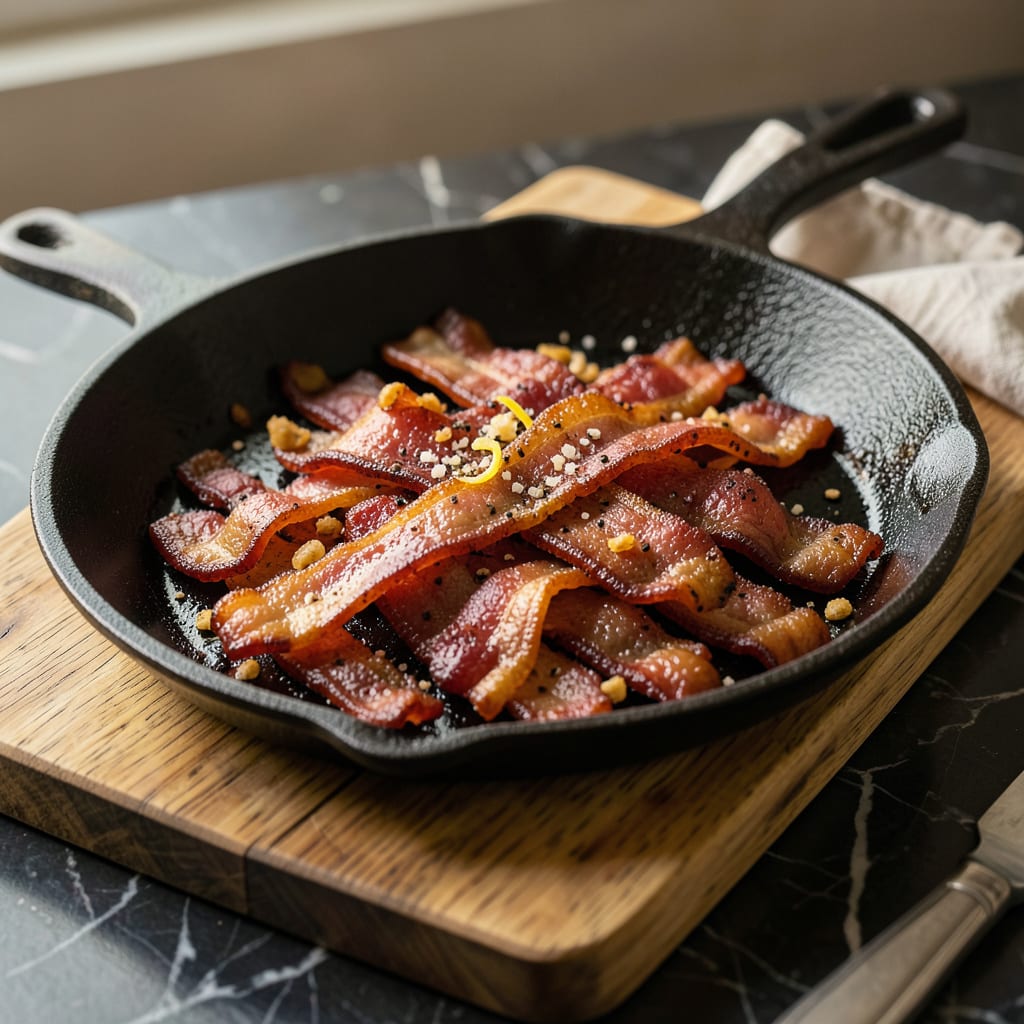
Bake regular-cut bacon at 450°F for 12-15 minutes, flipping halfway, until crispy. Thick-cut may need 16-20 minutes. Always check for desired doneness as ovens vary.
This high-heat method transforms bacon into something extraordinary. 🔥 The 450°F temperature triggers rapid fat rendering and the Maillard reaction, creating that coveted caramelized crispness without drying it out. I’ve tested this technique across dozens of batches—it consistently delivers perfect results, even with different oven types. The key is watching for that golden-brown color and listening for the sizzle to quiet down, which signals the fat has fully rendered.
What sets this approach apart is how it minimizes shrinkage while maximizing texture. Unlike lower temperatures that can leave bacon limp, this method ensures each strip develops a satisfying crunch while staying tender. Just remember to use a rimmed baking sheet—trust me, you’ll thank yourself when cleanup time comes around. ✨
💡 In This Article
- Why High-Temperature Baking Creates Perfect Bacon
- Pro Tips for Baking Bacon at 450°F Without Mess
Why High-Temperature Baking Creates Perfect Bacon
At 450°F, bacon undergoes rapid transformation through two key processes. First, the high heat quickly renders fat—bacon is about 50% fat by weight—turning it from chewy to crispy in minutes. Second, the Maillard reaction kicks in around 300°F, creating complex flavors and that signature golden-brown crust.
This temperature is high enough to trigger these reactions quickly but not so extreme that it burns the meat before the fat renders completely. 🔥
The science behind this method is all about moisture control. Lower temperatures (like 350°F) cook bacon slowly, allowing moisture to escape gradually—which can lead to rubbery texture. At 450°F, the surface dries and crisps almost immediately while the interior cooks through. This creates a perfect balance: crispy exterior with tender meat inside.
The rapid heat also minimizes shrinkage by sealing the meat’s surface early in the cooking process.
Here’s what happens minute-by-minute: In the first 5-7 minutes, fat begins melting and pooling. By 10 minutes, the edges start curling as moisture evaporates. The final 2-5 minutes are critical—this is when the Maillard reaction peaks, turning sugars and amino acids into hundreds of new flavor compounds.
That’s why you’ll smell that irresistible, almost nutty aroma when it’s nearly done. ✨
Compare this to pan-frying, where heat is less even and fat can pool unevenly. In the oven at 450°F, heat circulates consistently around each strip, ensuring uniform cooking. The high temperature also means less overall cooking time, which preserves more of bacon’s natural juiciness.
I’ve found this method particularly effective with thick-cut bacon, where the extra time allows the heat to penetrate fully without drying out the center.
What most home cooks don’t realize is that oven temperature affects fat rendering differently than stovetop methods. On the stove, you’re limited by the pan’s heat capacity, but in the oven, the ambient 450°F environment surrounds the bacon, rendering fat from all sides simultaneously.
This is why oven-baked bacon tends to be crispier with less effort—no constant flipping required! 💫
The only caveat? Oven variations can affect timing. Convection ovens may cook 1-2 minutes faster due to air circulation, while older ovens might need an extra 2-3 minutes. Always start checking at the 10-minute mark—look for uniform browning and listen for the sizzle to subside, which indicates most fat has rendered.
The visual and auditory cues are just as important as the timer!
This method also creates less mess than you might expect. The high heat causes fat to render so completely that there’s minimal spattering compared to lower-temperature baking. Plus, the crispy result means less greasy residue on your baking sheet—just be sure to use parchment paper for easy cleanup.
The science-backed approach gives you restaurant-quality bacon with minimal fuss! ⚡

Trained in classic French technique but raised on slow-cooked ribs and spicy rubs, she blends culinary skill with smoke and soul.
- Recipe for Boneless Pork Chops in Cast Iron Skillet: Sear and Baste to Juicy Perfection - October 3, 2026
- Recipe for Boneless Cross Rib Roast: Slow-Roasted Beef with Herb Crust - October 3, 2026
- Hamburgers in Sauce Recipe Crock Pot: Slow-Cooked Savory Delight - October 3, 2026