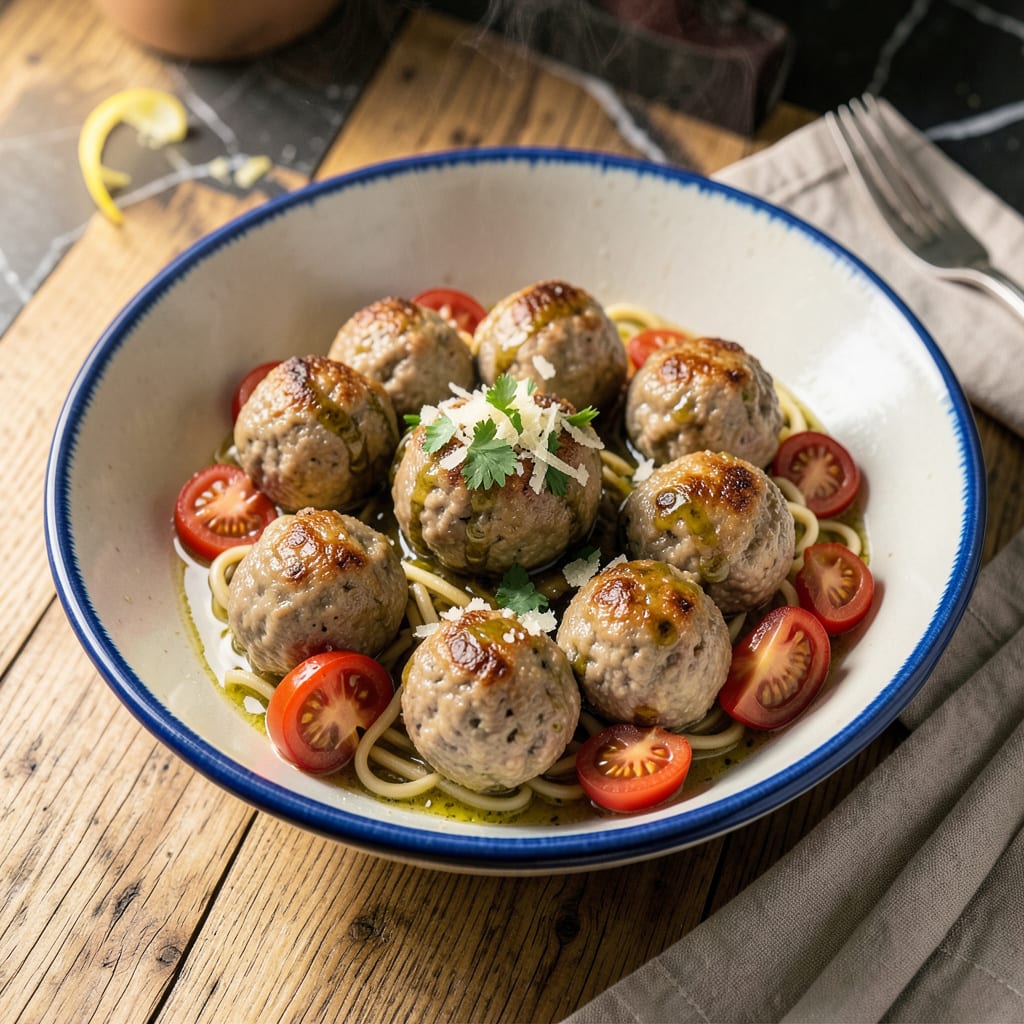
Boil raw meatballs for 10–15 minutes in gently simmering water or broth until they reach 160°F internally. Larger meatballs may need up to 20 minutes, while smaller ones cook faster. Avoid rapid boiling to prevent tough texture.
I’ve found that the secret to perfectly boiled meatballs lies in maintaining that gentle simmer—think small bubbles breaking the surface, not a rolling boil. 🔥 This controlled heat ensures even cooking without squeezing out the juices that keep them tender. My pro tip? Use a slotted spoon to occasionally turn them, and if you’re working with a mix of sizes, pull the smaller ones out first to avoid overcooking. The broth choice matters too; a rich beef or chicken stock adds depth, while water keeps things neutral for versatile use later.
💡 In This Article
- Why Boiling Time Varies for Different Meatball Sizes
- Best Liquids and Techniques for Boiling Meatballs
Why Boiling Time Varies for Different Meatball Sizes
The cooking time difference between small and large meatballs comes down to basic heat transfer physics. A 1-inch meatball cooks through in about 10-12 minutes because heat only needs to penetrate 0.5 inches to the center.
But double that diameter to 2 inches, and you’re looking at 18-20 minutes—the heat must travel four times the distance through the denser protein matrix. This isn’t just about size; it’s about how quickly energy can transform the raw meat’s structure.
Protein coagulation plays a huge role here. At 140°F, muscle proteins begin tightening, squeezing out moisture. By 160°F (the safe internal temp), they’ve formed a stable network that holds the meatball’s shape.
Larger meatballs spend more time in this coagulation zone, which is why they need lower heat—a vigorous boil would overcook the exterior before the center reaches temperature. I’ve ruined batches by rushing this process; the outer layer turned rubbery while the inside stayed raw.
Here’s what most home cooks miss: the liquid temperature matters more than the clock. A true simmer (180-200°F) with tiny bubbles breaking the surface every 2-3 seconds is ideal. Rapid boiling (212°F) causes violent protein contraction, forcing out juices and creating that dreaded mealy texture.
I test doneness two ways: a meat thermometer for precision, or cutting one open—the center should be uniformly cooked with no pink, and the juices should run clear, not bloody.
The meat blend affects timing too. All-beef meatballs (especially with 20% fat) cook differently than lean turkey or chicken versions. Fattier mixes need slightly longer to render properly, while leaner ones cook faster but risk drying out.
My go-to ratio is 80% ground chuck (80/20 lean-to-fat) with 20% ground pork—this balance gives juiciness without excessive shrinkage during cooking. 🔥
Size consistency is your best friend for even cooking. When I make batches, I use a 1.5-inch cookie scoop for uniformity, which yields meatballs that finish in about 13-15 minutes.
For larger 2-inch versions (great for subs), I extend the time to 18 minutes and reduce the heat slightly after the first 10 minutes to prevent overcooking the outer layers. The key is monitoring, not just timing.
Don’t forget about carryover cooking! Meatballs continue to rise about 5-10°F after removal from the liquid. This is why I pull them at 155°F—they’ll hit that perfect 160°F while resting. Larger meatballs have more thermal mass, so their carryover is more pronounced.
I once left a batch of 2-inch meatballs in the broth until they hit 160°F, and by the time I served them, they’d climbed to 168°F—dry and disappointing. ✨
Pro tip: If you’re making meatballs for soup, undercook them by 1-2 minutes since they’ll finish in the hot broth. For saucy applications like Swedish meatballs, boil until just done, then transfer to the sauce to absorb flavors without overcooking.
The liquid’s acidity (tomato sauce) or dairy content (cream sauces) will affect the final texture too—another reason to nail that initial boil perfectly.

Trained in classic French technique but raised on slow-cooked ribs and spicy rubs, she blends culinary skill with smoke and soul.
- Recipe for Boneless Pork Chops in Cast Iron Skillet: Sear and Baste to Juicy Perfection - October 3, 2026
- Recipe for Boneless Cross Rib Roast: Slow-Roasted Beef with Herb Crust - October 3, 2026
- Hamburgers in Sauce Recipe Crock Pot: Slow-Cooked Savory Delight - October 3, 2026