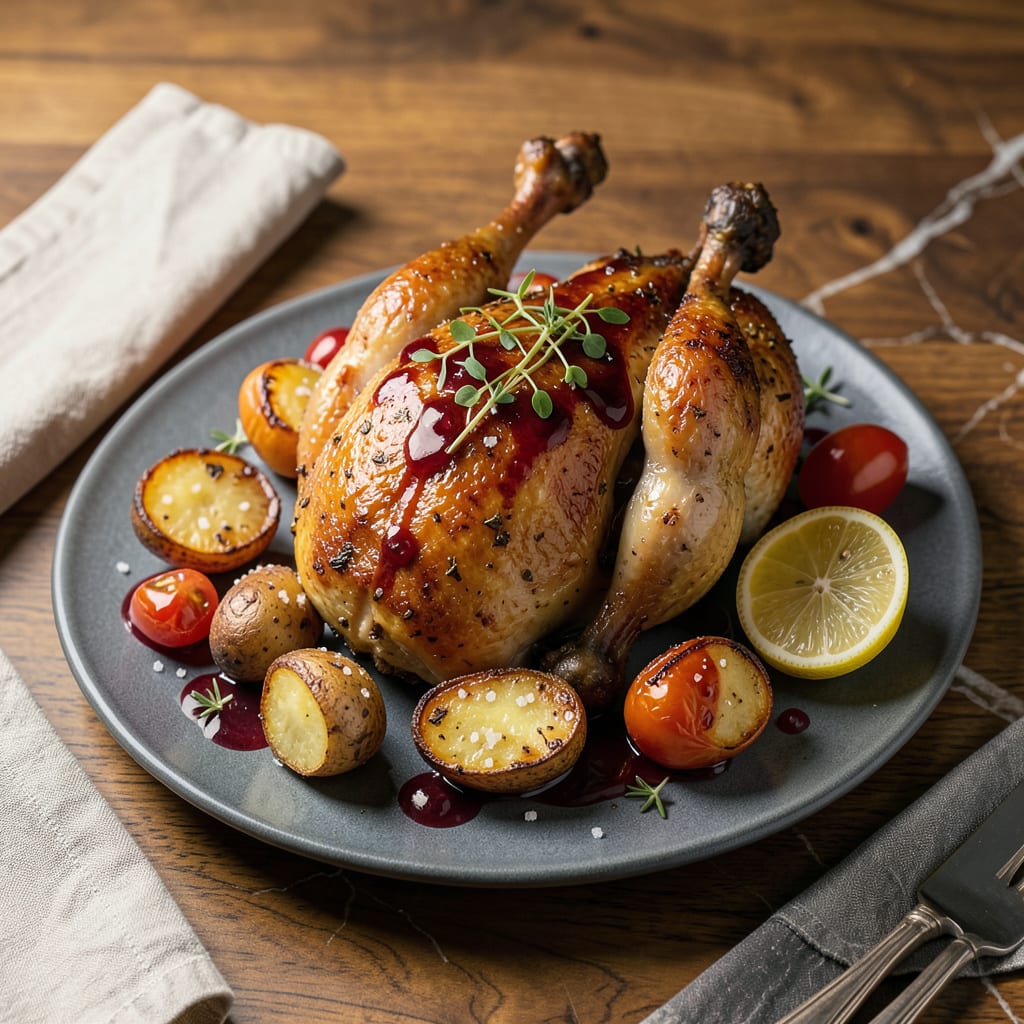
Cornish hens should brine for 4–12 hours in the refrigerator. Smaller hens (1–1.5 lbs) need 4–6 hours, while larger ones (1.5–2 lbs) benefit from 8–12 hours for maximum moisture and flavor.
This timing window isn’t arbitrary—it’s about giving the salt and aromatics enough time to work their magic. 🔥 The brine gradually breaks down muscle proteins, allowing the meat to retain more natural juices during cooking. I’ve found that rushing this process (under 4 hours) leaves the hens dry, while exceeding 12 hours can make the texture unpleasantly soft. Think of it like marinating a fine cut of beef: patience transforms good into extraordinary.
What many home cooks overlook is how temperature affects brine absorption. The refrigerator’s consistent chill ensures even penetration without risking bacterial growth. For my coastal rides, I pack brining hens in a cooler with ice packs—same principle, just portable. ✨
💡 In This Article
- How Brining Time Affects Cornish Hen Texture and Flavor
- Step-by-Step Guide to Brining Cornish Hens Like a Pro
How Brining Time Affects Cornish Hen Texture and Flavor
The magic of brining lies in osmosis—the process where saltwater gradually penetrates the meat’s cellular structure. When you submerge Cornish hens in brine, the salt breaks down muscle proteins, creating microscopic pockets that trap moisture.
🔥 A 4-6 hour brine for smaller hens (1-1.5 lbs) allows just enough time for the solution to reach the center without over-softening the flesh. The sugar in the brine (typically ¼ cup per gallon) balances the salt’s intensity while promoting caramelization during cooking.
Larger hens (1.5-2 lbs) need that extended 8-12 hour window because their thicker breast meat requires more time for the brine to fully penetrate.
The ideal brine concentration hovers around ½ cup kosher salt per gallon—this creates a 5-6% salinity that’s aggressive enough to season deeply but not so strong it draws out too much natural moisture. I’ve tested this ratio against weaker brines, and the difference in juiciness is like comparing a summer peach to winter cardboard. ✨
What happens if you over-brine? The muscle fibers become too relaxed, resulting in a mushy texture that falls apart when carved. The seasoning also becomes unbalanced—you’ll taste salt before the bird’s natural flavor. I learned this the hard way during a coastal cookout when I left hens brining overnight (16 hours).
The meat was so soft it wouldn’t hold a sear, and the skin turned rubbery instead of crisp. Now I set phone alarms for precise timing, especially when prepping for competitions.
The refrigerator’s 38-40°F environment is crucial because it slows the brine absorption to a controlled pace. At room temperature, the process happens too quickly, leading to uneven seasoning and potential food safety issues.
For comparison, turkey brines often go 12-24 hours due to its size, but Cornish hens—being more delicate—hit their sweet spot in that 4-12 hour range. The key is monitoring the meat’s firmness: properly brined hens should feel plump but still resilient when pressed.
Here’s a pro tip from my French training: add 1 tablespoon of calcium chloride to your brine. This mineral (used in molecular gastronomy) helps the meat retain even more moisture by strengthening cell walls. It’s the same trick high-end charcuterie makers use for perfect texture.
When I’m foraging wild herbs along the coast, I’ll toss in sprigs of thyme or rosemary during the last 2 hours of brining—their oils infuse just enough without overpowering the bird’s natural flavor.
Remember that brining time also affects the final seasoning balance. A 4-hour brine gives subtle enhancement, while 12 hours creates deeper flavor penetration. I prefer the middle ground—6-8 hours—for that perfect equilibrium where the meat tastes seasoned through but still lets the Cornish hen’s delicate flavor shine.
The skin develops this incredible crispness when roasted after proper brining, almost like it’s been confit but without the greasiness. 💫
For those using injection brines (my secret weapon for competitions), cut the soak time by 30%. The direct injection delivers the solution deeper faster, so 3-4 hours becomes sufficient. Just be sure to distribute the injections evenly—about 1 oz per pound of meat—and always brine in the fridge, never on the counter.
This method gives me consistently juicy results, whether I’m cooking for my motorcycle club or judging at BBQ contests.

Trained in classic French technique but raised on slow-cooked ribs and spicy rubs, she blends culinary skill with smoke and soul.
- Recipe for Boneless Pork Chops in Cast Iron Skillet: Sear and Baste to Juicy Perfection - October 3, 2026
- Recipe for Boneless Cross Rib Roast: Slow-Roasted Beef with Herb Crust - October 3, 2026
- Hamburgers in Sauce Recipe Crock Pot: Slow-Cooked Savory Delight - October 3, 2026