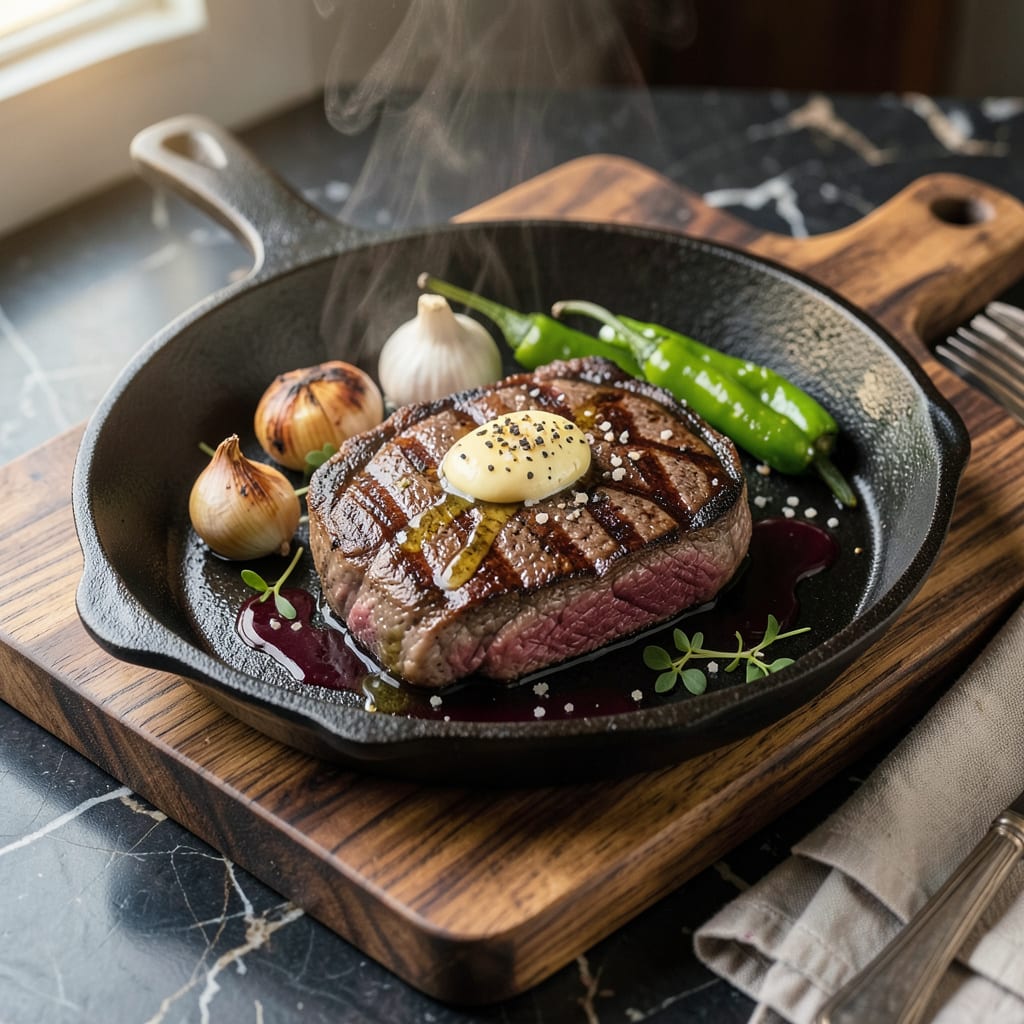
For a 2-inch steak in the oven, cook at 400°F for 20-25 minutes for medium-rare (135°F internal temp) or 25-30 minutes for medium (145°F). Use a meat thermometer for precision and sear first for best results.
This timing works because thick cuts need lower, steady heat to cook evenly without burning. 🔥 I’ve found that starting with a screaming-hot sear creates that perfect crust, while the oven’s dry heat gently cooks the center to your ideal doneness. The 2-inch thickness means you’ll get that coveted pink gradient from edge to center—just remember that carryover cooking will add about 5°F more as it rests.
What separates good steak from great is understanding how heat travels through dense muscle. The oven’s ambient temperature slowly breaks down collagen while preserving juices, unlike high-heat methods that can dry out thicker cuts. My pro tip: Let it rest 10 minutes before slicing to redistribute those delicious juices. ✨
💡 In This Article
- Oven Cooking Science for Thick Steak Perfection
- Step-by-Step Guide for Oven-Cooked 2-Inch Steaks
Oven Cooking Science for Thick Steak Perfection
When you’re cooking a 2-inch steak, the oven’s dry heat works differently than direct grilling. The thickness creates a thermal gradient where the outer layers cook first while the center gradually reaches temperature.
This is why 400°F works so well—it’s hot enough to develop a crust but gentle enough to prevent overcooking before the center reaches your target doneness. The heat penetrates at about 1/4-inch per 10 minutes, which explains why thicker cuts need more time than their 1-inch counterparts.
The magic happens through conduction and convection working together. Conduction transfers heat from the steak’s surface inward, while convection circulates hot air around the meat. What most people don’t realize is that collagen in connective tissues starts breaking down around 140°F, which is why medium-rare (135°F) gives you that perfect balance of tenderness and juiciness.
The oven’s consistent temperature creates an ideal environment for this transformation without the risk of charring you’d get from high-heat methods. 🔥
Carryover cooking is the secret factor that trips up many home cooks. When you remove your steak at 130°F for medium-rare, it will continue cooking internally as the heat redistributes, typically rising another 5-10°F during resting. This is why I always pull my steaks 5°F below the target temperature.
The resting period also allows muscle fibers to relax and reabsorb juices that were pushed to the center during cooking—cutting too soon means those precious juices end up on your cutting board instead of in your steak.
Thickness dramatically changes cooking dynamics. A 1-inch steak might take 10-12 minutes at the same temperature, while your 2-inch cut needs nearly double that time. The increased mass means more thermal energy is required to raise the internal temperature.
I’ve found that using a wire rack on your baking sheet creates better air circulation, which helps achieve more even cooking compared to placing the steak directly on the pan where one side might steam.
Here’s what’s actually happening at the molecular level: Around 120°F, muscle proteins begin to coagulate, squeezing out moisture. Between 130-140°F, collagen converts to gelatin, creating that melt-in-your-mouth texture. The oven’s dry environment helps create a concentrated flavor profile as moisture evaporates from the surface.
This is why oven-cooked steaks often have a more intense beefy flavor compared to those cooked in moist environments like sous vide. ✨
Temperature control is everything with thick cuts. While thinner steaks can handle temperature fluctuations, your 2-inch steak needs that steady 400°F to cook evenly. I recommend checking the temperature in multiple spots—the thickest part of the meat and near the edges—to ensure consistent doneness throughout.
Remember that oven temperatures can vary by 25-50°F, so an oven thermometer is just as important as your meat thermometer for precision cooking.
The science explains why that 10-minute rest isn’t optional—it’s when the steak’s internal temperature stabilizes and the juices redistribute. Cutting into it immediately would release about 30% more juice onto your plate. During this time, the muscle fibers that contracted during cooking begin to relax, allowing them to reabsorb the moisture.
This is when your steak transforms from good to restaurant-quality, developing that perfect texture where every bite is juicy and flavorful. 💫

Trained in classic French technique but raised on slow-cooked ribs and spicy rubs, she blends culinary skill with smoke and soul.
- Recipe for Boneless Pork Chops in Cast Iron Skillet: Sear and Baste to Juicy Perfection - October 3, 2026
- Recipe for Boneless Cross Rib Roast: Slow-Roasted Beef with Herb Crust - October 3, 2026
- Hamburgers in Sauce Recipe Crock Pot: Slow-Cooked Savory Delight - October 3, 2026