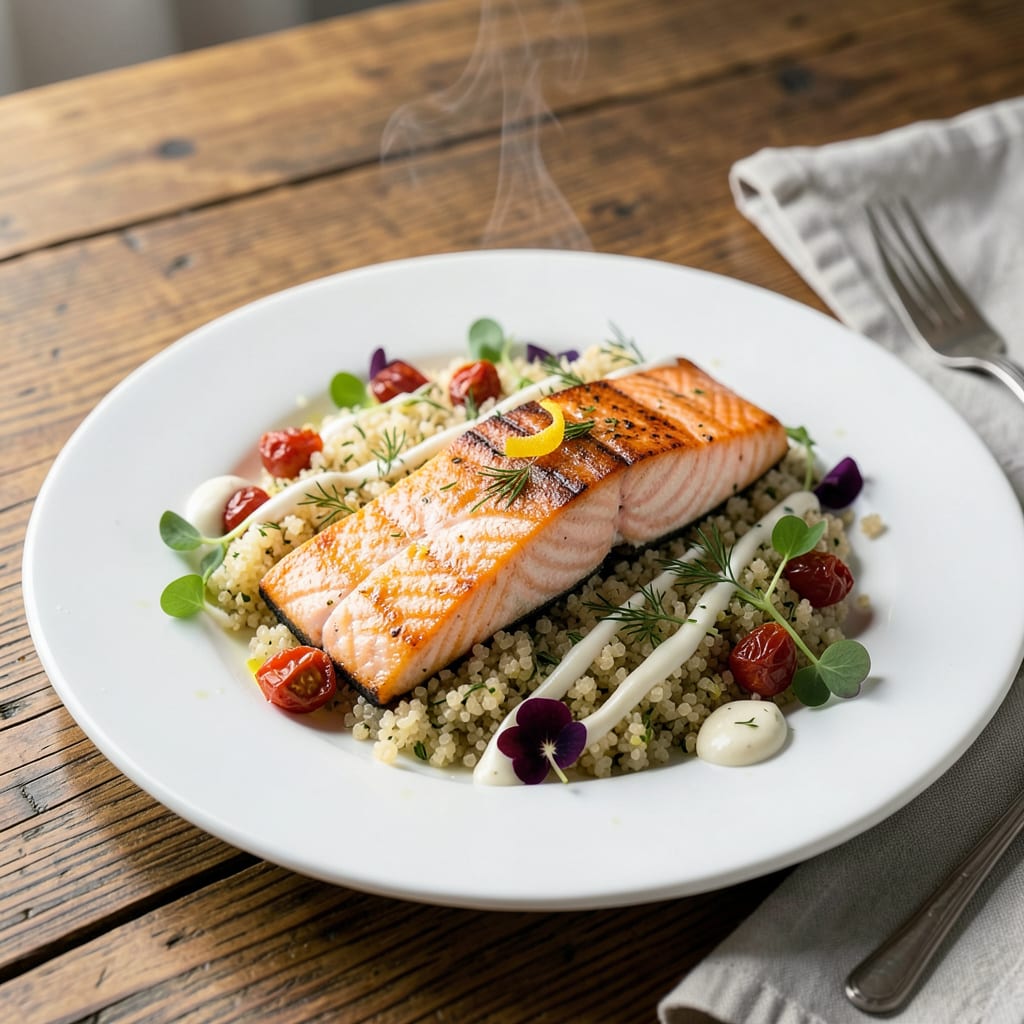
A 3.5-ounce (100g) serving of baked salmon contains approximately 180-200 calories, depending on preparation. Wild-caught varieties tend to be slightly lower in calories than farmed, with skin-on options adding minimal extra calories.
This lean protein powerhouse delivers more than just calories—it’s packed with omega-3 fatty acids and high-quality protein that keep you full for hours. What many don’t realize is how preparation dramatically shifts the numbers: a drizzle of olive oil can add 120 calories per tablespoon, while lemon-herb seasoning keeps it light. 🔥
I’ve found wild sockeye typically lands at the lower end of the range, while Atlantic farmed varieties run slightly higher due to fat content. The skin contributes minimal calories but adds incredible flavor—perfect for crisping up in the oven.
💡 In This Article
- Factors Affecting Baked Salmon Calorie Count
- Healthy Baked Salmon Serving Suggestions and Pairings
Factors Affecting Baked Salmon Calorie Count
The calorie difference between wild and farmed salmon comes down to fat content. Wild varieties like sockeye or coho swim constantly, developing leaner muscle with about 5-7% fat, while farmed Atlantic salmon (often raised in pens) can reach 12-15% fat. This fat difference translates to roughly 20-30 more calories per 100g in farmed fish.
The tradeoff? Farmed salmon often has a richer, buttery texture that many prefer. 🔥
That crispy skin you love adds surprisingly little—just 5-10 calories per serving—but removes it and you lose those golden, flavor-packed fats. Where calories really climb is in preparation: a tablespoon of olive oil adds 120 calories, while honey glaze can contribute 60+ calories per serving.
Even healthy-sounding marinades with soy sauce or teriyaki can pack hidden sugars that bump up the count. ✨
Portion size plays tricks on calorie math. Restaurant servings often weigh 6-8 ounces (double the standard 3.5oz reference), instantly doubling your intake. I’ve seen clients underestimate by 300+ calories when eyeballing portions. The fix? Use a food scale until you can visualize 100g—about the size of a checkbook. 💫
Cooking method matters more than you’d think. Poaching in water adds zero calories, while baking with oil increases absorption. A 400°F oven creates that perfect crispy skin but may require more oil than lower-temp methods. Even healthy-sounding additions like nuts (think almond-crusted salmon) can add 50+ calories per tablespoon of topping. 🌟
Here’s what most miss: the 10% moisture loss during baking concentrates nutrients and calories. A 150g raw fillet might shrink to 135g cooked, making the calories per gram slightly higher post-cooking. This is why nutrition labels often list raw weights—what starts as 200 calories raw becomes about 220 calories cooked for the same portion size.
⚡
Pro tip: If tracking macros, weigh your salmon after cooking for accuracy. The USDA database uses raw weights, which can overestimate actual consumed calories by 10-15% once moisture evaporates. I always recommend clients invest in a simple kitchen scale—it’s the only way to nail those numbers consistently. 💛

Trained in classic French technique but raised on slow-cooked ribs and spicy rubs, she blends culinary skill with smoke and soul.
- Recipe for Boneless Pork Chops in Cast Iron Skillet: Sear and Baste to Juicy Perfection - October 3, 2026
- Recipe for Boneless Cross Rib Roast: Slow-Roasted Beef with Herb Crust - October 3, 2026
- Hamburgers in Sauce Recipe Crock Pot: Slow-Cooked Savory Delight - October 3, 2026