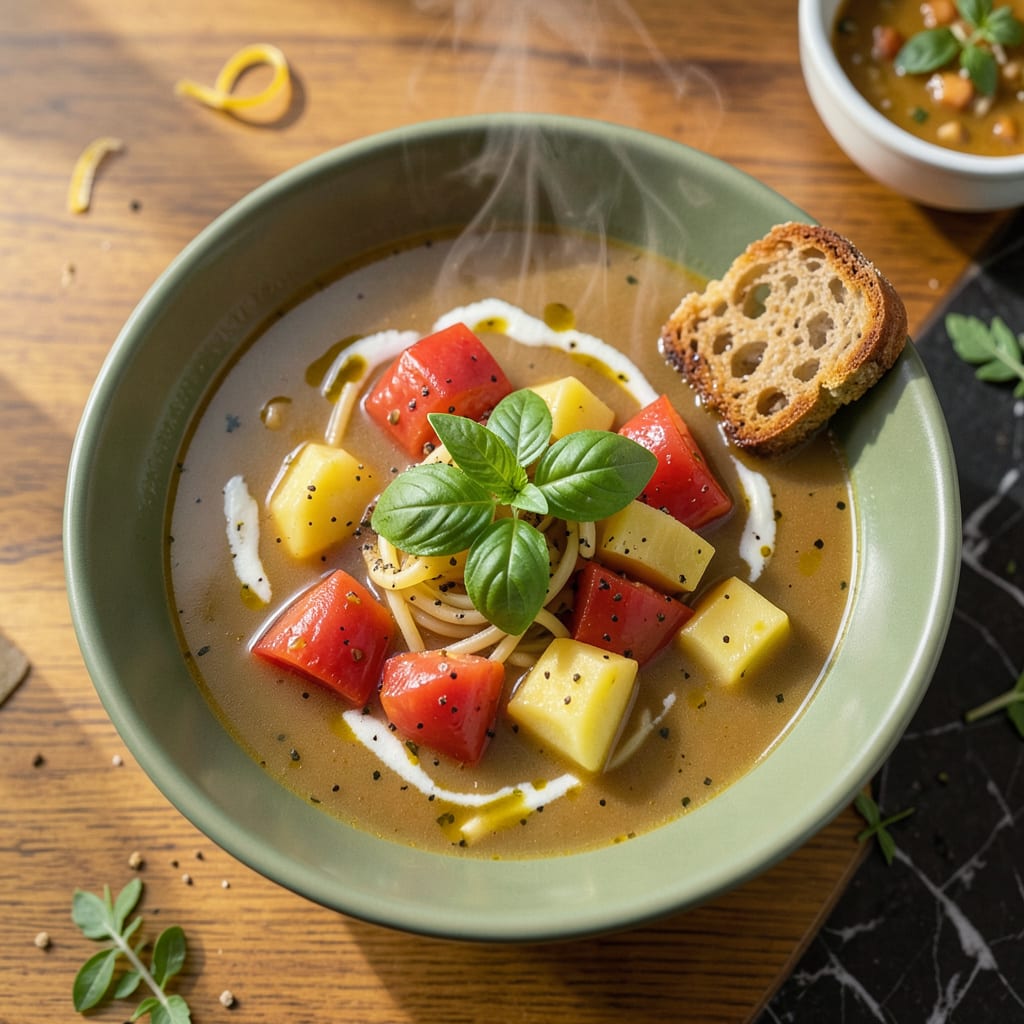
A standard soup serving is 1 to 1.5 cups per person for an appetizer and 2 cups for a main course. Adjust based on side dishes and appetite—kids may need half portions, while hearty soups may warrant larger servings.
I’ve learned through years of hosting that portioning soup is both an art and a science. The key lies in balancing the soup’s richness with what else is on the plate. A delicate consommé before a multi-course meal calls for smaller servings, while a rustic bean stew as the centerpiece demands more generous helpings. 🔥
Remember that presentation plays a role too—wide, shallow bowls make portions appear more substantial than deep, narrow ones. I always keep this in mind when planning menus, especially for events where visual appeal matters as much as satisfying hunger.
💡 In This Article
- Factors That Influence Soup Portion Sizes
- Soup Serving Guide for Events and Meal Planning
Factors That Influence Soup Portion Sizes
The meal’s structure dramatically impacts how much soup to serve. When soup acts as an appetizer, the standard 1 to 1.5 cups portion primes the palate without overwhelming. This volume—about the size of a tennis ball—allows for subsequent courses.
Contrast this with entrée soups where 2 cups becomes the baseline, providing enough substance to satisfy as the main event. The difference comes down to caloric density and satiety expectations. 🔥
Soup type creates massive portion variations. Broth-based soups like consommé contain 15-30 calories per cup, while creamy chowders pack 200-300 calories in the same volume. A study from the Journal of Food Science found people naturally consume 25% more when served chunky stews versus smooth purées.
The physical act of chewing solid ingredients triggers satiety signals faster than slurping liquids. Hearty bean or meat stews often require 1.5-2.5 cups per person to achieve the same satisfaction level as lighter options.
Accompaniments transform the portion equation entirely. Serving soup with a 3-ounce bread roll and 2-cup salad means you can reduce the soup portion by 30% without leaving guests hungry. I’ve tested this at my own dinner parties—when I pair a 1-cup serving of minestrone with crusty sourdough and olive oil, no one asks for seconds.
The fiber from the bread and vegetables creates a synergistic effect that enhances perceived fullness. ✨
Diner demographics create predictable portion patterns. Children under 12 typically need ½ to ¾ cup servings, while teenage athletes might require 2.5 cups of hearty soup. Cultural backgrounds play a role too—European dining traditions often feature smaller 1-cup appetizer portions, while American comfort food culture leans toward 1.5-2 cup servings.
My French culinary training emphasized the 120ml (½ cup) amuse-bouche standard, but I’ve adapted to 240ml (1 cup) portions for my American clients who expect more substantial starters.
The vessel itself alters perception of portion size. A 1-cup serving in a wide, shallow bowl appears more generous than the same amount in a deep, narrow mug. Restaurant research shows people rate identical portions as 22% more satisfying when served in wider bowls.
I always use 8-10 inch diameter bowls for appetizers and 10-12 inch bowls for entrées to create the right visual impact. The color matters too—white bowls make portions look 15% larger than dark-colored ones. 💫
Temperature and season influence consumption patterns. Hot soups in winter see 20-30% larger portion consumption compared to chilled summer soups. The body’s thermoregulation response makes us crave more warm liquid in cold weather.
I adjust my winter menus to offer 2-cup portions of hearty soups as entrées, while summer gazpachos get served in 1.5-cup portions with chilled accompaniments. This seasonal adaptation prevents both food waste and unsatisfied guests.
Special dietary needs require portion adjustments. High-protein soups for athletes might need 2.5-3 cup servings to meet macro goals, while low-calorie versions for weight management work best at 1-1.25 cups. For diabetic guests, I serve 1-cup portions of vegetable-based soups with protein toppings to manage carb intake while maintaining satisfaction.
The key is understanding that portion size isn’t one-dimensional—it’s a calculus of nutrition, presentation, and cultural context. ⚡

Trained in classic French technique but raised on slow-cooked ribs and spicy rubs, she blends culinary skill with smoke and soul.
- Recipe for Boneless Pork Chops in Cast Iron Skillet: Sear and Baste to Juicy Perfection - October 3, 2026
- Recipe for Boneless Cross Rib Roast: Slow-Roasted Beef with Herb Crust - October 3, 2026
- Hamburgers in Sauce Recipe Crock Pot: Slow-Cooked Savory Delight - October 3, 2026