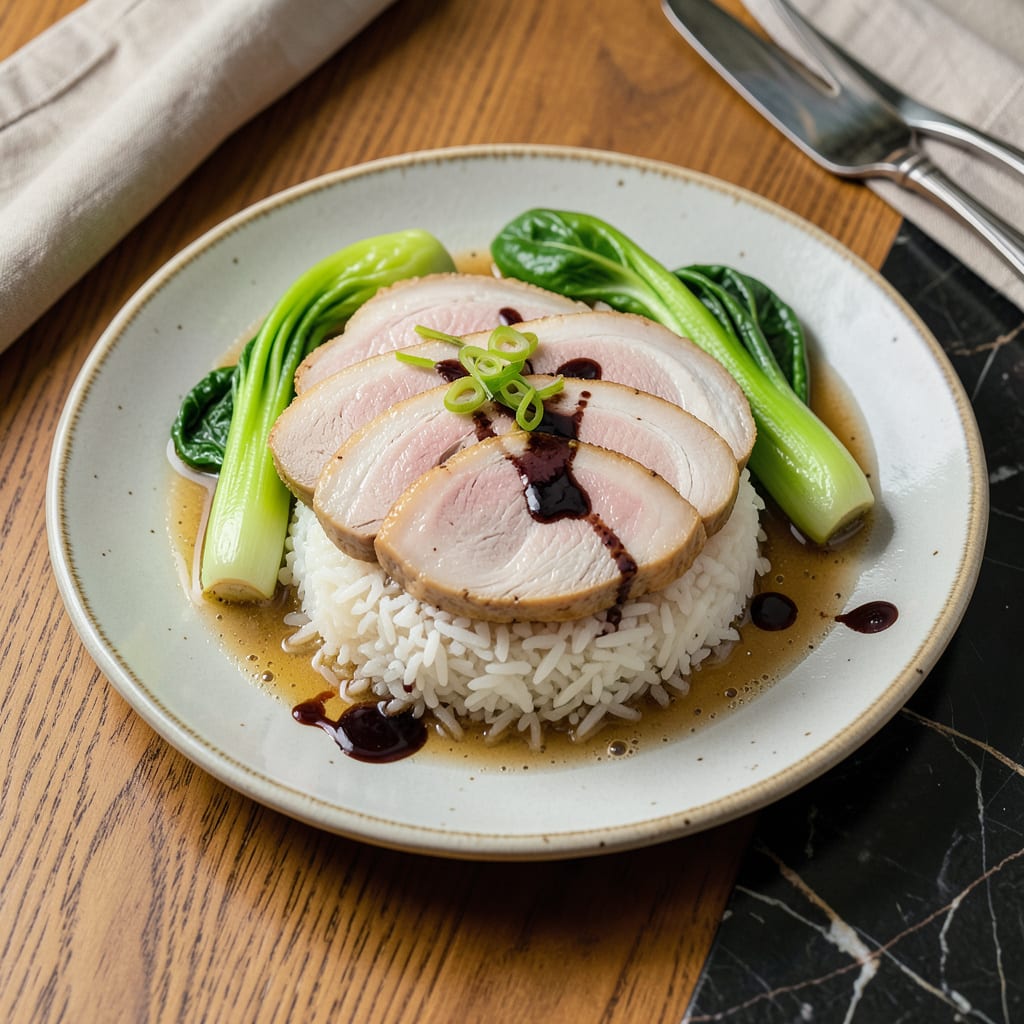
Boil pork for 20-30 minutes per pound at a gentle simmer (180°F/82°C). Smaller cuts like chops need 10-15 minutes, while larger roasts may require 45-60 minutes for full tenderness.
Timing isn’t just about weight—it’s about the cut’s personality. Pork shoulder, rich in connective tissue, rewards patience with fall-apart texture, while lean tenderloin turns rubbery if overcooked. 🔥 I always start testing doneness at the lower end of the time range, using a fork to check resistance. Remember, boiling is just the beginning—what you do after (resting, slicing against the grain) makes the difference between dry and divine.
The simmer temperature is your secret weapon. Too aggressive, and proteins seize up; too gentle, and collagen won’t melt properly. Think of it like a slow dance—180°F keeps everything moving smoothly without stepping on toes. ✨ For extra flavor, I toss in garlic cloves, bay leaves, and a splash of apple cider vinegar to brighten the broth.
💡 In This Article
- Why Boiling Time Varies for Different Pork Cuts
- Step-by-Step Guide to Boiling Pork Perfectly
Why Boiling Time Varies for Different Pork Cuts
The secret lies in the muscle structure and fat distribution. Pork shoulder, with its dense connective tissue and marbling, requires 45-60 minutes per pound to fully break down collagen into gelatin. This transformation is what gives pulled pork its signature melt-in-your-mouth texture.
The collagen fibers in shoulder cuts are about 3x thicker than in tenderloin, demanding more time to properly render.
Compare that to pork loin, where the lean muscle fibers are arranged in long, parallel bundles. These cuts cook faster (20-25 minutes per pound) because they contain less connective tissue. The loin’s fat content hovers around 3-5%, while shoulder can reach 15-20%.
That extra fat acts as an insulator, slowing heat penetration and requiring extended cooking. 🔥 I always check shoulder with a fork—when it slides in like butter, the collagen has fully converted.
Ribs present a unique challenge with their combination of meat, fat, and bone. The bone acts as a heat conductor, accelerating cooking near the center while the outer meat needs time to tenderize. This is why rib sections often require 30-40 minutes per pound—the meat nearest the bone cooks faster than the outer layers.
The intermuscular fat in ribs also melts at different rates, creating that perfect balance of tender meat and rich flavor.
Thickness plays a crucial role too. A 1-inch chop cooks through in 10-12 minutes, while a 3-inch roast needs 3x longer for heat to penetrate the center. I use the “finger test” for chops—when the meat springs back firmly but gives slightly, it’s done.
For larger cuts, I rely on an instant-read thermometer, aiming for 145°F in the thickest part.
The water temperature makes all the difference in texture. At 180°F, proteins coagulate gently without squeezing out moisture. Go above 200°F, and you’ll get tough, dry meat as the muscle fibers contract violently.
I maintain this precise temperature by keeping the water at a “shiver” simmer—just enough movement to see tiny bubbles breaking the surface, but not a rolling boil. ✨
Here’s what most home cooks miss: the resting period after boiling is just as important as the cooking time. Larger cuts need 15-20 minutes of resting to allow juices to redistribute. Skip this step, and you’ll lose up to 30% of the moisture when you slice.
I wrap my boiled pork in foil with a towel over top—this keeps it warm while the fibers relax and reabsorb the juices.
Pro tip: The pH of your boiling liquid affects tenderness. Adding a splash of vinegar (about 2 tablespoons per quart) helps break down muscle fibers faster by lowering the pH slightly. But go easy—too much acid can make the meat mealy. I prefer apple cider vinegar for its mild sweetness that complements pork’s natural flavor.
💫

Trained in classic French technique but raised on slow-cooked ribs and spicy rubs, she blends culinary skill with smoke and soul.
- Recipe for Boneless Pork Chops in Cast Iron Skillet: Sear and Baste to Juicy Perfection - October 3, 2026
- Recipe for Boneless Cross Rib Roast: Slow-Roasted Beef with Herb Crust - October 3, 2026
- Hamburgers in Sauce Recipe Crock Pot: Slow-Cooked Savory Delight - October 3, 2026