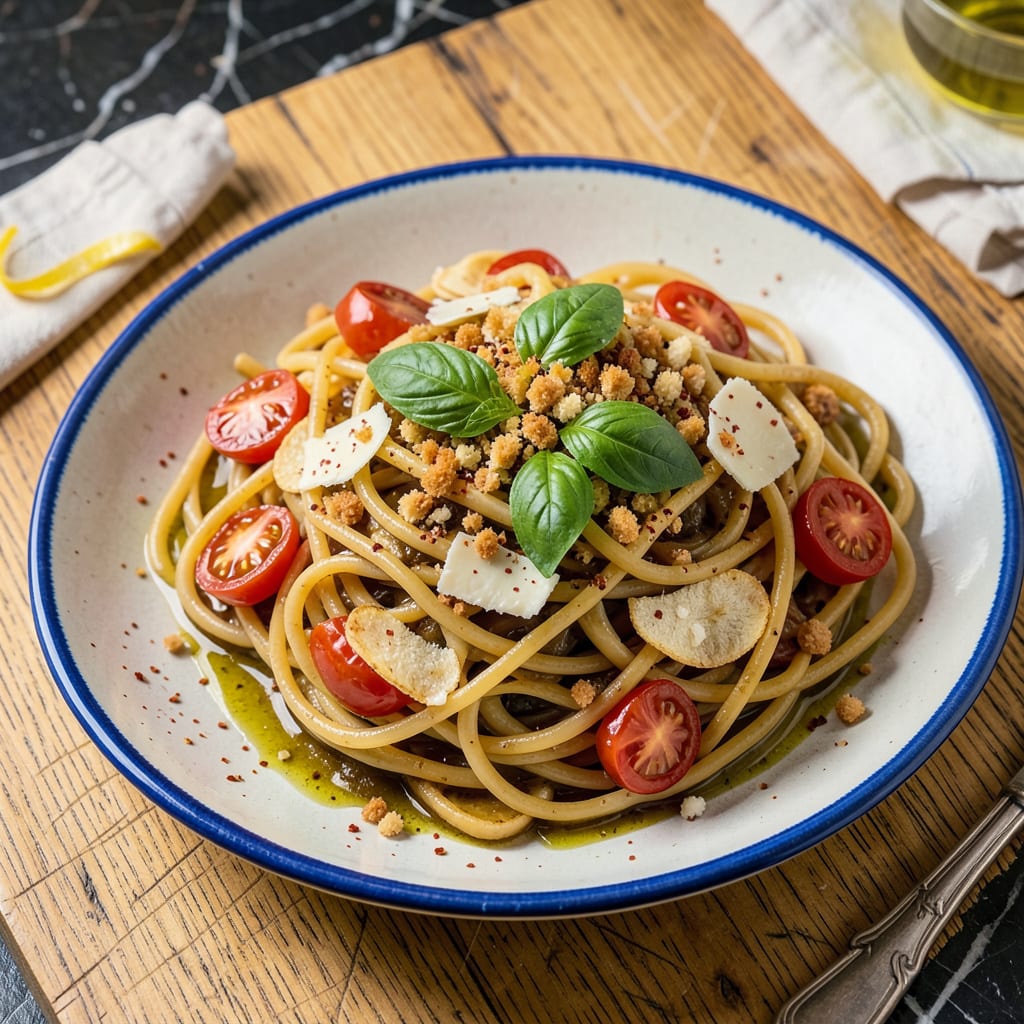
For 8 people, plan on 1 to 1.5 pounds of dry pasta (16 to 24 ounces) as a main dish, or 12 to 16 ounces for a side. This equals roughly 2 ounces of dry pasta per person for a hearty serving, or 1.5 ounces for lighter portions.
I always consider the meal’s role when portioning pasta—it’s the difference between a satisfying centerpiece and a complementary side. 🔥 For example, if you’re serving a rich ragu or creamy Alfredo, you might lean toward the lower end since the sauce adds heft. But for simple olive oil and garlic dishes, I bump up the quantity because the pasta itself carries the meal. Remember, shapes matter too: dense penne fills plates differently than delicate angel hair.
What catches many home cooks off guard is how much pasta expands during cooking. Those 16 ounces of dry spaghetti will nearly double in volume, which is why I recommend using a scale for precision. My pro tip? Cook a test batch first to gauge your crowd’s appetite—some groups devour pasta while others pick at it. ✨
💡 In This Article
- Calculating Pasta Portions for Large Groups
- Pasta Cooking Tips for Crowds: Timing and Serving
Calculating Pasta Portions for Large Groups
The secret to perfect pasta portions lies in understanding how different shapes and cooking methods affect volume. Dense, compact shapes like penne or fusilli weigh more per cup than delicate strands like spaghetti or angel hair.
For example, 1 cup of dry penne weighs about 4 ounces, while the same volume of angel hair clocks in at just 2 ounces. This density difference means you’ll need nearly twice as much by volume for lighter pastas to achieve the same satisfying portion size.
Here’s what most home cooks overlook: pasta absorbs water and expands dramatically during cooking. That 1 pound of dry spaghetti you started with will yield about 2.25 pounds of cooked pasta—more than doubling in weight and volume.
The absorption rate varies by shape too: tubular pastas like rigatoni can absorb up to 150% of their weight in water, while flat noodles like fettuccine absorb closer to 120%. This expansion is why I always recommend weighing dry pasta rather than using volume measurements for accuracy.
The sauce you’re serving plays a huge role in portion calculations. Rich, heavy sauces like Alfredo or bolognese allow you to serve slightly smaller pasta portions (1.5 ounces per person) because the dish feels more substantial.
Conversely, light olive oil-based sauces or simple aglio e olio require larger pasta portions (2-2.5 ounces per person) to create a satisfying plate. I’ve found that the sauce-to-pasta ratio should be about 1:2 by volume—enough to coat but not drown the noodles.
Appetite variables make a bigger difference than most realize. A lunch crowd typically consumes about 20% less pasta than a dinner group. Similarly, if you’re serving multiple courses, you can reduce portions by 25% since guests will be sampling other dishes.
My rule of thumb: when in doubt, cook 1.25 pounds for 8 people as a main dish—this gives you a buffer for seconds without excessive leftovers. The cooked pasta will keep beautifully in the fridge for 3-4 days if stored properly in an airtight container with a drizzle of olive oil.
Pro chefs use a simple conversion formula: 1 ounce of dry pasta = ½ cup cooked. This means that 1 pound of dry pasta will serve about 8 people with 1-cup portions each.
For heartier appetites or restaurant-style servings, bump that up to 1.5 cups per person, which translates to 1.5 pounds dry pasta for your group of eight. I always keep a kitchen scale handy—it’s the only way to get consistent results when scaling recipes.
Consider the occasion when finalizing your quantities. A casual family dinner might see people going back for seconds, while a formal dinner party often results in more restrained portions. I’ve catered enough events to know that buffet-style service increases consumption by about 30% compared to plated meals.
For buffets, I recommend cooking the full 1.5 pounds to account for this “second-helpings effect.” The extra pasta also gives you flexibility if some guests prefer larger portions or if you want leftovers for pasta salad the next day.
Remember that different wheat varieties affect absorption rates too. Whole wheat pasta absorbs more water than white pasta—about 10-15% more by weight—so you’ll need to adjust your cooking water accordingly. Gluten-free pastas often require even more water and have different expansion rates, typically yielding about 20% less cooked volume than traditional semolina pasta.
Always check package instructions for these specialty pastas, as their cooking behavior can vary significantly from standard varieties.

Trained in classic French technique but raised on slow-cooked ribs and spicy rubs, she blends culinary skill with smoke and soul.
- Recipe for Boneless Pork Chops in Cast Iron Skillet: Sear and Baste to Juicy Perfection - October 3, 2026
- Recipe for Boneless Cross Rib Roast: Slow-Roasted Beef with Herb Crust - October 3, 2026
- Hamburgers in Sauce Recipe Crock Pot: Slow-Cooked Savory Delight - October 3, 2026