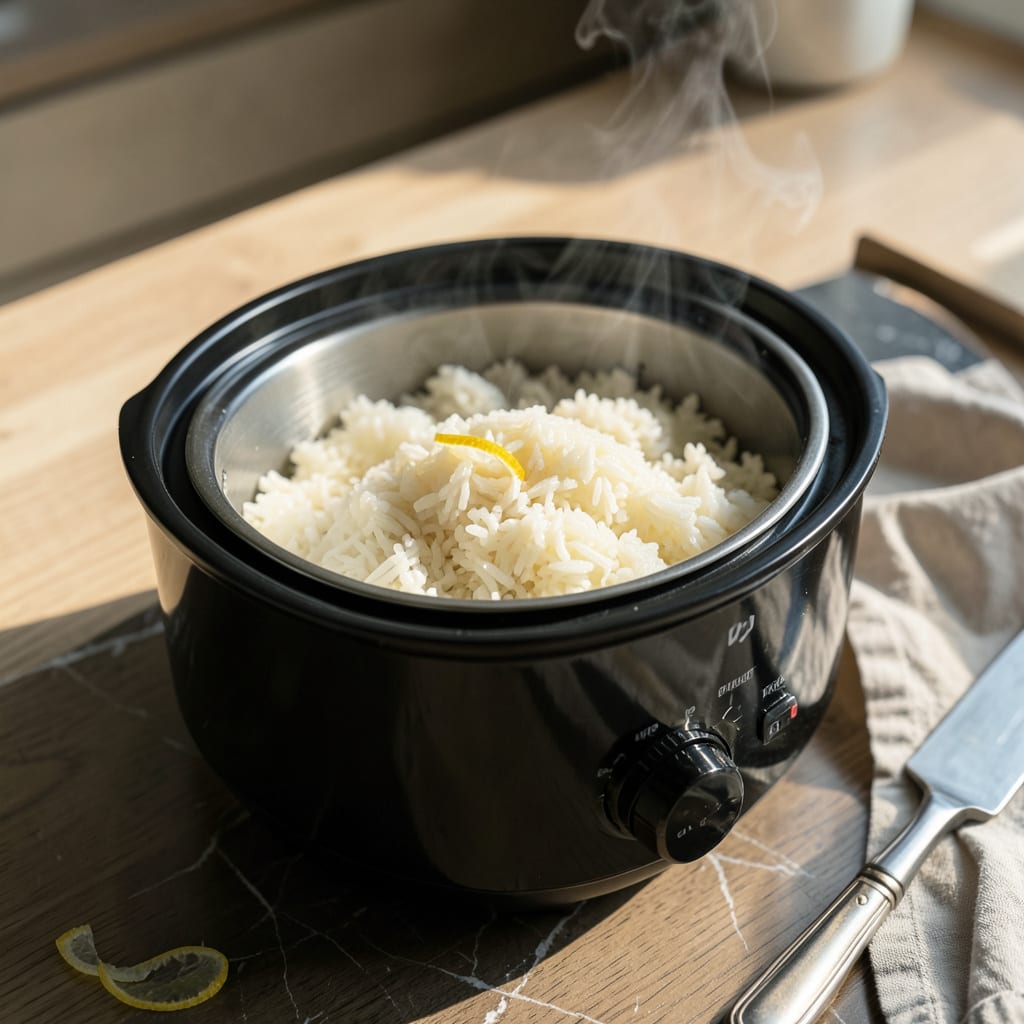
For perfect jasmine rice in a rice cooker, use a 1:1.25 ratio—1 cup rice to 1.25 cups water. Rinse the rice first for fluffier results, and adjust slightly if your cooker runs hot or cool.
This ratio works because jasmine rice has a unique starch structure that absorbs moisture differently than basmati or short-grain varieties. 🌟 I’ve found that the extra ¼ cup of water per cup of rice compensates for jasmine’s lower amylose content, preventing that dreaded dry, crumbly texture. The rinsing step isn’t just for show—it removes excess surface starch that would otherwise make your rice gummy rather than light and separate.
What most people don’t realize is how much cooker temperature affects the outcome. Older rice cookers often run hotter, so you might need to reduce water by 1-2 tablespoons to avoid mush. Conversely, if your cooker takes forever to switch to “keep warm,” a splash more water prevents undercooked grains. It’s all about observing your specific appliance’s quirks.
💡 In This Article
- Why the Jasmine Rice-to-Water Ratio Matters
- Pro Tips for Cooking Jasmine Rice in Any Rice Cooker
Why the Jasmine Rice-to-Water Ratio Matters
Jasmine rice contains about 15-17% amylose, the starch responsible for grain separation, compared to 22-25% in basmati. This lower amylose content means jasmine grains absorb water more slowly and require precise hydration to achieve that signature tender-yet-fluffy texture.
The 1:1.25 ratio accounts for this by providing just enough moisture to fully gelatinize the starch without making the rice soggy. 🔥
When jasmine rice cooks, the water penetrates the grain’s outer layer first, then gradually moves inward. At 212°F, the starch granules swell and burst, releasing amylose that creates the rice’s characteristic stickiness. Too little water leaves the core undercooked and chalky, while excess water causes the grains to split and turn mushy.
The ideal ratio creates a balance where each grain remains intact but yields slightly to the bite.
Regional preferences play a surprising role in water ratios. In Thailand, where jasmine rice originates, many cooks use a 1:1 ratio for firmer rice that pairs with saucy dishes. Meanwhile, Vietnamese cuisine often prefers a slightly wetter 1:1.5 ratio for stickier rice that clumps together for easy handling.
This variation shows how the same ingredient adapts to different culinary traditions. ✨
The rinsing process removes about 10-15% of the surface starch, which would otherwise create a gummy paste during cooking. I’ve tested this repeatedly—unrinsed jasmine rice requires 2-3 tablespoons less water to achieve the same texture. The rinsing also eliminates any residual milling dust that could affect absorption rates.
For best results, rinse until the water runs nearly clear, typically 3-4 cycles of swirling and draining. 💫
Temperature fluctuations in rice cookers dramatically impact water absorption. Older models with simple thermostats often reach 220-225°F, causing faster evaporation. Newer fuzzy-logic cookers maintain precise 212°F temperatures, allowing for more consistent results. If your cooker consistently produces dry rice, try increasing water by 1 tablespoon per cup until you find your appliance’s sweet spot. 🌟
For brown jasmine rice, the ratio shifts to 1:1.75 because the intact bran layer requires additional moisture and cooking time. The bran absorbs water more slowly, so the extra liquid compensates for the longer 45-50 minute cooking cycle.
High-altitude cooks should increase water by 1-2 tablespoons per cup due to lower boiling temperatures and faster evaporation rates above 3,000 feet. ⚡
The perfect ratio ultimately depends on your specific rice variety, cooker model, and personal texture preference. Start with the 1:1.25 baseline, then adjust in small increments while keeping detailed notes. I’ve found that even the same brand of jasmine rice can vary slightly between harvests, making this observational approach essential for consistent results. 💛

Trained in classic French technique but raised on slow-cooked ribs and spicy rubs, she blends culinary skill with smoke and soul.
- Recipe For Diced Pork In Slow Cooker: Melt-In-Your-Mouth Tenderness All Day - October 3, 2026
- Recipe for Crock Pot Lasagna Using Ravioli: No-Boil Cheese Layers - October 3, 2026
- Recipe for Cut Up Chicken: One-Pan Crispy Bites - October 3, 2026