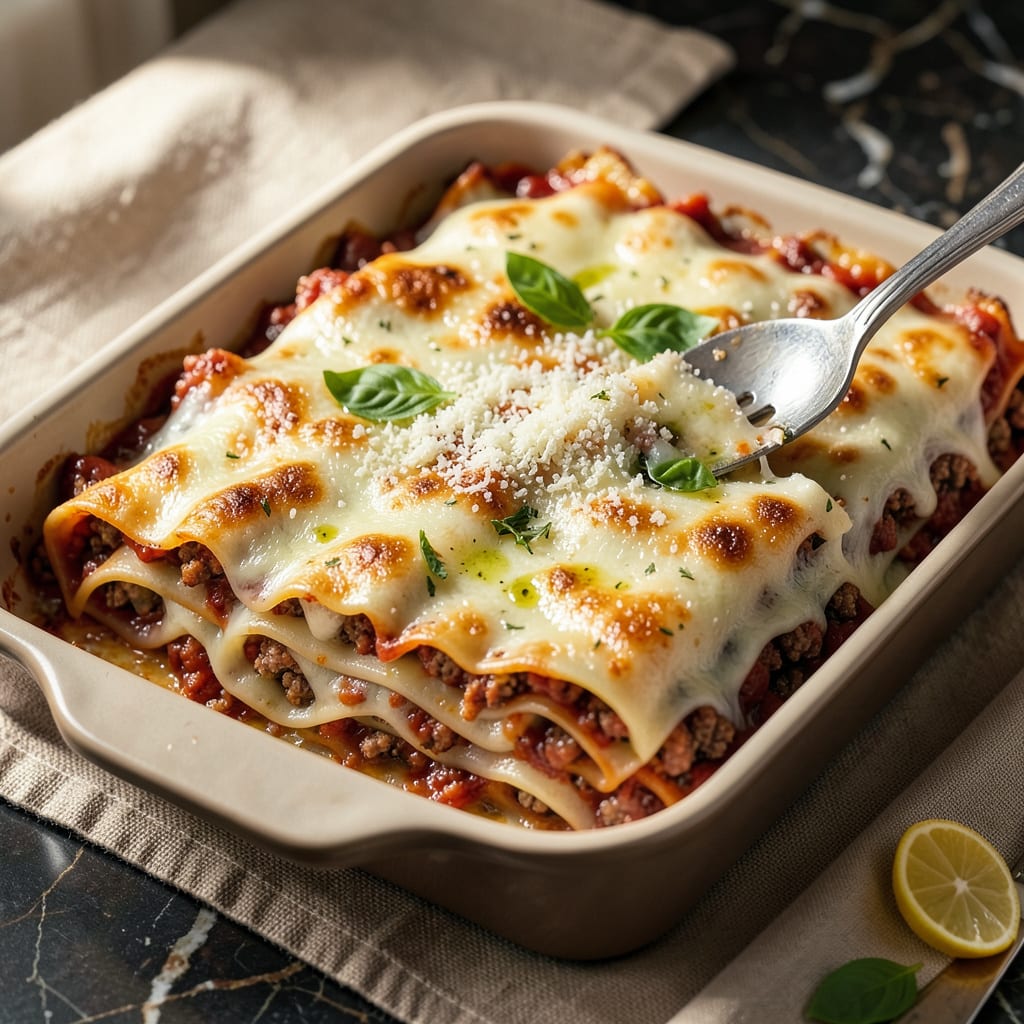
No, oven-ready lasagna noodles are designed to soften directly in the sauce during baking. Just layer them dry—they absorb moisture from the sauce and cook perfectly without pre-boiling.
I’ve tested these noodles in countless lasagnas, and their secret lies in the pre-steaming process during manufacturing. 🔥 This creates tiny pores that eagerly soak up sauce flavors while baking, eliminating the need for separate boiling. What’s brilliant is how they maintain structural integrity until the very end—no more mushy bottom layers or undercooked centers. The key is using about 25% more sauce than you would with traditional noodles to ensure even hydration throughout every layer.
💡 In This Article
- How Oven-Ready Lasagna Noodles Work Without Boiling
- Tips for Perfect Oven-Ready Lasagna Every Time
How Oven-Ready Lasagna Noodles Work Without Boiling
The magic starts with how these noodles are manufactured. Unlike traditional lasagna noodles, oven-ready versions undergo a special pre-steaming process that partially cooks them and creates microscopic pores. These pores act like tiny sponges, allowing the noodles to absorb liquid directly from your sauce during baking.
🔥 The starch structure is also modified to soften gradually, preventing that dreaded gummy texture you sometimes get with undercooked regular noodles.
Here’s what’s happening in your oven: As the lasagna bakes at 375°F, the sauce moisture migrates into the noodles through capillary action. The starch granules swell and gelatinize, transforming from firm to perfectly tender. Traditional boiled noodles achieve this through direct water contact, but oven-ready versions do it more slowly and evenly.
This controlled hydration is why you’ll notice the texture is more uniform throughout the dish—no overcooked edges with underdone centers.
What most people don’t realize is that oven-ready noodles actually require more sauce than their traditional counterparts. I recommend using about 1½ cups of sauce per layer (versus 1 cup for boiled noodles) to compensate for the absorption process. The extra liquid ensures complete hydration without drying out.
Think of it like making risotto—the noodles need that constant moisture contact to reach the ideal al dente texture.
The starch composition plays another crucial role. These noodles contain a higher percentage of amylose (a straight-chain starch) compared to regular pasta. Amylose molecules unravel and rebond during baking, creating a sturdy yet tender structure. This is why oven-ready lasagna holds its shape better when sliced, even after absorbing all that sauce.
✨ The result is a lasagna with distinct layers that maintain their integrity from first slice to last.
Temperature control matters too. Baking at 375°F (versus lower temps) creates the perfect environment for this hydration process. Too low, and the noodles won’t soften properly; too high, and the outside layers may dry before the center cooks.
That 30-minute covered bake followed by 15 minutes uncovered isn’t arbitrary—it’s designed to first hydrate then set the structure perfectly.
Compare this to traditional noodles: Boiled lasagna sheets absorb water quickly but then release some of that moisture during baking, which can make your dish watery. Oven-ready versions skip this release phase entirely, giving you better control over the final texture.
💫 The difference is especially noticeable in the bottom layer, which stays perfectly cooked rather than turning mushy from prolonged contact with sauce.
Pro tip: If you’re skeptical about skipping the boil, try this test. Place a dry oven-ready noodle in warm water for 10 minutes—you’ll see it soften just like it does in your lasagna. This simple experiment demonstrates exactly how the baking process works, minus the oven’s heat.
The noodle will be fully cooked but still hold its shape, proving the technology behind these time-saving sheets.

Trained in classic French technique but raised on slow-cooked ribs and spicy rubs, she blends culinary skill with smoke and soul.
- Recipe for Boneless Pork Chops in Cast Iron Skillet: Sear and Baste to Juicy Perfection - October 3, 2026
- Recipe for Boneless Cross Rib Roast: Slow-Roasted Beef with Herb Crust - October 3, 2026
- Hamburgers in Sauce Recipe Crock Pot: Slow-Cooked Savory Delight - October 3, 2026